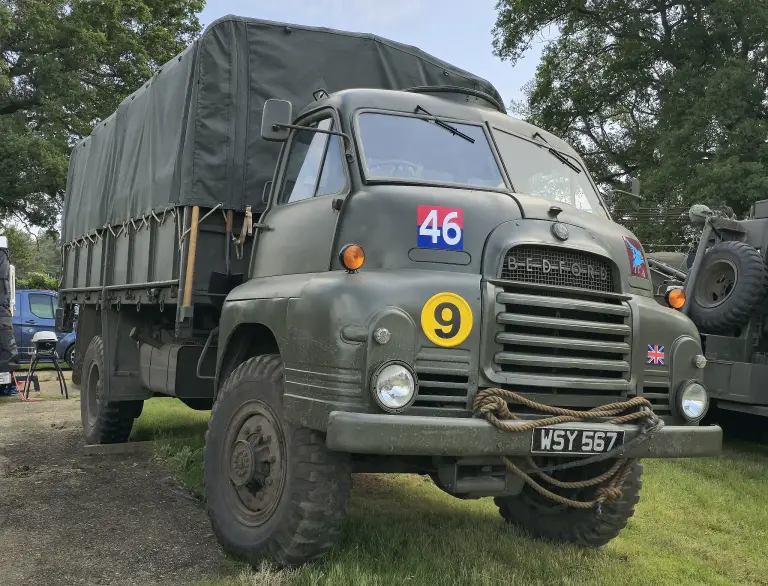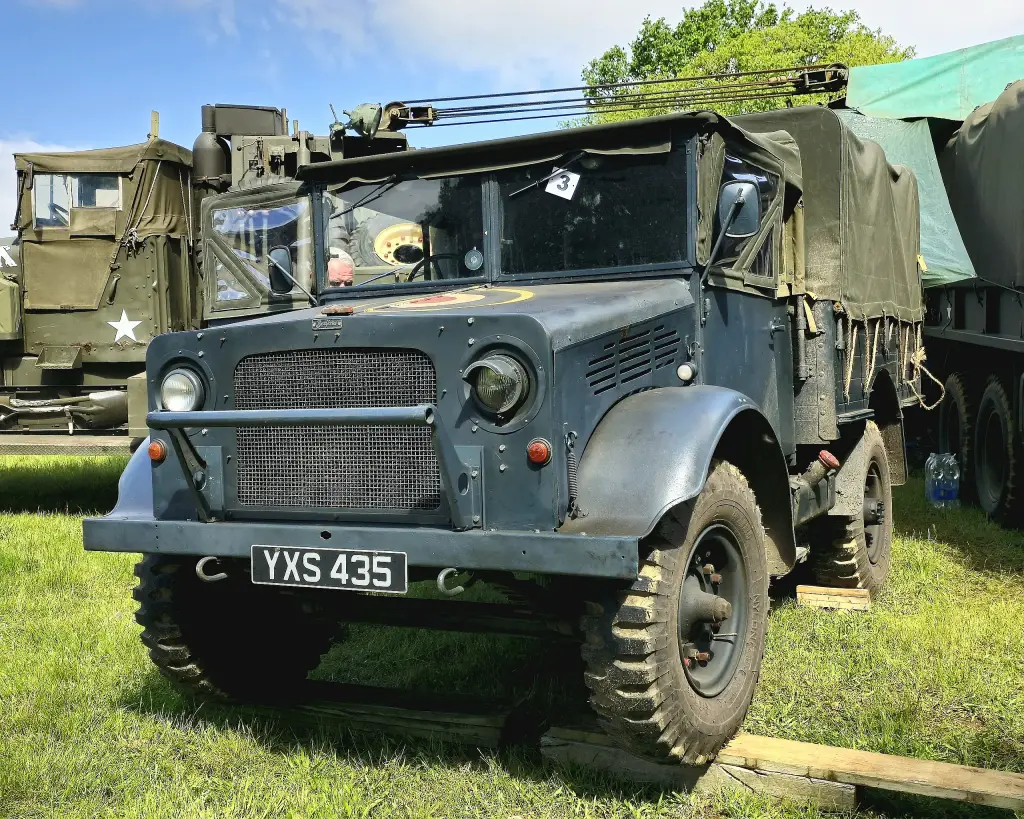
The Bedford OY was an army lorry built by Bedford for the British Armed Forces and introduced in 1939. It was based on Bedford’s O-series commercial vehicles with a modified front end and single rear tyres, and was designed for a 3-ton payload.
Bedford OY at a glance
| Maker | Bedford |
|---|---|
| Introduced | 1939 |
| Type | army lorry |
| Payload | 3 tons |
| Engine | Bedford WD six-cylinder, 3,519 cc, 72 hp at 3,000 rpm |
| Gearbox | four-speed manual |
| Electrical system | 12 volt |
| Brakes | hydraulic with vacuum servo assistance |
| Fuel | petrol, 145 litres |
| Range | 450 km |
| Maximum speed | about 65 km/h |
| Main variants | OYD general service, OYC tanker |
History of the Bedford OY
A 3-ton lorry from the O series
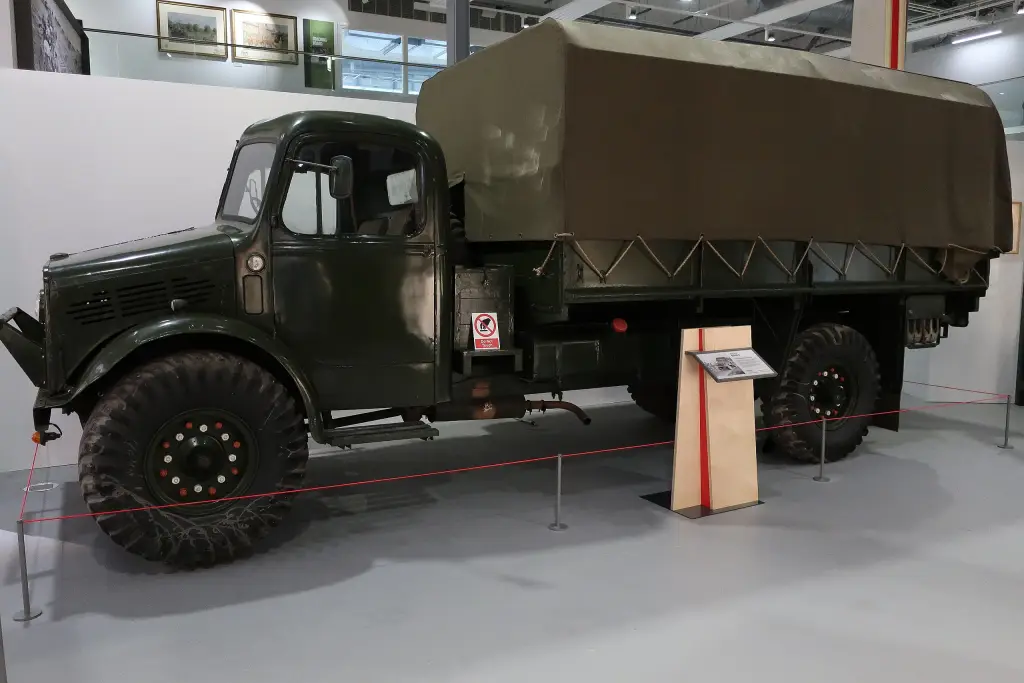
The OY was introduced in 1939 and was based on Bedford’s O-series commercial vehicles, with a modified front end and single rear tyres. It was designed for a 3-ton payload. The OYD was the general service vehicle, while the OYC was a tanker version for carrying water or petrol. The vehicles were widely used during and after the Second World War, but were later superseded by the Bedford RL.
The OY was powered by a Bedford WD six-cylinder engine of 3,519 cc, liquid cooled, producing 72 hp at 3,000 rpm. It had a four-speed manual gearbox, a 12-volt electrical system and hydraulic brakes with vacuum servo assistance. Tyres were 10.50-16, fuel capacity was 145 litres, range about 450 km and maximum speed about 65 km/h.
Wartime production
The Bedford OX and the larger OY were the most produced British military trucks of the Second World War, with more than 95,000 vehicles delivered to the army between 1939 and 1945. In September 1939 the British government placed its first order for 5,000 Bedford OX and 11,000 Bedford OY trucks. The military version simplified the cab and gave it a more robust look, though it kept metal doors and was relatively comfortable compared with other military vehicles with open cabs and canvas screens. Like the civilian models, only the rear wheels were driven, and the 3.5-litre six-cylinder petrol engine gave 72 hp and a maximum speed of 65 km/h.
The OY series was also built as tankers for water and fuel, mobile workshops, office vehicles, ambulances and other roles. The most produced version was the general service OYD. The short-wheelbase OX was a separate 30 cwt (1.5 ton) model with a semi-forward cab resembling the Bedford MW, and an armoured body on the OXD produced the Bedford OXA anti-tank vehicle used for home defence.
Design and features
- Three-ton payload: a 4×2 army lorry based on the civilian O series with a modified front end and single rear tyres.
- WD six-cylinder engine: 3,519 cc, 72 hp at 3,000 rpm, with a four-speed manual gearbox.
- Military electrics: a 12-volt system and hydraulic brakes with vacuum servo assistance.
- Long range: 145 litres of petrol gave about 450 km, with a maximum speed of about 65 km/h.
- Tanker and specialist bodies: the OYC carried water or petrol, and other bodies served as workshops, offices and ambulances.
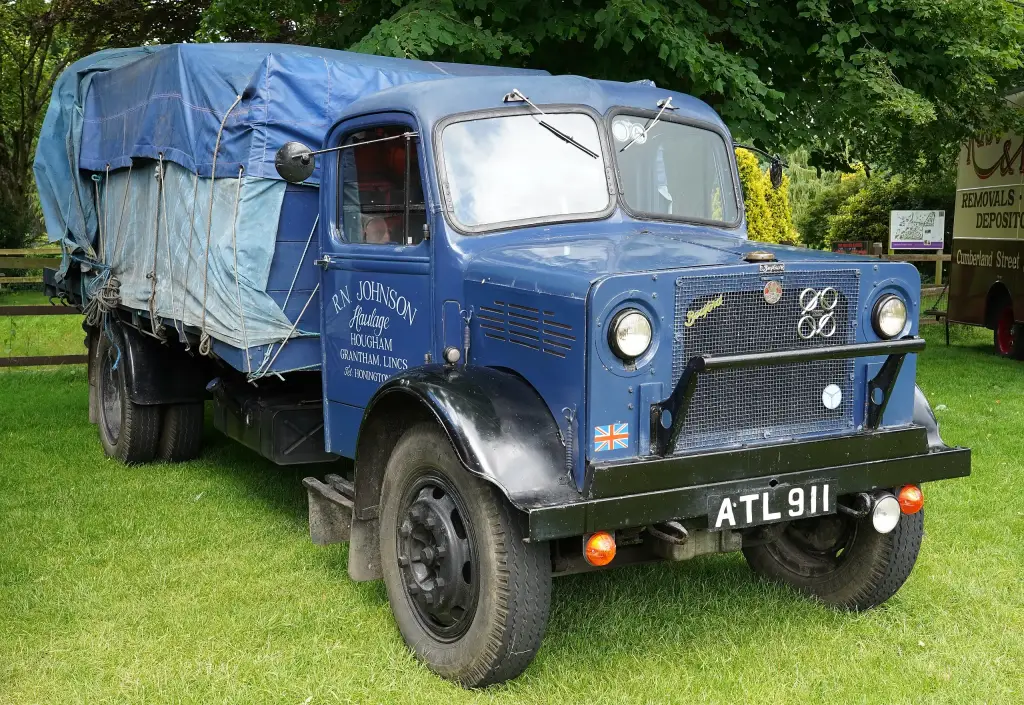
Bedford OY versions
- OYD: general service cargo lorry and the most produced version.
- OYC: tanker for water or petrol.
- OYD-based specialists: mobile workshop, office vehicle and ambulance.
- OWS: a 5-ton short-wheelbase derivative.
- OWL: a 5-ton long-wheelbase derivative.
- OWB: a 32-seat bus derivative.
- OX: the short-wheelbase 30 cwt sibling, including the armoured OXA.
The OY was superseded by the Bedford RL; the O-series also produced the Bedford OB bus. More are in the Bedford collection.
Video: 1940 Bedford OY running.
Video by Zercov123 on YouTube.
Sources
- Bedford OY, English Wikipedia: technical data and variants
- Bedford OX, Dutch Wikipedia: production, military use and OY details
- Bedford OXA, Italian Wikipedia: armoured OXA version