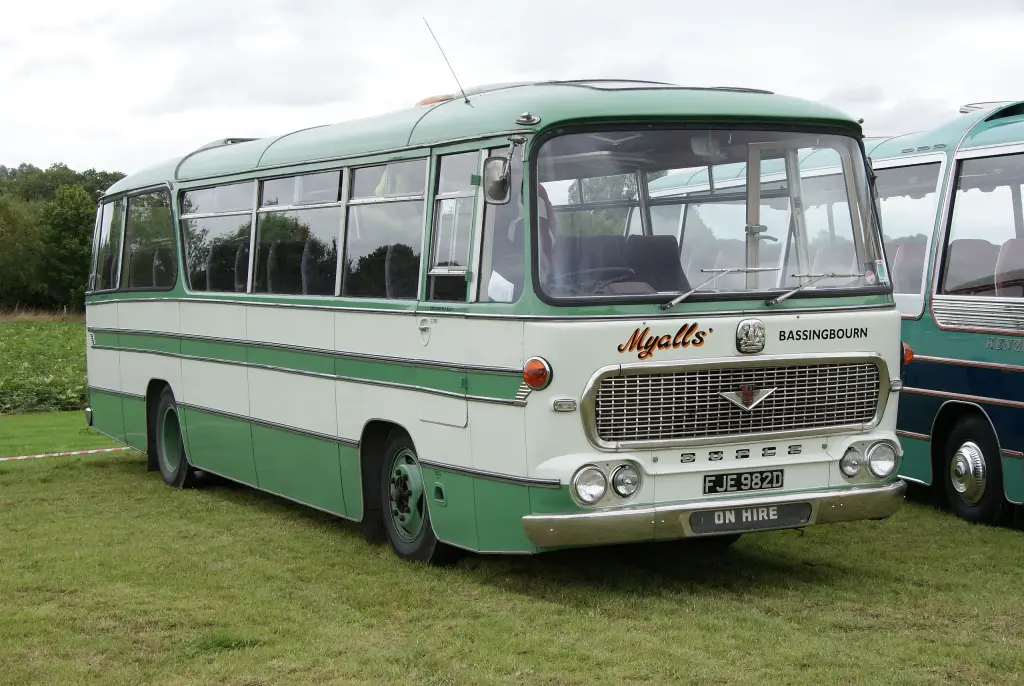
The Bedford VAM was a bus and coach chassis manufactured by Bedford from 1965. It was a front-entrance, front-engine design with a large front overhang that let the door sit ahead of the front axle, and it was sold in the United Kingdom and in export markets including Hong Kong, Australia and New Zealand.
Bedford VAM at a glance
| Maker | Bedford |
|---|---|
| Production | 1965-1971 |
| Type | front-entrance front-engine coach chassis |
| Wheelbase | 4.9 m |
| Body length | up to 36 ft (11 m) |
| Seating | 41-45 passengers |
| VAM3 engine | Bedford 300 cu in petrol |
| VAM5 engine | Bedford 330 cu in diesel |
| VAM14 engine | Leyland 400 cu in diesel |
| VAM70 engine | Bedford 466 cu in diesel |
| VAM75 engine | Bedford 500 cu in diesel (BLP2) |
| Replaced by | Bedford Y series |
History of the Bedford VAM
A front-entrance coach
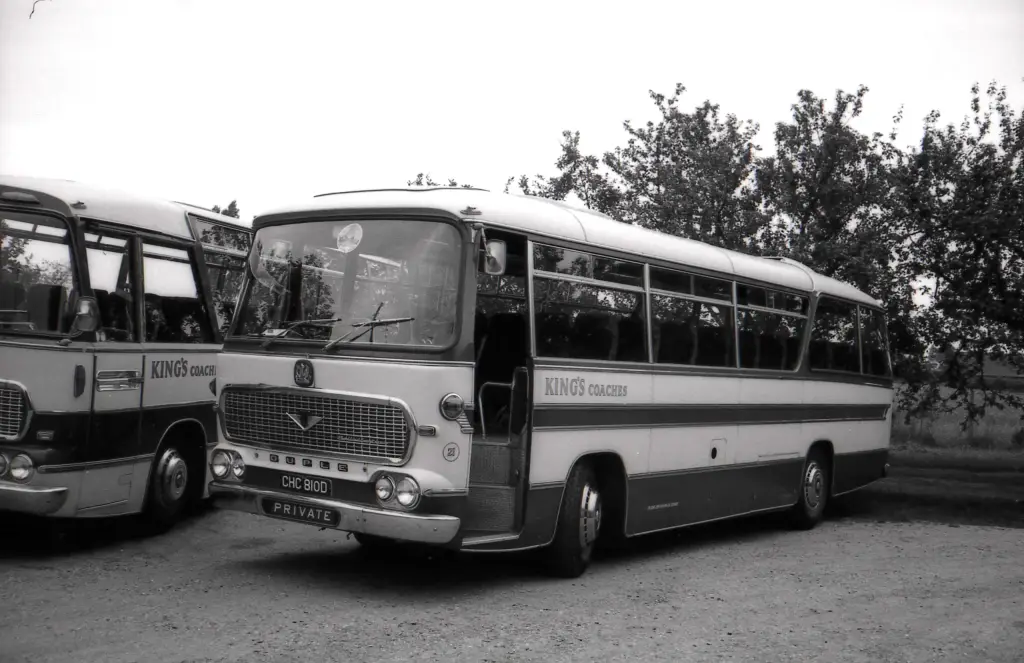
In August 1965 Bedford began production of a new front-entrance, front-engine coach chassis at the Vauxhall Motors plant in Luton. The VAM name stood for VA series Medium, and shorter and longer versions were named VAS (S for small) and VAL (L for long). The VAM and VAL both had a large front overhang, which allowed the entrance door to be positioned ahead of the front axle.
The idea had been shown by Yeates with the FE44, a 44-seat bus with a front entrance based on a modified Bedford SB chassis. That conversion had not received approval from Vauxhall Motors, which feared overloading the chassis and the resulting breakage, but it made Bedford aware of the demand for such a bus, and the VAM followed in 1965.
Chassis and engines
The VAM chassis could take bodies 36 ft long, the maximum length then allowed for two-axle buses in Britain, and its wheelbase was 4.9 m, giving a capacity of 41 to 45 seats depending on the body. The engine was mounted vertically at the front. The first series offered three six-cylinder engines: a 4.9-litre Bedford petrol, a 5.4-litre Bedford diesel and a 6.6-litre Leyland O.400 diesel. From 1967 a new 7.7-litre Bedford diesel was available as the most powerful option. Petrol-engined buses could have a four- or five-speed synchromesh gearbox, while diesel vehicles were available only with a five-speed gearbox, and the braking system also differed between engine variants.
The engine options carried model names: the VAM3 used the Bedford 300 cu in petrol engine, the VAM5 the Bedford 330 cu in diesel, the VAM14 the Leyland 400 cu in diesel, the VAM70 the Bedford 466 cu in diesel and the VAM75 the Bedford 500 cu in diesel, also known as the BLP2. The VAM was sold extensively in the United Kingdom and in export markets including Hong Kong, Australia and New Zealand, where some examples used Perkins or Cummins engines. Production figures are uncertain: the Bus Lists on the Web register records 2,971 VAM chassis, while other sources suggest about 9,000.
The end of the VAM
In 1971 the VAM was replaced by the Bedford Y series, which with its underfloor engine offered more seats for the same length.
Design and features
- Front entrance: a large front overhang let the door sit ahead of the front axle for one-person operation.
- Five engine options: Bedford petrol and diesel units and the Leyland O.400.
- Body length: up to 36 ft, the maximum for a two-axle bus in Britain at the time.
- Seating: 41 to 45 passengers depending on the body.
- Export sales: sold in Hong Kong, Australia and New Zealand, some with Perkins or Cummins engines.
Bedford VAM versions
- VAM3: Bedford 300 cu in petrol engine.
- VAM5: Bedford 330 cu in diesel engine.
- VAM14: Leyland 400 cu in diesel engine.
- VAM70: Bedford 466 cu in diesel engine.
- VAM75: Bedford 500 cu in diesel engine, also known as BLP2.
- VAS and VAL: the shorter and longer versions of the same front-entrance family.
The VAM was replaced by the Bedford Y series, and its longer relative was the Bedford VAL. More are in the Bedford collection.
Video: Myalls Bedford VAM, FJE 982D
Video by Richard Haughey on YouTube.
Sources
- Bedford VAM, English Wikipedia: engine options and export markets
- Bedford VAM, French Wikipedia: production, dimensions, engines, seating