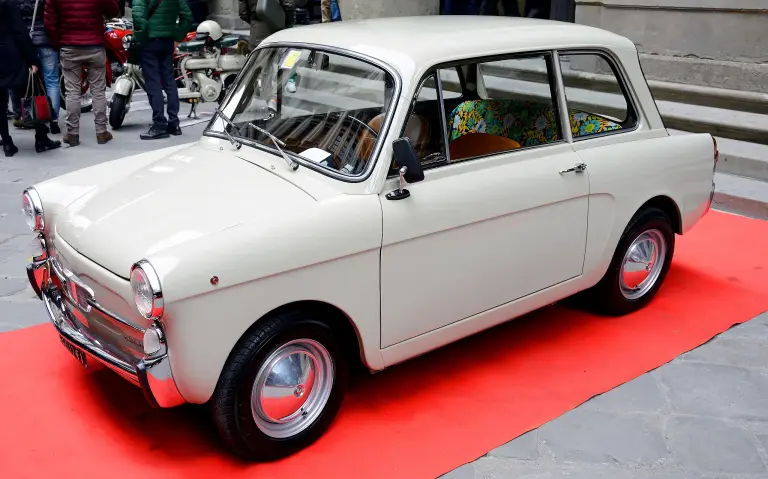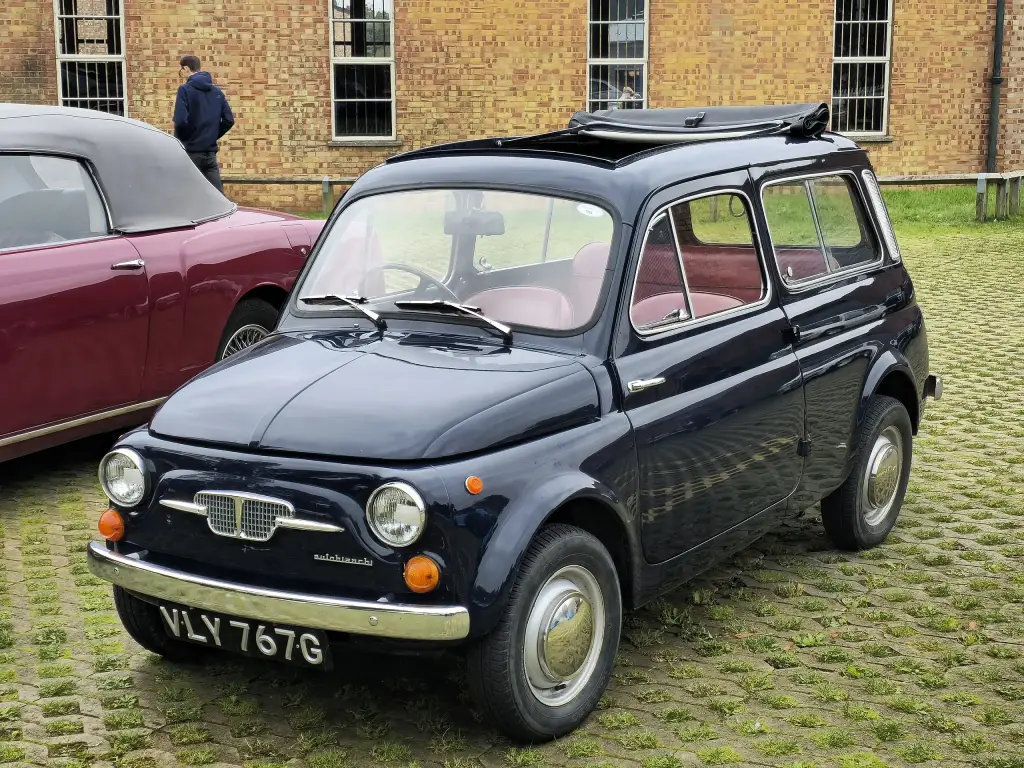
The Autobianchi Giardiniera is the estate version of the Fiat 500, and from 1968 it was built by Autobianchi at Desio rather than by Fiat. It was also sold as the Autobianchi Bianchina Giardiniera. Production ran until 1977, two years after the Fiat 500 saloon it was derived from had gone out of production, and it was replaced in practice by nothing until the Fiat Panda arrived in 1980.
Autobianchi Giardiniera at a glance
| Maker | Autobianchi, Desio (Fiat group) |
|---|---|
| Production | 1968–1977 (assembly at Desio from 1967) |
| Bodies | estate car and van |
| Engine | air-cooled twin, 499 cc, mounted flat under the floor |
| Layout | rear engine, rear-wheel drive |
| Doors | rear-hinged (“suicide”) throughout production |
| Tailgate | hinged on the left, includes part of the roof |
| Also sold as | Autobianchi Bianchina Giardiniera |
| Final wheels | Fiat 126 Personal type |
| Replaced by | nothing until the Fiat Panda of 1980 |
History of the Autobianchi Giardiniera
From Fiat to Autobianchi
The Giardiniera had been part of the Fiat 500 range since 1960, matching the 500 D in trim, and for several years it was assembled on Autobianchi’s own Bianchina lines at Desio as well. At first the cars kept the Fiat badge. Assembly moved to Desio entirely in the last months of 1967, and in early 1968, three years after the 500 F had been introduced, the estate took the Autobianchi name. Apart from the doors it followed F specification, but those doors, unlike those of the saloon, kept their rear hinges to the end.
Details and the van
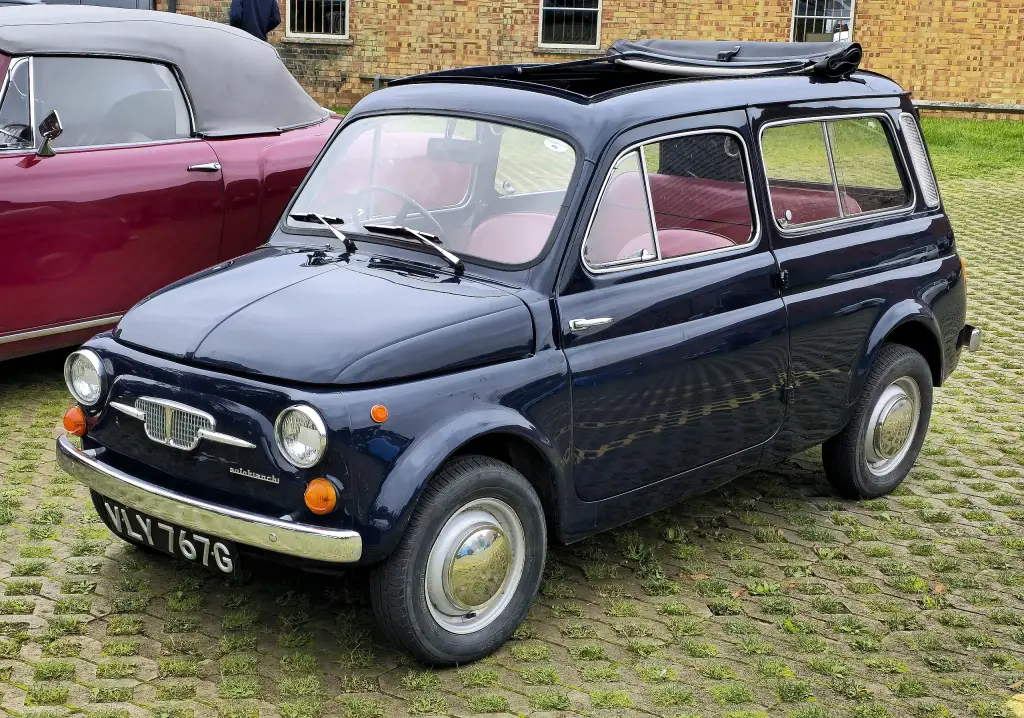
The Autobianchi version is recognised by small changes: black rather than steel-coloured air grilles on the rear pillars, an exterior mirror, a larger front badge without the two horizontal whiskers that carried the Fiat logo, and rear side windows that opened as a single quarter-light instead of sliding in two pieces. A peculiarity shared with earlier cars was the tailgate, which included a portion of the roof and was hinged on the left-hand side. The estate was initially built alongside its more elegant derivative, the Bianchina Panoramica, which left the range in 1969. A commercial van version had no rear seat, sheet metal in place of the rear windows and no fabric sunroof, which the passenger car kept to the end of production.
The end
To rationalise production, in 1972 the specification was brought close to that of the Fiat 500 R saloon launched that year. When the 500 saloon itself went out of production in 1975, the Giardiniera carried on because of its usefulness; by then the design was old, and it was withdrawn two years later, in 1977, with wheels from the Fiat 126 Personal in its final period. Prototypes of a 126 estate were prepared but rejected, since Fiat was concentrating on a new and modern car to take over the role: the Fiat Panda, which appeared in 1980.
Design and features
- Flat twin under the floor: the 499 cc air-cooled engine lies on its side beneath the load deck, as in the Fiat 500 Giardiniera.
- Roof-hinged tailgate: the rear door includes part of the roof and swings on the left-hand side.
- Rear-hinged doors: kept on the estate even after the saloon had changed to front hinges.
- Longer wheelbase: the estate body sits on the long chassis, giving a useful load area behind the rear seat.
- Van version: no rear seat, panelled rear sides and no fabric sunroof.
Autobianchi Giardiniera versions
- Passenger estate (1968–1977): with the fabric sunroof of the original.
- Van: panelled body and no rear seat, for light commercial work.
- Bianchina Giardiniera: the same car marketed under the Bianchina name.
- 1972 specification: trim brought into line with the Fiat 500 R.
The Giardiniera was the estate member of the Bianchina family, and it stayed in production long after the A112 had been launched. More cars are in the Autobianchi collection.
Sources
- Autobianchi Giardiniera, English Wikipedia: production dates, layout, naming
- Autobianchi Giardiniera, Italian Wikipedia: assembly history, trim changes, end of production