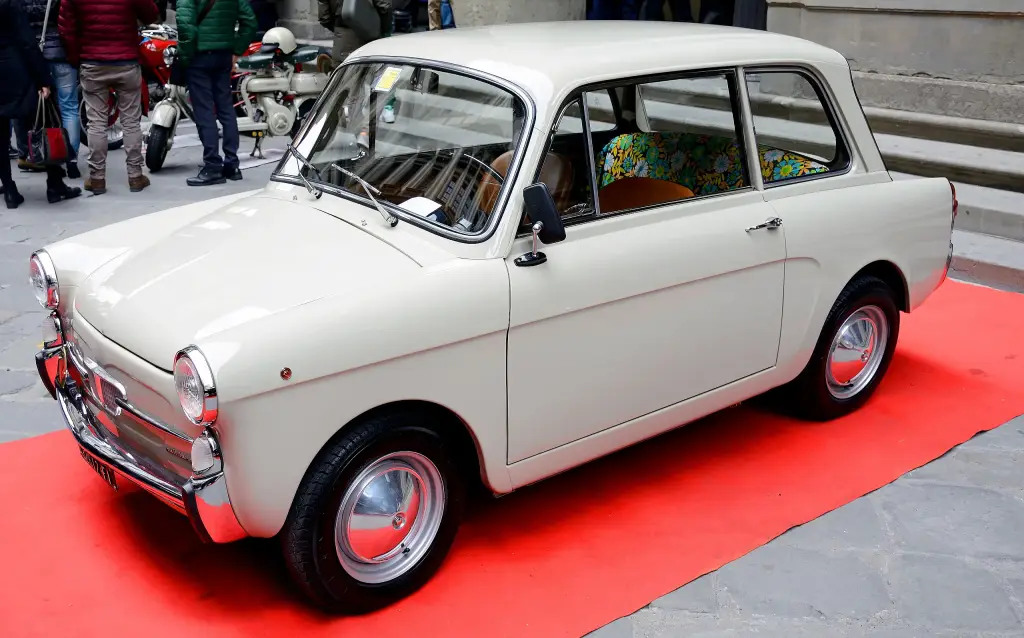
The Autobianchi Bianchina is a minicar built on the chassis and mechanicals of the Fiat 500, and it was the car that established the Autobianchi name. It was presented in Milan on 16 September 1957 in a single three-box body, the Trasformabile, and grew into a range that included a cabriolet, an estate and a van. Roughly 275,000 were produced between 1957 and 1970.
Autobianchi Bianchina at a glance
| Maker | Autobianchi, Desio (Fiat group) |
|---|---|
| Production | 1957–1970 |
| Bodies | Trasformabile, Cabriolet, Panoramica estate, 4-seat saloon, van |
| Engine | air-cooled twin, 479 cc; 499 cc later |
| Power | 15 PS at launch, up to 21 PS in the Special |
| Layout | rear engine, rear-wheel drive |
| Doors | front-hinged, except rear-hinged on the Trasformabile |
| Launch price | 565,000 lire, over 15 per cent more than the 500 |
| Cabriolet built | about 3,150 |
| Built | about 275,000 |
History of the Autobianchi Bianchina
An upmarket 500
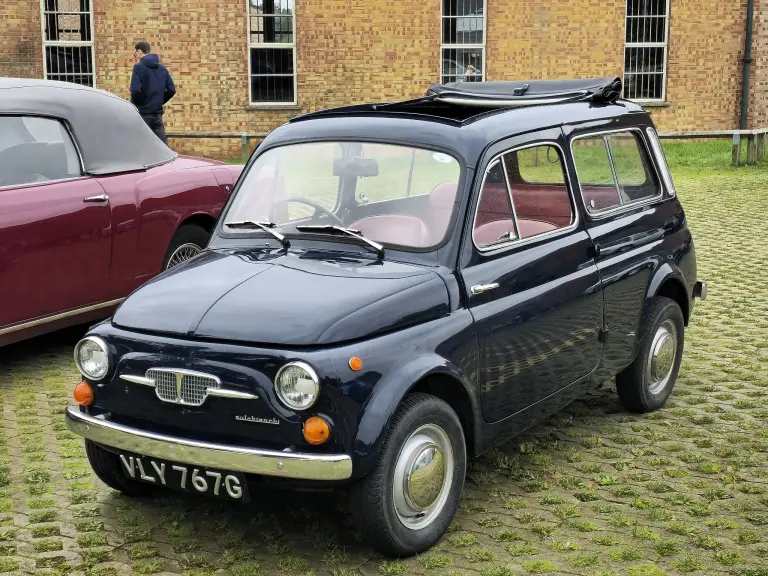
The Bianchina was conceived as a luxurious version of the Fiat Nuova 500, using that car’s chassis and mechanicals under more elegant bodywork with tail fins, plenty of chrome and a large fabric sunroof. It was shown to the public on 16 September 1957 at the Museum of Science and Technology in Milan. In the first months of sale deliveries were higher than those of the cheaper but more spartan 500, despite a list price of 565,000 lire — more than 15 per cent above the Fiat. The Milanese associations of the car, the aura of the old Bianchi marque, the better finish and a long instalment plan of 30 monthly payments offered by SAVA all played a part. The original 479 cc air-cooled twin produced 15 PS; output rose to 16.5 PS in 1959 and to 17 PS in the Italian catalogue.
The range grows
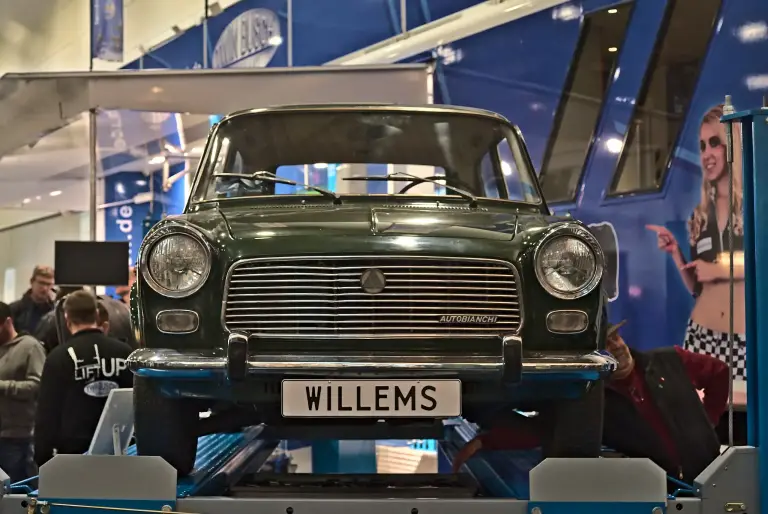
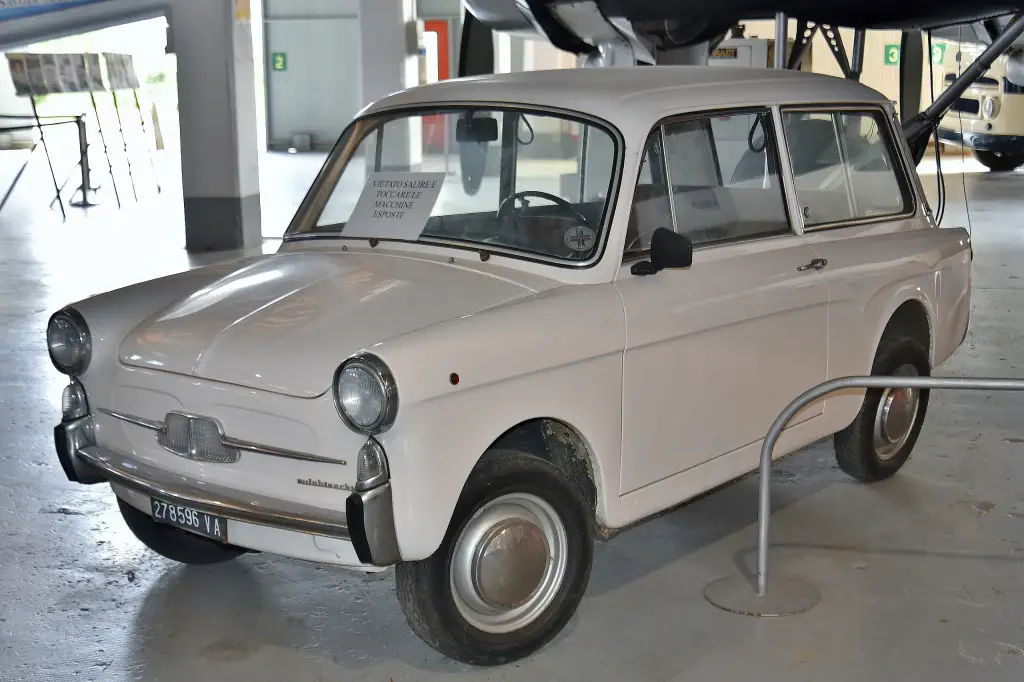
In 1960 Autobianchi added the Cabriolet, a true open car with a fabric hood and a 499 cc engine of 21 PS, and the Panoramica, an estate derived from the Fiat 500 Giardiniera with a wheelbase 10 cm longer and the engine turned through 90 degrees under the floor. From the same year the Trasformabile received the larger 499 cc engine and was offered as a Special with two-tone paint and 21 PS. The Cabriolet’s doors were hinged at the front, while the Trasformabile kept rear-hinged “suicide” doors. In 1962 the Trasformabile was replaced by a four-seat saloon with a fixed steel roof, officially called simply the “4 posti”; it kept the short-wheelbase chassis of the Cabriolet and was the version the public liked best, thanks in part to its near-vertical rear window.
Later years and export names
A minor facelift in 1965 brought a revised front badge, a new dashboard with a mock-wood insert and half a horsepower more for the saloon; the 4 posti and Cabriolet also received the optimised F-type engine. All versions gained a floor recessed over the passengers’ feet in 1962. Production ended in 1969–1970, by which time the Giardiniera had taken over. In France the models were sold under separate names: the saloon as the Lutèce, the estate as the Texane and the Cabriolet as the Eden Roc. In the United States the importer sold them with Fiat badges, and in West Germany the Panorama was assembled by Neckar Automobilwerke as the Neckar Panorama. A red Bianchina cabriolet appears in the 1966 film How to Steal a Million, and a white one was the car of the Italian comedy character Ugo Fantozzi.
Design and features
- Fiat 500 foundations: the same chassis, rear-mounted air-cooled twin and suspension, with more luxurious bodywork.
- Trasformabile roof: a large fabric sunroof that ran back over the rear window, with fixed side pillars.
- Panoramica estate: long-wheelbase body with a rear hatch, derived from the Fiat 500 Giardiniera.
- Two-tone Special: contrasting paint, chrome window frames and 21 PS from 1960.
- Separate French names: Lutèce, Texane and Eden Roc for the saloon, estate and cabriolet.
Autobianchi Bianchina versions
- Trasformabile (1957–1962): the original three-box two-seater with a fabric roof and rear-hinged doors.
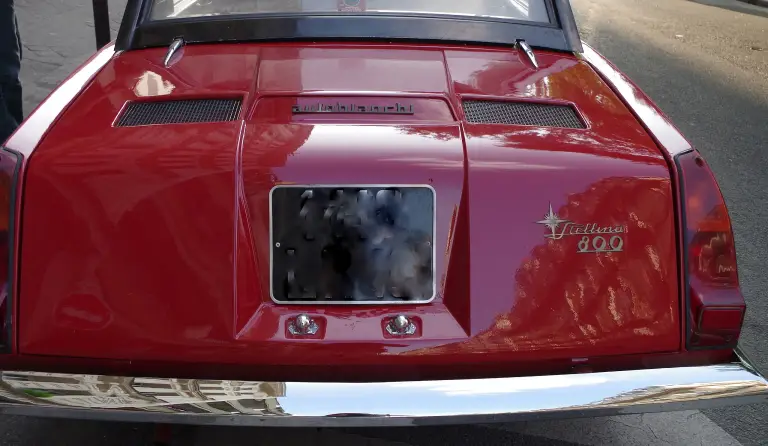
- Cabriolet (1960–1969): full convertible, 499 cc and 21 PS, about 3,150 built.
- Panoramica (1960–1969): estate on the long Fiat 500 Giardiniera chassis.
- 4 posti (1962–1969): closed four-seat saloon, in base and Special form.
- Furgoncino: van on the Panoramica base, with low or high roof.
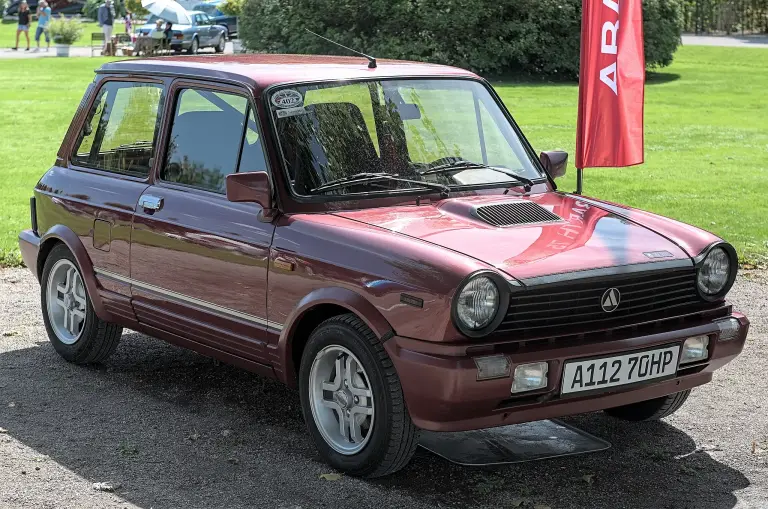
The Bianchina was replaced in the range by the Giardiniera, and its role as the small Autobianchi was taken by the A112. More cars are in the Autobianchi collection.
Video: The Bianchina is an Unconventional Choice
Video on YouTube.
Sources
- Autobianchi Bianchina, English Wikipedia: bodies, engines, export names, production
- Autobianchi Bianchina, Italian Wikipedia: prices, versions, facelift, Cabriolet total