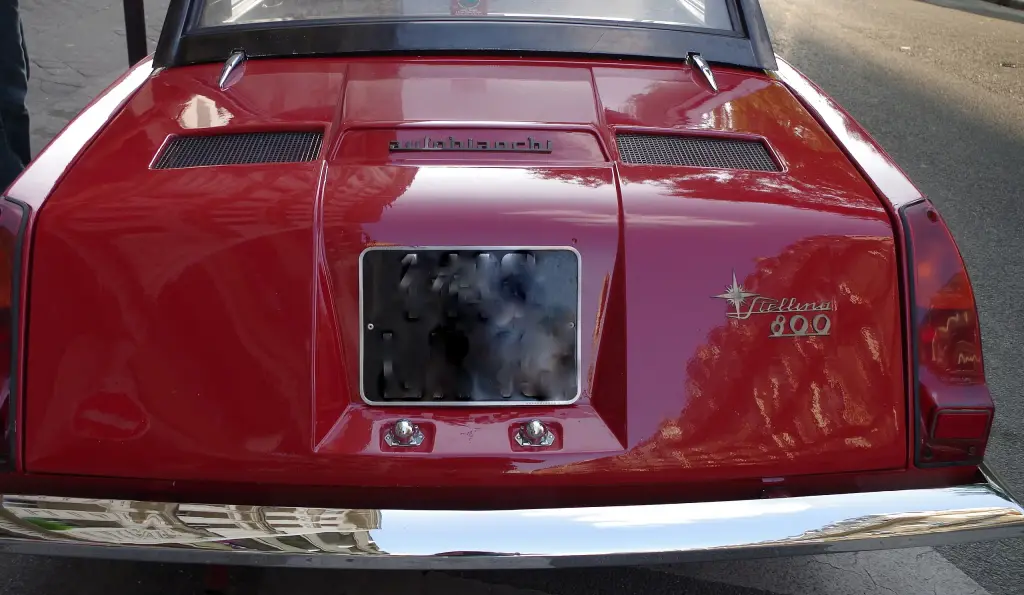
The Autobianchi Stellina is a small two-seat spider built in 1964 and 1965. It used the chassis and running gear of the Fiat 600D but a unique bodyshell of fibreglass panels over a steel frame, which made it the first Italian production car with a fibreglass body. Its styling came from Luigi Rapi, and 502 were made before the Fiat 850 Spider took its place.
Autobianchi Stellina at a glance
| Maker | Autobianchi, Desio (Fiat group) |
|---|---|
| Production | 1964–1965 |
| Body | two-seat spider, fibreglass panels on a steel frame |
| Engine | 767 cc water-cooled rear four (Fiat 600D) |
| Power | 29 hp (22 kW) |
| Layout | rear engine, rear-wheel drive |
| Brakes | drums on all four wheels |
| Styling | Luigi Rapi |
| Price | 993,000 lire for the Stellina 800 |
| Built | 502, of which about 350 for the Italian market |
History of the Autobianchi Stellina
Fibreglass first
The Stellina was first shown as a prototype at the Turin Motor Show in 1963, and it went on sale a year later at a price of almost a million lire. Underneath were the chassis and mechanicals of the Fiat 600D, including its rear-mounted 767 cc water-cooled four and drum brakes, but the body was something new: a steel frame with fibreglass panels attached to it, a construction chosen for ease of manufacture, low weight and, above all, freedom from rust, which was the scourge of ungalvanised Italian steel at the time. The difficulty was repair, since a damaged panel could only be dealt with by a specialist workshop, and there was a small network of them equipped for the work. Italian buyers were suspicious of the material, and the high price — 993,000 lire — pushed the car towards wealthy buyers.
Equipment and colours
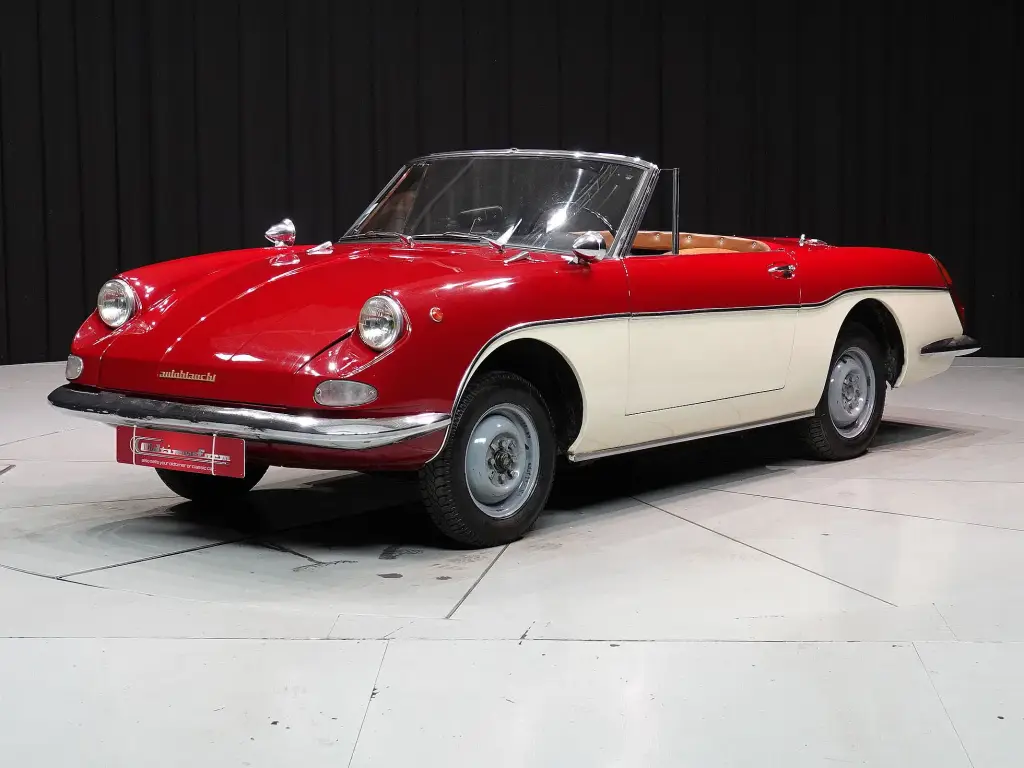
The specification followed the usual pattern for spiders: a fabric roof, a plastic rear window, bright paint contrasting with a fairly carefully finished interior in brown or black leatherette, and that interior was available only on red cars, with no other colours offered even to order. Options included a radio, whitewall tyres, a chrome tubular roof rack, an Abarth exhaust and Borrani wire wheels, and alloy wheels made for the Fiat 600 could be ordered. Weight was low, which helped the modest power, but the Stellina sold poorly and production of the first series, built in 1963–1965, reached only 343 cars.
The Stellina 800
In 1965, after a fall in sales blamed largely on the car’s lack of power, Autobianchi added the Stellina 800 — unofficially a second series, though it supplemented rather than replaced the 750. The engine was enlarged to 792 cc by increasing the bore to 63 mm, lifting output to just 31.5 hp and the top speed by 10 km/h, to 125 km/h; most of the gain was at low and medium engine speeds. Externally the two cars were identical. About 200 of the 800 were built, and the model was withdrawn in 1965 when Fiat launched the larger Fiat 850 Spider with 49 hp and the weight of the Fiat dealer network behind it. In total 502 Stellinas were made, 350 of them registered in Italy and the rest exported.
Design and features
- Fibreglass body: the first Italian production car with plastic panels, fitted to a steel frame and immune to rust.
- Fiat 600D mechanicals: the rear-mounted 767 cc water-cooled four and the standard drivetrain.
- Light weight: low mass extracted reasonable performance from 29 hp.
- Sleek spider styling: a low, rounded two-seater body by Luigi Rapi with a fabric hood.
- Rare options: radio, whitewall tyres, chrome roof rack, Abarth exhaust and Borrani wire wheels.
Autobianchi Stellina versions
- Stellina 750 (1963–1965): the original 767 cc car, 343 built.
- Stellina 800 (1965): 792 cc and 31.5 hp, about 200 built alongside the 750.
- Special equipment: cars ordered with Borrani wire wheels, chrome roof racks or the Abarth exhaust.
The Stellina stood apart from Autobianchi’s small cars such as the Bianchina; its sales role at the top of the range was later taken by the Primula Coupé. More cars are in the Autobianchi collection.
Video: Autobianchi Stellina 1964 3D model by 3DModels.org
Video on YouTube.
Sources
- Autobianchi Stellina, English Wikipedia: construction, engine, price, production
- Autobianchi Stellina, Italian Wikipedia: series, equipment, colours, Stellina 800