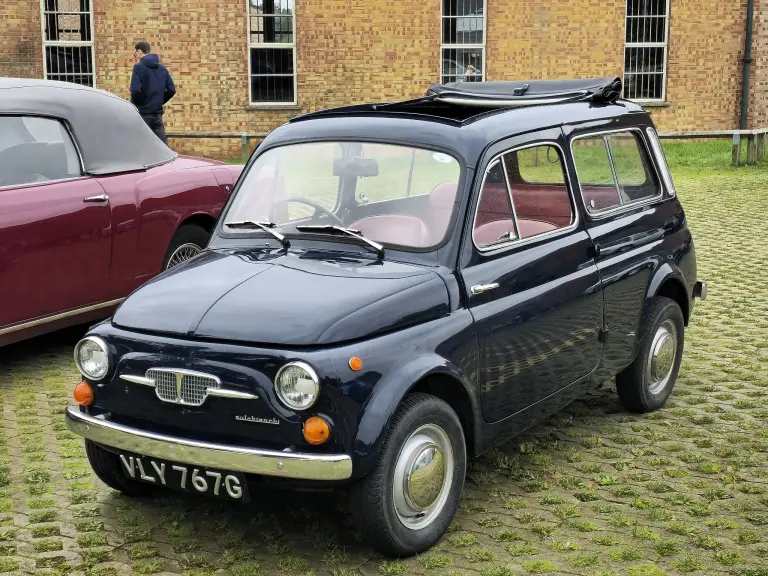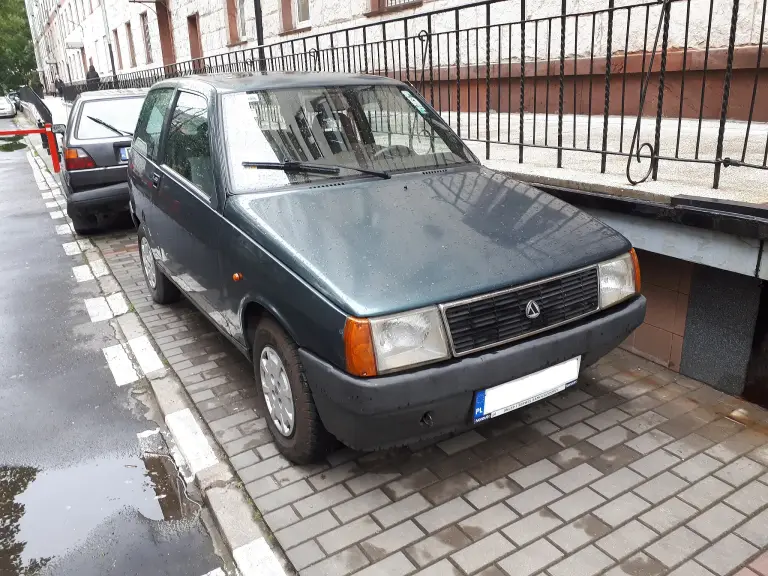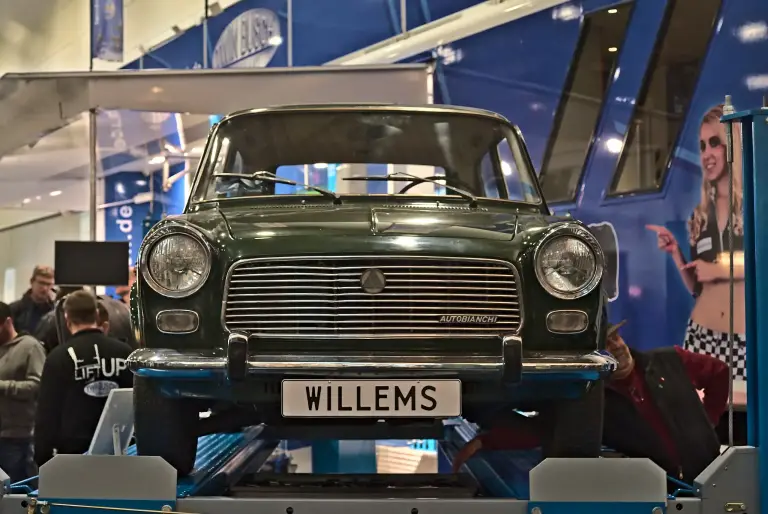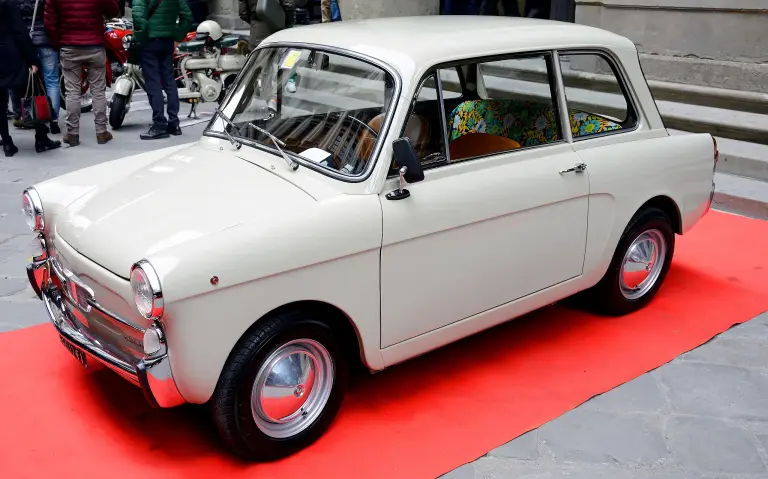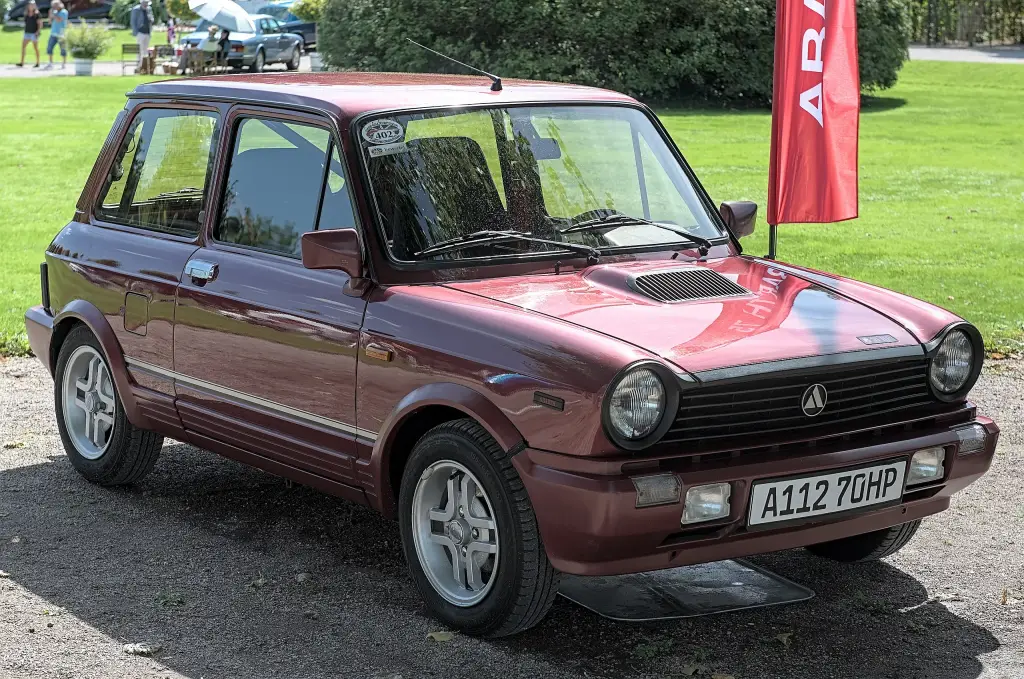
The Autobianchi A112 is a three-door supermini that Autobianchi produced from 1969 to 1986. It was developed on a shrunken version of the Fiat 128 platform, and its mechanicals subsequently underpinned the Fiat 127. Over 1.2 million cars were built in the Autobianchi factory in Milan, and the sporting Abarth versions gave the model a following that outlived it.
Autobianchi A112 at a glance
| Maker | Autobianchi, Milan (Desio) |
|---|---|
| Production | 1969–1986 |
| Body | three-door hatchback |
| Engines | 903 cc; 965 cc; 982 cc and 1,050 cc Abarth |
| Power | 42–48 PS in standard form; 70 PS in the 1,050 Abarth |
| Transmission | four-speed, five-speed later |
| Brakes | discs front, drums rear |
| Boot | 180 litres |
| Acceleration | 0–100 km/h in 13.7 s (early 903 cc) |
| Fuel consumption | about 6.9 l/100 km |
| Built | over 1.2 million |
History of the Autobianchi A112
Origins
By the later 1960s Fiat was losing ground in the small-car class to the Mini, which Innocenti was building in Italy. Dante Giacosa’s answer, developed under the code X1/2, was an elegant small car with front-wheel drive, sold through the less critical Autobianchi brand; in effect it was a large-scale field trial of the mechanical package destined for the forthcoming Fiat 127 (project X1/4). The A112 was shown at the Turin show in 1969 and went on sale that October. It was offered only as a three-door, with the 903 cc overhead-valve engine from the Fiat 850, in its first front-wheel-drive installation. Demand was so strong that waiting lists often ran past twelve months, and in 1970 the car finished second in the European Car of the Year vote behind the Fiat 128.
First and second series
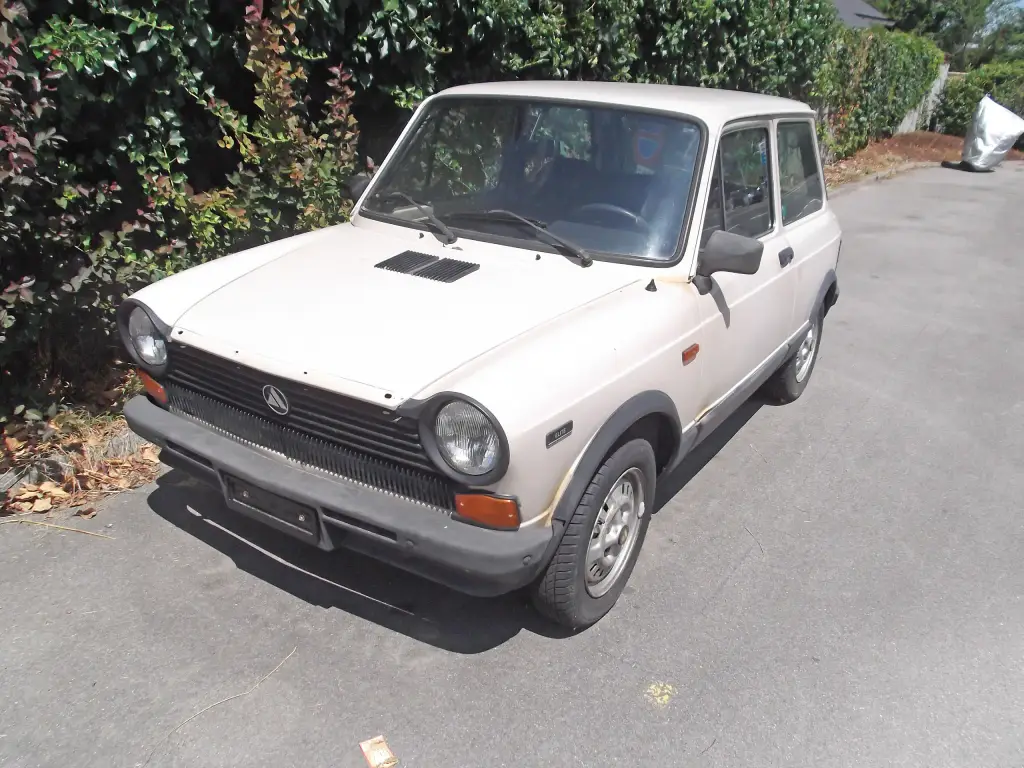
The original car had cloth-and-leatherette seats, a circular instrument pack and a 180-litre boot that could be extended by folding the rear seat. In autumn 1971 the engine was brought into line with the Fiat 127 and quoted at 47 PS, and two new versions arrived: the A112 E (“E” for Elegant), with a contrasting roof colour, better trim and later a five-speed gearbox, and the Abarth, prepared by Carlo Abarth’s workshop with a 982 cc engine. A makeover in March 1973 brought a new grille with a larger mesh, rubber bumpers with chrome inserts (the Normale kept metal bumpers with rubber strips), new alloy wheels and revised seats and dashboard; the E became the Elegant, and the Abarth lost its flank scorpion badges and gained a chequered upholstery.
Third and fourth series
The 1975 third series made the car a five-seater, added much larger vents on the C-pillars and redesigned the tail lamps, with reversing lights integrated on the Elegant and Abarth. The Abarth received a 1,050 cc engine quoted at 70 hp, while the Normale dropped to 42 PS in July 1975, and emissions rules cost the Elegant two horsepower in 1976, leaving 45 PS. In November 1977 the Nuova A112 appeared with a slightly taller roof and a marked edge along its sides, a considerably more habitable cabin, stepped tail lamps and an Elegant enlarged to 965 cc and 48 PS. Elite and LX versions followed, and from the end of 1977 the car was badged as a Lancia A112 in some export markets; in Sweden it was sold through Saab as the Saab Lancia A112.
Fifth series and the end
July 1979 brought the last major change: large black plastic cladding around new tail lamps, new side trim and bumpers, a new grille, black plastic wheelarches and larger extractor vents behind the rear windows. The five-speed gearbox spread from the Abarth to other versions, its fifth ratio an overdrive. The Normale became the Junior, the Elite was added above the Elegant, and a large roll-back canvas sunroof became available on the Junior. Production ended in 1986, when the Y10 took over; by 1984, 35 per cent of A112 buyers were women and about a third were aged 18 to 24.
Design and features
- Fiat 128-derived platform: a shortened version of the larger car’s floorpan, with front-wheel drive.
- 903 cc pushrod engine: from the Fiat 850, used transversely for the first time and later shared with the Fiat 127.
- Abarth versions: 982 cc and then 1,050 cc engines quoted at up to 70 hp.
- Regular updates: five series over seventeen years, with the roof raised in 1977 for more interior space.
- Trim ladder: Normale, E, Elegant, Elite, LX and Junior versions over the model’s life.
Autobianchi A112 versions
- A112 Normale (1969–1979): the base car, later renamed Junior.
- A112 E / Elegant (1971–): contrasting roof at first, richer trim, 965 cc from 1977.
- A112 Abarth (1971–1986): 982 cc, then 1,050 cc with 70 hp; five-speed in some markets from 1979.
- A112 Elite and LX: more comfortable equipment added in the later 1970s.
- Gold Shadow (1978): a special-bodied car by Rayton Fissore with bodywork reminiscent of the Porsche 928.
The A112 replaced the Bianchina and the Primula, and it was succeeded by the Y10. More cars are in the Autobianchi collection.
Video: Autobianchi A 112 – Kleiner Italiener
Video on YouTube.
Sources
- Autobianchi A112, English Wikipedia: engines, series changes, equipment
- Autobianchi A112, Italian Wikipedia: origins, performance figures, market details