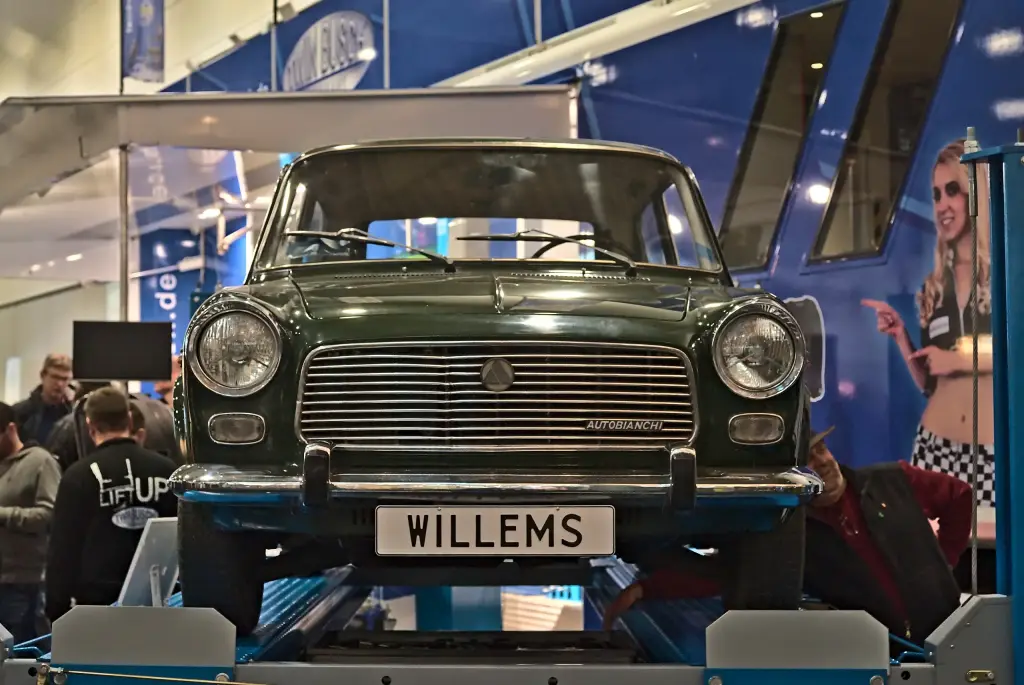
The Autobianchi Primula is a small family car built between 1964 and 1970. It matters far beyond its own sales: it was the first Fiat-group car to put the engine across the car and drive the front wheels, and its arrangement of engine, clutch and gearbox became the pattern for almost every front-wheel-drive car made since. Around 75,000 were built at Desio.
Autobianchi Primula at a glance
| Maker | Autobianchi, Desio (Fiat group) |
|---|---|
| Production | 1964–1970 |
| Bodies | three-door hatchback, two- and four-door saloons, five-door hatchback, coupé |
| Engines | 1,221 cc (1964–68); 1,197 cc and 1,438 cc (1968–70) |
| Power | 59–65 PS; 75 PS in the Coupé S |
| Layout | front-wheel drive, transverse engine |
| Gearbox | four-speed manual, end-on above the differential |
| Steering | rack and pinion, a first for Fiat |
| Brakes | discs on all four wheels |
| Suspension | front wishbone and transverse leaf spring; dead axle rear |
| Built | about 74,858 |
History of the Autobianchi Primula
Project 109
Before the Primula every Fiat-group passenger car drove its rear wheels: large models had the classic front-engine, rear-drive layout, small ones put the engine at the back. Fiat had avoided transverse front-wheel drive since a 1932 test accident in which its first front-drive prototype caught fire, with Giovanni Agnelli personally involved. Dante Giacosa and Oreste Lardone nevertheless convinced the management to try again, and because nobody wanted to risk the Fiat name on the experiment, it went ahead under the less critical Autobianchi badge as Project 109 in 1961. The new floorpan carried the 1,221 cc four from the Fiat 1100 D transversely, with a gearbox whose first gear was synchromesh.
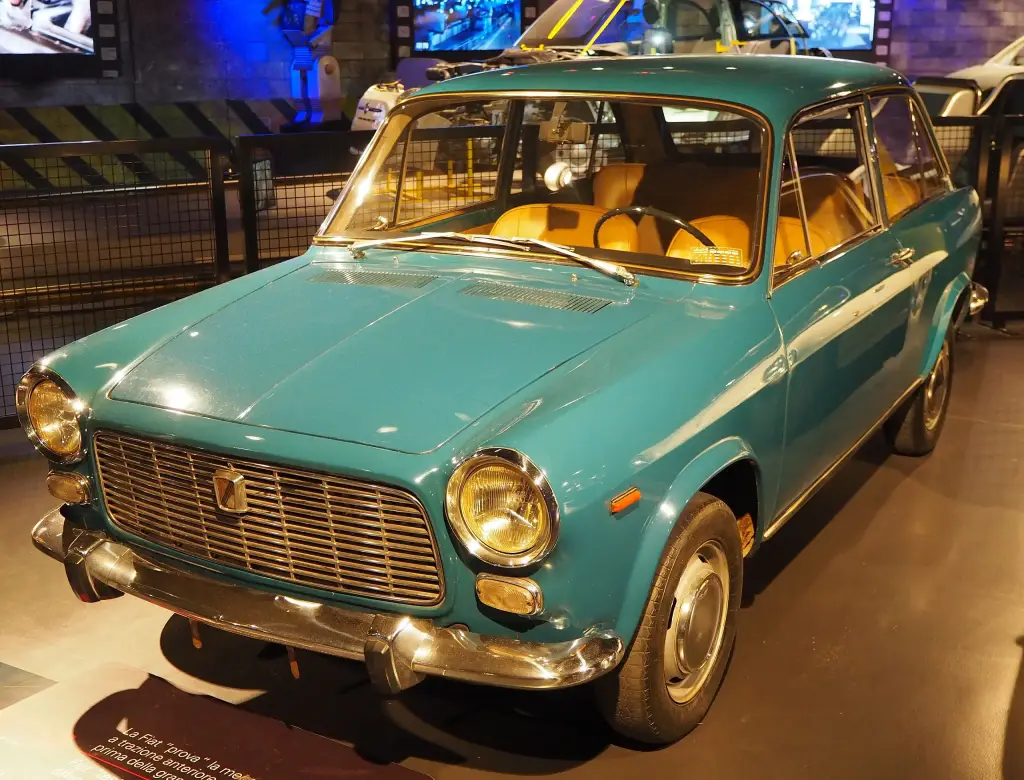
The driveline that became the standard
The Mini had shown what a transverse engine could do for space, but its gearbox sat in the engine sump, sharing the engine oil. Giacosa moved the gearbox out and mounted it end-on beside the engine, above the differential. To make the unit short enough to fit across the engine bay while still allowing the required steering angles, Ettore Cordiano designed a concentric hydraulic clutch release working through a hollow gearbox input shaft, doing away with the external lever and the thrust bearing. Because the final drive was offset from the centre line, the Primula had unequal-length driveshafts. Its front suspension used a single wishbone with an upper transverse leaf spring, which left room for the gearbox, and there was a dead axle at the rear. All four wheels had disc brakes, unusual in a small car at the time.
1968 update and reception
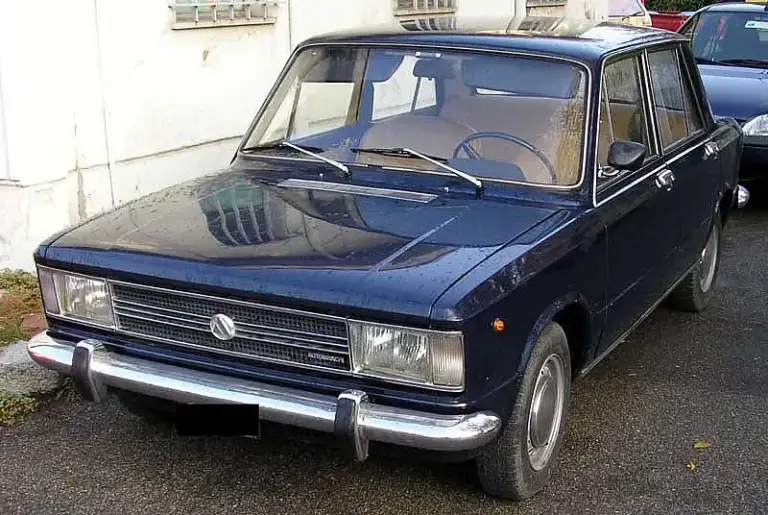
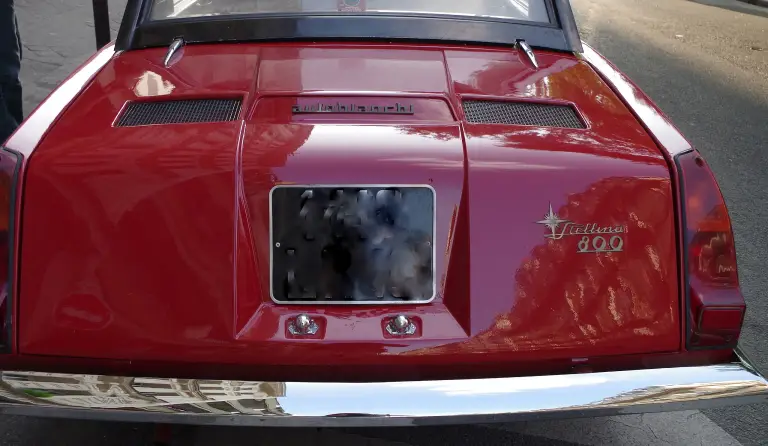
The Primula was well received and finished second in the 1965 European Car of the Year award, behind another front-wheel-drive car, the Austin 1800. That convinced Fiat to develop the concept, which led to the Fiat 128 of 1969. A restyle in 1968 changed the saloon’s grille and interior, gave the coupé a completely new tail without the tail fins, and brought Fiat 124 engines: 1,197 cc and 65 PS for the saloons, and the 1,438 cc unit of the 124 Special, quoted at 75 PS, for the Coupé S. The hatchback tailgate, little liked in Italy, was popular in France, where such practical bodies already had a following. Production ended in 1970 after 74,858 cars, with its spiritual successor the A111 already on the market; the Fiat 238 van was also derived from the Primula.
Design and features
- Transverse engine, gearbox end-on: the arrangement that replaced the Mini’s gearbox-in-sump and became universal.
- Concentric clutch release: a hydraulic piston inside a hollow input shaft, patented by Fiat through Ettore Cordiano’s design.
- Unequal-length driveshafts: a consequence of the offset final drive.
- Rack-and-pinion steering: the first Fiat-group model to use it.
- Disc brakes all round: unusual for a small Italian car of 1964.
Autobianchi Primula versions
- Three-door hatchback (1964–1968): the original body.
- Saloon and five-door hatchback (1965–1968): added a year after launch, in two-, three-, four- and five-door forms.
- Coupé (1965–1968): fastback body designed by Carrozzeria Touring, two doors only.
- Berlina 65C (1968–1970): restyled saloon with the 1,197 cc Fiat 124 engine.
- Coupé S (1968–1970): 1,438 cc and 75 PS, with a redesigned tail.
The Primula led to the larger A111 and to the smaller A112, and its driveline was the basis of the Fiat 128. More cars are in the Autobianchi collection.
Video: Autobianchi Primula
Video on YouTube.
Sources
- Autobianchi Primula, English Wikipedia: project history, driveline, reception
- Autobianchi Primula, Italian Wikipedia: versions, engines, production total, 1968 update