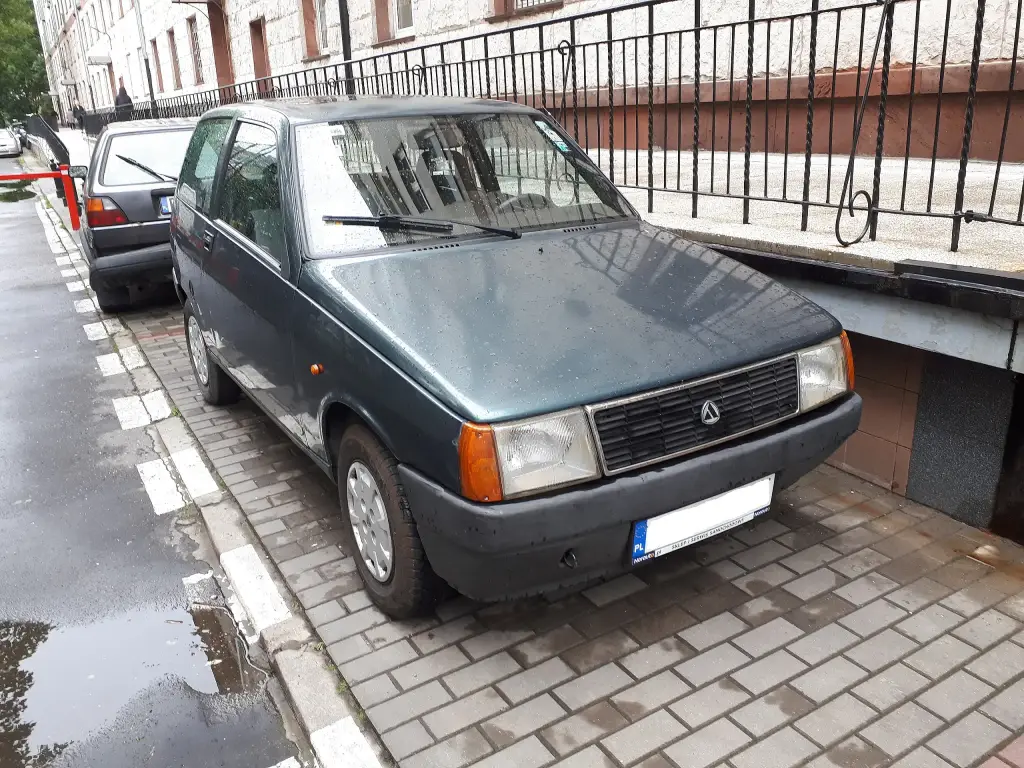
The Autobianchi Y10 is a three-door supermini made from 1985 to 1996 and sold as the Lancia Y10 in most export markets. It replaced the fifteen-year-old A112 as the upmarket small car of the Fiat group, with unusually high equipment for its class, a drag coefficient of 0.31 and a new rear suspension that was later adopted by the facelifted Fiat Panda. It was the last car to wear the Autobianchi badge.
Autobianchi Y10 at a glance
| Maker | Autobianchi, Desio; later Arese and Pomigliano |
|---|---|
| Production | 1985–1996 |
| Body | three-door hatchback |
| Engines | 999 cc FIRE and other four-cylinder petrol units; turbo and 4WD versions |
| Power | 45 hp in the entry-level Fire |
| Layout | front-wheel drive, four-wheel drive optional from 1986 |
| Drag coefficient | 0.31 |
| Transmission | five-speed manual, standard on all versions |
| Suspension | MacPherson front, Omega rigid axle rear |
| Fuel tank | 47 litres |
| Built | about 667,000 in the first seven years |
History of the Autobianchi Y10
Geneva 1985
The Y10 made its official debut at the Geneva Motor Show in March 1985 as the replacement for the A112, which by then had been on sale for fifteen years. Because the two cars looked so different, the A112 stayed in the range alongside the new model almost to the end of 1986. The Y10 was sold under the Autobianchi badge in Italy, France, Portugal and Japan, and as a Lancia elsewhere, a decision that owed something to Lancia’s British importer Lancar Ltd., which feared buyers would pronounce the name “white hen”. In France and Portugal the Autobianchi badge lasted until 1989. Despite strong interest at the show, early sales disappointed; in 1985 Autobianchi-Lancia built 63,495 cars, fewer than the 88,292 A112s of the previous year.
Design
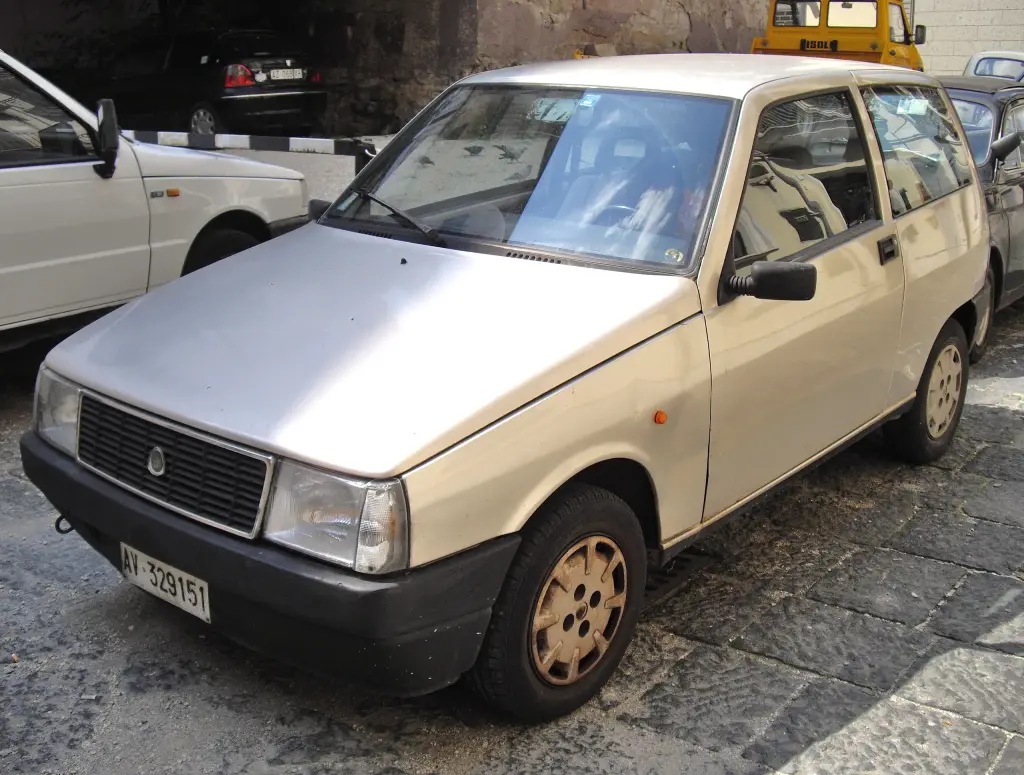
The shape was developed by the Fiat Centro Stile, then directed by Vittorio Ghidella, after proposals were commissioned from Pininfarina, Giorgetto Giugiaro and the in-house team; hundreds of sketches and scale models were produced from 1980, and the final in-house design was chosen as best suited to the car’s intended “select and elite” clientele. Its most distinctive feature is the truncated rear, with a tailgate cut off vertically and finished in matte black whatever the body colour. The wedge profile, sloping bonnet, steeply raked windscreen bonded with silicone resin rather than a rubber gasket, flush side glass, recessed door handles, the absence of roof gutters and a roofline that tapers gently to the rear gave a drag coefficient of 0.31. A single wiper served the windscreen, and the tailgate was hinged high on the roof, its pivot moved 11 cm inwards to improve access to the luggage compartment.
Range and the end of the marque
Mechanically the car used the Fiat Panda’s underpinnings, with a transverse engine, front-wheel drive and optional four-wheel drive, but its rear suspension was new: a rigid axle of arched “Omega” form, located by a central joint and two longitudinal links and sprung on coil springs instead of the Panda’s leaf springs. The Panda adopted the same axle with its 1986 Supernova update. The Y10 was also the first car to use Fiat’s new FIRE engine, a 999 cc unit of 45 hp in the entry-level Fire; trim names were officially written in lower case, as “fire”, “touring” and “turbo”. All versions had a five-speed gearbox and a servo-assisted brake system, and the interior was fully carpeted, with Alcantara optional on the dashboard, seats and door panels. The car was a runner-up for the 1986 European Car of the Year, losing to the Ford Scorpio. It was the last model built at the historic Desio plant, which closed in 1992, after which production moved to Arese and Pomigliano d’Arco. British sales were consistently weak and the car was withdrawn from the United Kingdom in late 1991; the Lancia Ypsilon carried the formula on in left-hand-drive markets.
Design and features
- Aerodynamic body: a drag coefficient of 0.31, remarkable for a small car in 1985.
- Matte black tailgate: a vertically cut rear end that became the car’s signature.
- Omega rear axle: a new rigid axle on coil springs, later used by the facelifted Fiat Panda.
- FIRE engine: the first car to use Fiat’s new Fully Integrated Robotised Engine, 999 cc and 45 hp.
- High equipment: five-speed gearbox and servo brakes on every version, with Alcantara and climate control optional.
Autobianchi Y10 versions
- Y10 Fire (1985–): entry-level model with the 999 cc FIRE engine and 45 hp.
- Y10 Touring: more highly equipped version.
- Y10 Turbo: turbocharged performance model.
- Y10 4WD (from 1986): four-wheel drive using the Panda-derived transmission.
- Lancia Y10: the same car under the Lancia badge in most export markets.
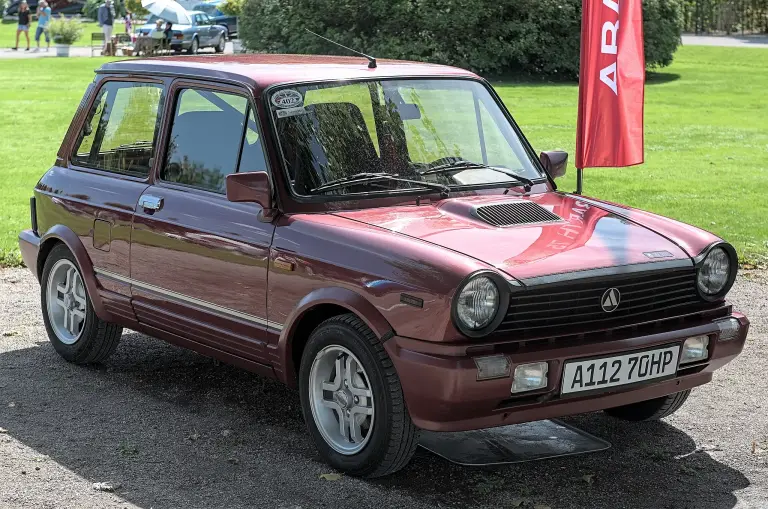
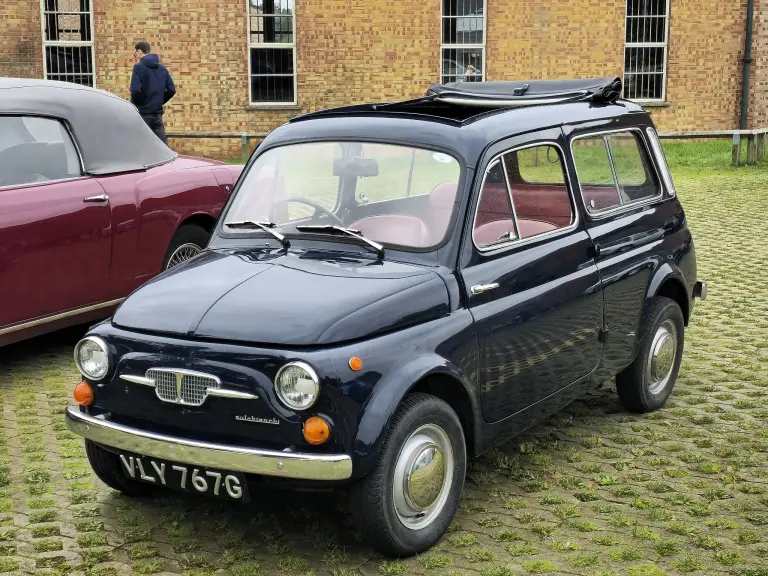
The Y10 replaced the A112 and ended the story that began with the Bianchina. More cars are in the Autobianchi collection.
Video: Autobianchi Y10 4WD
Video on YouTube.
Sources
- Autobianchi Y10, English Wikipedia: design, engines, markets, production
- Autobianchi Y10, Italian Wikipedia: badging, Desio plant, suspension, equipment