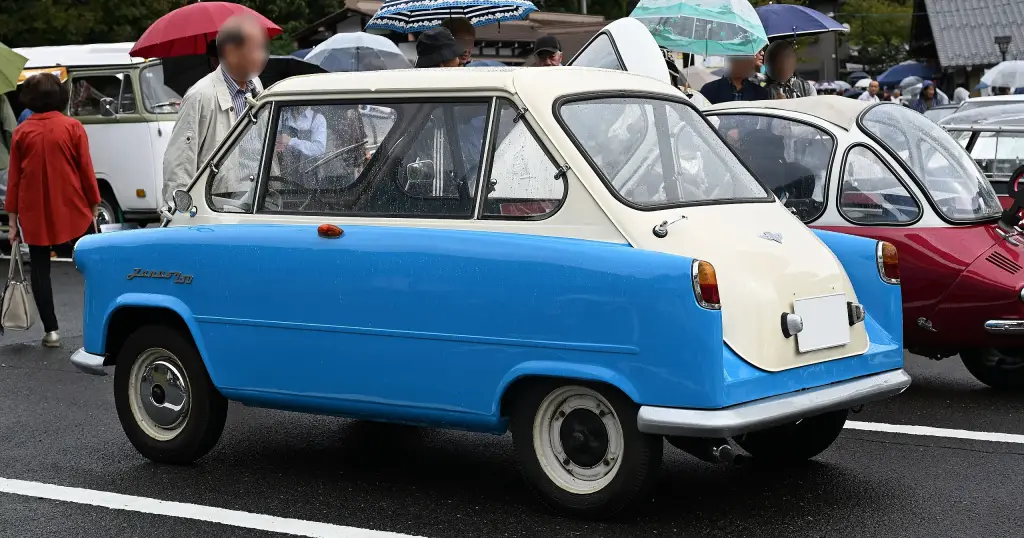
The Zündapp Janus is a four-seat microcar that the Zündapp works of Nuremberg built between 1957 and 1958. It was the only car the motorcycle manufacturer ever put into production, and it took its name from the Roman god shown with two faces looking in opposite directions.
Zündapp Janus at a glance
| Maker | Zündapp-Werke GmbH, Nuremberg |
|---|---|
| Production | June 1957 – 1958 |
| Built | 6,902 |
| Engine | 248 cc single-cylinder two-stroke, fan-cooled |
| Power | 14 hp |
| Layout | mid-engine, rear-wheel drive |
| Top speed | 80–85 km/h |
| Seats | four, back to back |
| Doors | one at the front, one at the rear |
| Price | 3,290 DM, plus 40 DM for the heater |
| Length | 2,890 mm |
| Weight | about 425 kg |
History of the Zündapp Janus
The Janus began at Dornier. After the war the aircraft firm was barred from building aircraft, so Claude Dornier pushed his son Claudius into new fields; the result was a four-seat car with two passengers facing forward and two facing back, using the enclosed space as efficiently as possible. The prototype was called the Dornier Delta, but Dornier calculated that building it in its own works would not pay.
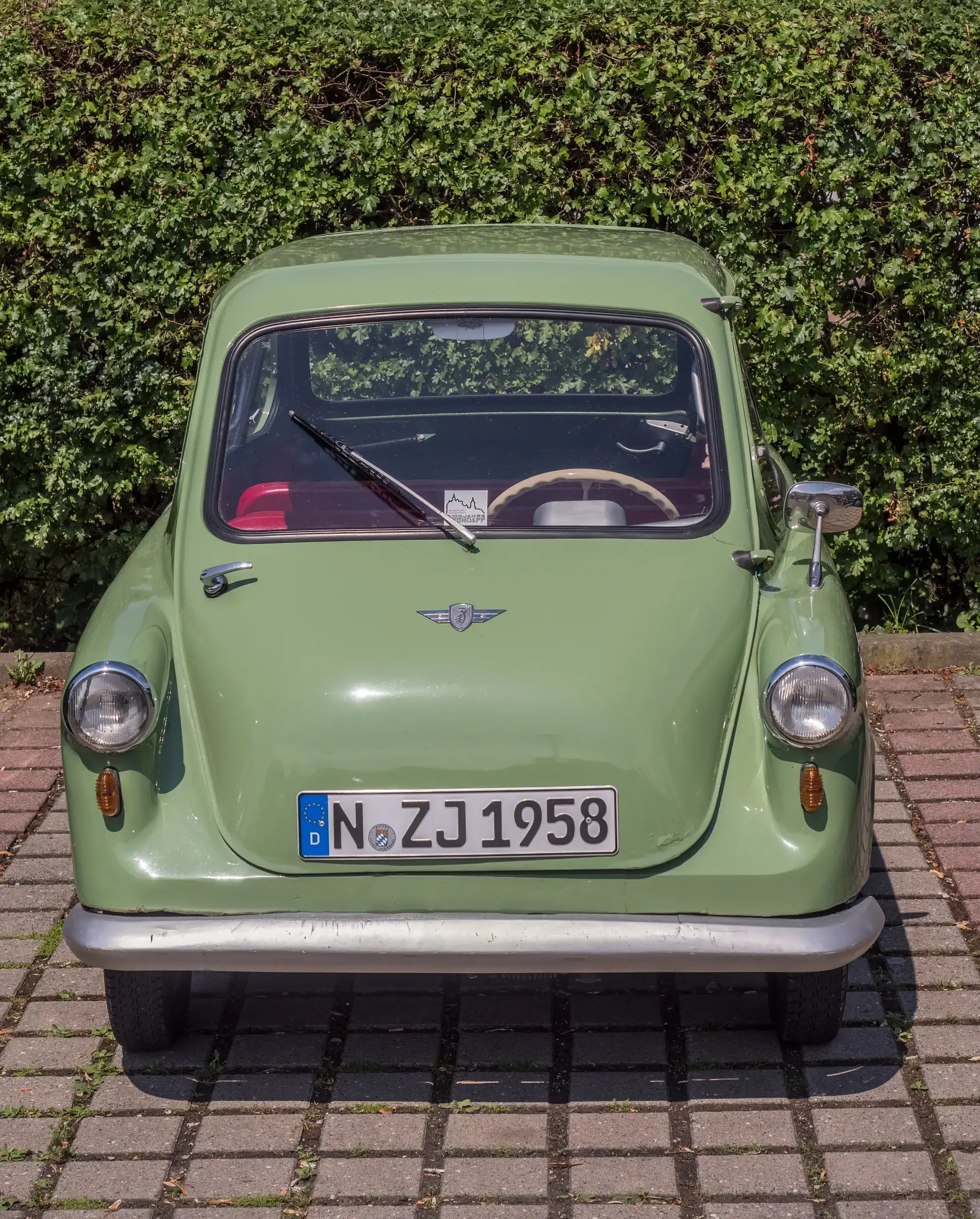
Zündapp, a motorcycle maker, had decided in 1954 to offer something more weatherproof than a motorcycle. It approached Kroboth, Brütsch and Fuldamobil before settling on the ready-developed Dornier design, which it licensed and refined with its own engineering. Production started in June 1957.
The layout gave the car its character. A front-opening door served the forward-facing pair, a rear-opening door the pair sitting backwards, and the two faces of Janus explained the name. The 248 cc two-stroke single sat ahead of the rear axle and drove through a four-speed gearbox with a reverse gear; a ratchet mechanism prevented skipping a gear. The front wheels hung on pushed leading arms, the rear axle was a swing axle, and all four wheels had hydraulically operated drum brakes with finned drums for cooling.
Sales were poor. Only 1,731 cars were made in the first six months. The engine was much lighter than the rear passengers, so the centre of gravity moved with the load and the handling advantages usually claimed for mid-engined cars did not appear. The Janus also lacked features that rivals already offered, and at 3,290 DM, plus 40 DM for the heater, it sat uncomfortably close to the 3,780 DM of a basic Volkswagen. By mid-1958, after 6,902 cars, Zündapp dropped the project and sold the Nuremberg factory to Bosch. The car later appeared in the 2011 animated film Cars 2, where Professor Zündapp is modelled on a 1957 Janus.
Design and features
- Back-to-back seating: rear passengers face backwards with limousine-like leg and head room, and the seat backs fold to make a 1,800 by 1,200 mm bed.
- Two doors, opposite ends: each row has its own entrance, so nobody climbs over anybody.
- Mid-mounted engine: balanced weight and maintenance under the car’s own roof, at the cost of noise and occasional fumes in the cabin.
- Four-wheel hydraulic brakes: still unusual in a small car of the late 1950s.
Zündapp Janus versions
- Janus (1957–1958): the only production version.
- Dornier Delta (1955–1956): the prototype from which the Janus was developed.
- Dornier Delta II (mid-1960s): a six-seat camping study by Dornier and Hymer that never passed the prototype stage.
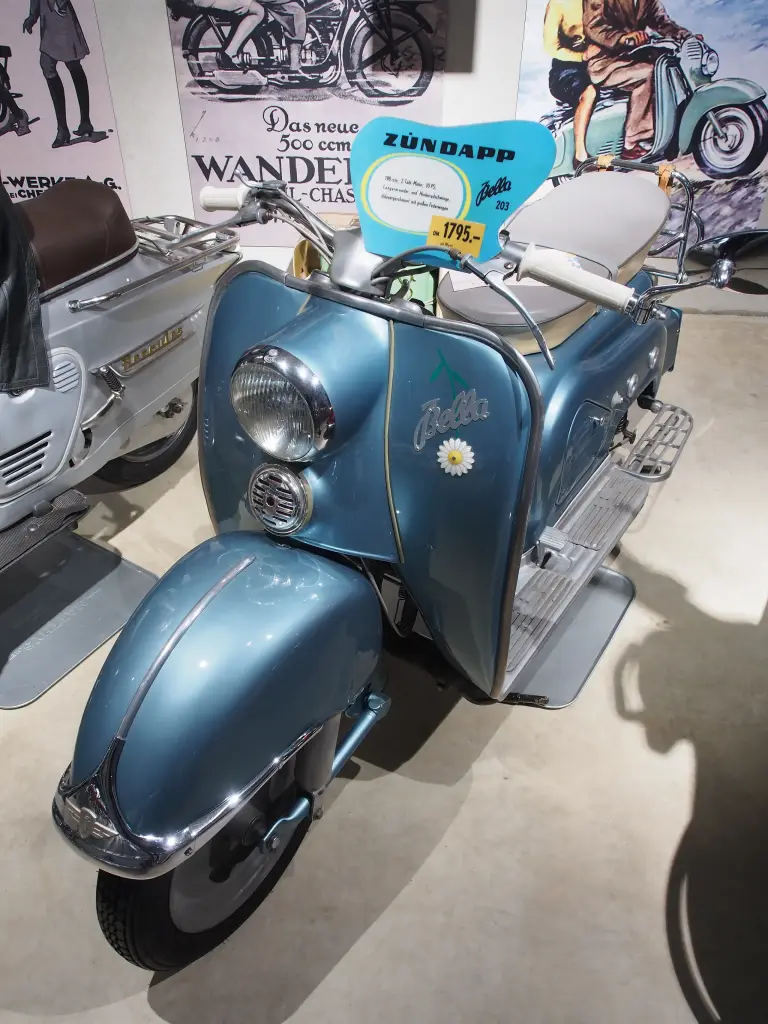
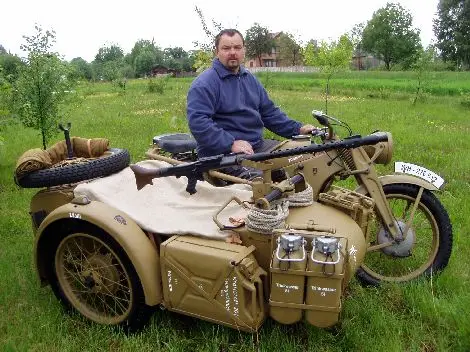
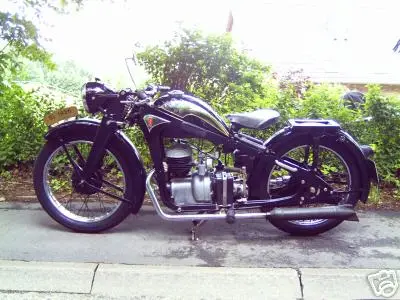
The Janus shared its showroom with the Bella scooter, then the company’s best seller. Before the war Zündapp had worked with Ferdinand Porsche on a “car for everyone” project; its motorcycle output is represented here by the K 800 and the KS 601. More models are in the Zündapp collection.
Sources
- Zündapp Janus, English Wikipedia: Dornier origin, design, production, handling
- Zündapp Janus, German Wikipedia: price, technical data, production, Bosch sale