The ZIL-133 was a three-axle 6×4 truck produced by ZiL from 1975. It was a higher-payload development of the ZIL-130, and in diesel form it became a front-engined alternative to the new KamAZ cab-over trucks.
ZIL-133 at a glance
| Maker | ZiL, Moscow |
|---|---|
| Production | 1975–2000, later versions to 2005 |
| Class | three-axle 6×4 cargo truck |
| Based on | ZIL-130 |
| Payload | 8 t (ZIL-133G1), 10 t (ZIL-133G2) |
| Petrol engine | ZIL-133 V8, 225 hp |
| Diesel engine | KamAZ-740 in the ZIL-133GYa |
| Diesel production | 105,759 built, 1979–1993 |
| Fuel use | 26.6 L/100 km diesel, 48.3 L/100 km petrol |
| Last versions | ZIL-133G40, ZIL-630900, ZIL-6309N0 |
History of the ZIL-133
An eight-tonne ZIL-130
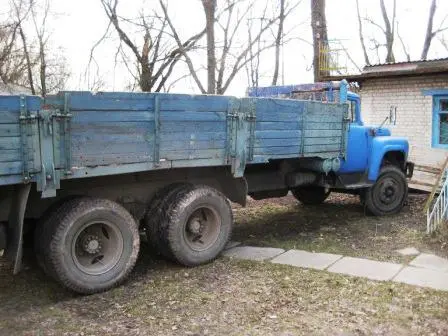
Development of an 8-tonne 6×4 truck on ZIL-130 components began in the early 1960s, and the first prototypes were ready in the middle of the decade. Serial production was postponed again and again, partly because the new KamAZ plant was to build a more modern cab-over truck of the same class; prototypes for that plant, the ZIL-170, were made at ZIL itself. In 1975 the decision was finally taken to build the ZIL-133G1 with a long wheelbase, two fuel tanks and a platform with three side boards. It was the largest petrol-engined civil truck in the Soviet Union.
Petrol and diesel
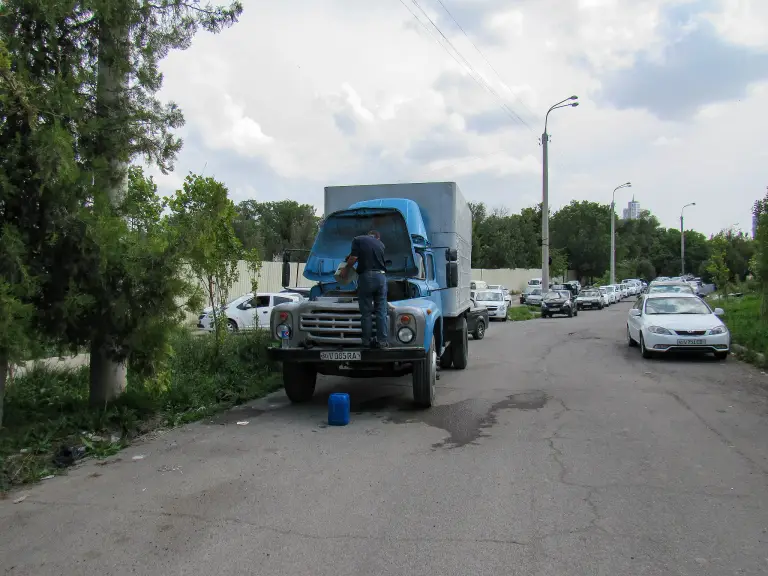
The petrol ZIL-133 engine was developed from the ZIL-130 V8, with 225 hp and a torque of 45 kgm, a compression ratio of 7.5 and a displacement of about 7 litres. The 1979 update, the ZIL-133G2, raised the payload from 8 to 10 tonnes and the gross weight to 17.1 tonnes. A diesel version with the KamAZ-740 engine had been designed in parallel and entered production in 1979 as the ZIL-133GYa; its longer bonnet, needed to fit the bigger engine, is easy to recognise. The diesel used 26.6 litres per 100 km at 60 km/h against 48.3 for the petrol truck, so the petrol G2 was dropped in 1983 and the GYa became the main product, mostly as a bare chassis for cranes and fire equipment.
Chassis
Because of its ZIL-130 parentage the ZIL-133 differs from it in only a few ways: a steering axle with a straight beam, two driven axles with a manually lockable inter-axle differential, and a longer frame with a different side-member section. The plant built a long list of versions: the ZIL-133V tractor, the short-wheelbase ZIL-133D and 133D1 dump chassis, the ZIL-144N agricultural vehicle with arched tyres, and the ZIL-133VYa tractor and dumper with the KamAZ diesel.
The end of the line
Production of the ZIL-133GYa continued until 14 April 1993. The model was then modernised with the cab of the new ZIL-4331 family as the ZIL-133G40, built until 2000, followed by the ZIL-630900 with the YaMZ-236A-1 engine and then the ZIL-6309N0, which met Euro 2 and was built until 2005. The last development, the ZIL-630980 with an MMZ D-260.E3 engine, was a single vehicle built in 2008.
Design and features
- Three axles: a 6×4 layout with a lockable inter-axle differential and a longer, stronger frame.
- Biggest petrol truck: the 225 hp ZIL-133 V8 made it the largest petrol-engined civil truck in the USSR.
- Diesel efficiency: the KamAZ-740 version used almost half the fuel of the petrol truck.
- Chassis specialist: most examples were supplied as bare chassis for cranes, fire engines and other equipment.
ZIL-133 versions
- ZIL-133G1 (1975): first production version, 8 tonne payload.
- ZIL-133G2 (1979): 10 tonne payload, petrol V8.
- ZIL-133GYa (1979–1993): diesel version with the KamAZ-740 and a longer bonnet.
- ZIL-133G40 (1992): modernised version with the ZIL-4331 cab.
- ZIL-630900 and ZIL-6309N0: final versions with YaMZ diesels, to 2005.
The ZIL-133 was developed from the ZIL-130, and its later cab came from the ZIL-4331. More trucks are in the ZiL collection.
Sources
- ZIL-133, English Wikipedia: history, engines, modifications
- ЗИЛ-133, Russian Wikipedia: production dates, payloads, diesel output