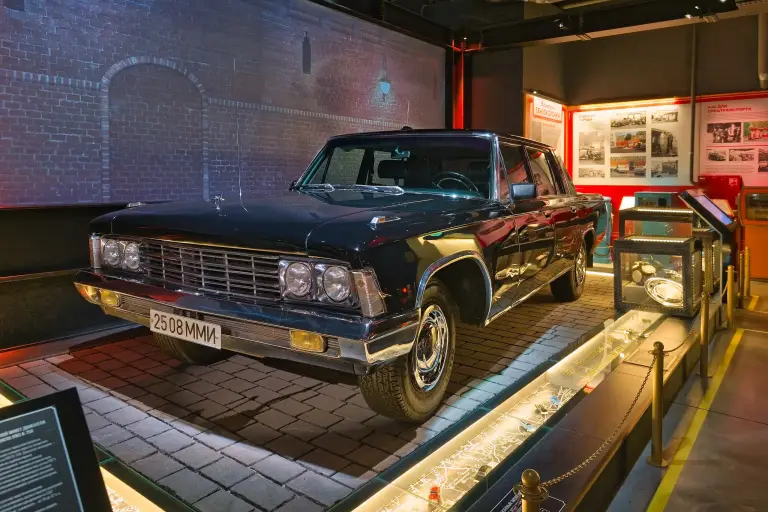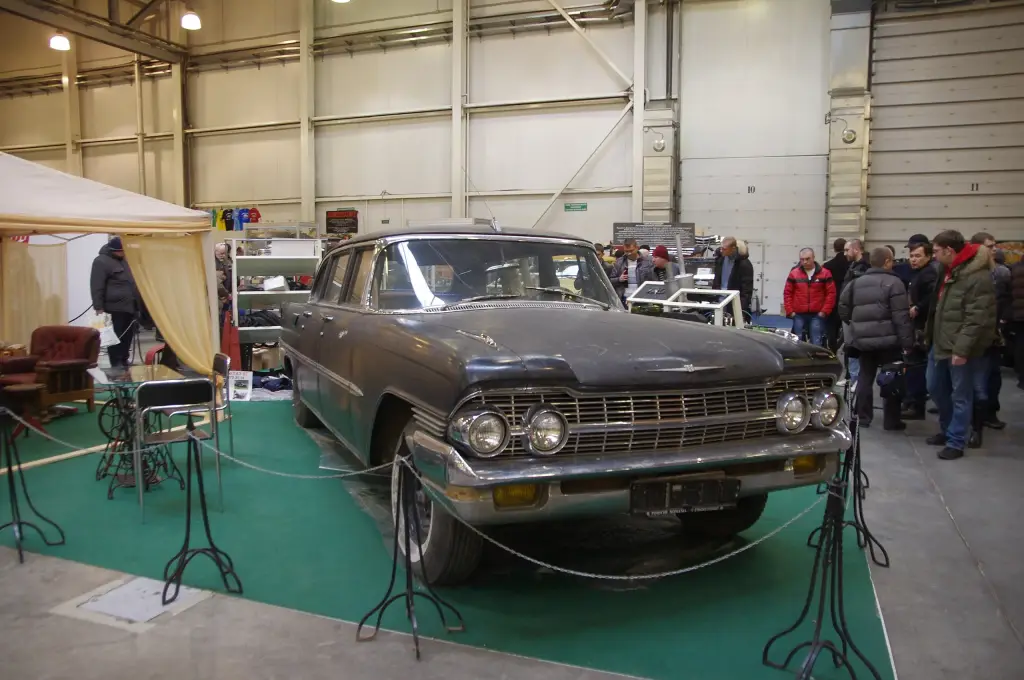
The ZIL-111 was a state limousine built by the Likhachov plant in Moscow from 1958 to 1967. It carried the top leadership of the Soviet Union, was built in small batches and was restyled in 1962 as the ZIL-111G with four headlamps.
ZIL-111 at a glance
| Maker | ZiL (Zavod imeni Likhachova), Moscow |
|---|---|
| Production | 1958–1967 |
| Role | state limousine for Politburo members |
| Engine | 5,980 cc V8, 200 hp |
| Transmission | automatic with hydraulic torque converter |
| Top speed | about 170 km/h |
| Bodies | limousine, long-wheelbase sedan, phaeton |
| Main versions | ZIL-111, 111A, 111V, 111G, 111D |
| Restyling | December 1962 (ZIL-111G) |
| Built | about 112 of all versions, 26 of them ZIL-111G |
| Replaced by | ZIL-114 in 1967 |
History of the ZIL-111
A new face for the state
The ZIS-110 of 1945 was the official car of the Soviet leadership, but by the early 1950s it looked dated beside the new American models. The plant built the ZIS-110M prototype in 1948 and then the ZIS-111 «Moskva» on a new chassis, a design by Valentin Rostkov that mixed elements of Cadillac, Packard and Buick. A rival proposal by Lev Yeremeyev of GAZ was judged more promising, and in 1956 a full-size clay model of his design was ready. The result kept the American layout of the period: panoramic glass, a separate frame, independent front suspension and a large V8.
Into production
The ZIL-111 entered production in 1958, and until 1961 it was built alongside the ZIS-110. The cabin was trimmed in leather and broadcloth with thick pile carpet and polished wood, and the equipment included ventilation and heating, a five-band radio controllable from the rear, electric windows, a vacuum screen wash and windscreen and front-door window defrosting. The 5,980 cc V8 produced 200 hp and drove through an automatic gearbox modelled on the Chrysler PowerFlite. Brakes were hydraulic drums with a vacuum servo, and the front suspension used coil springs and wishbones. At the 1958 Brussels world fair the car took a top prize.
Versions and restyling
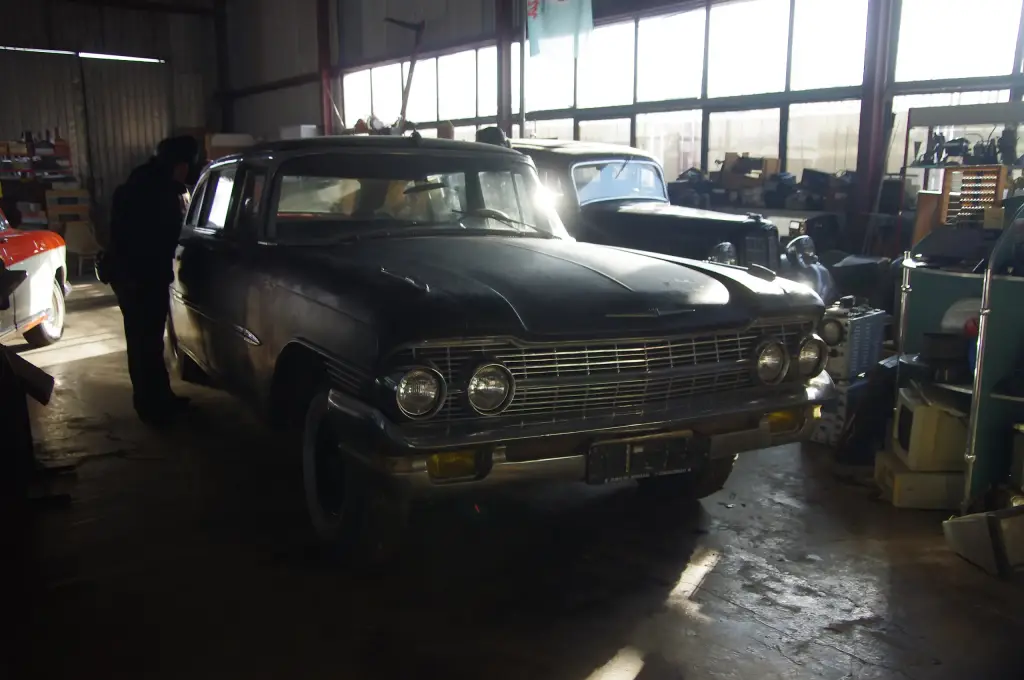
In 1959 the ZIL-111A appeared with a Soviet-built air conditioning unit, recognisable by its smaller rear window. The seven-seat ZIL-111V phaeton followed in 1960, with a hydraulically operated soft top and four side windows that disappeared into the doors; only 12 were built. In December 1962 the car was restyled as the ZIL-111G with a wide chrome grille and quad headlamps, the first four-headlamp system on a Soviet car, round tail lamps and arrow-shaped side mouldings. Air conditioning became standard, and the changes made the car 50 mm longer and 210 kg heavier. The open parade version, the ZIL-111D, was built from early 1963; about eight were made, all with microphones, and Fidel Castro received one as a gift.
End of the line
The ZIL-111 was normally available only as state transport for members of the Politburo. About 112 cars of all versions were built between 1958 and 1967, 26 of them ZIL-111Gs. The minibus ZIL-118 Yunost was developed from the same mechanicals. In 1967 the ZIL-114 replaced the limousine.
Design and features
- American-inspired styling: panoramic glass and a body in the tradition of mid-1950s Packard and Cadillac design.
- V8 and automatic: a 6-litre engine of 200 hp with a Chrysler-influenced automatic gearbox.
- State-only transport: reserved for Politburo members and built in batches of a few dozen.
- Luxury equipment: leather and broadcloth trim, a five-band radio, electric windows and air conditioning from 1959.
ZIL-111 versions
- ZIL-111 (1958–1962): the original limousine with twin headlamps.
- ZIL-111A (1959): version with air conditioning and a smaller rear window.
- ZIL-111V (1960): seven-seat phaeton with a hydraulic soft top, 12 built.
- ZIL-111G (1962–1966): restyled car with quad headlamps and standard air conditioning.
- ZIL-111D (1963): parade convertible on the 111G base, about eight built.
The ZIL-111 was replaced by the ZIL-114, and its mechanicals were used for the ZIL-118 Yunost minibus. More cars are in the ZiL collection.
Sources
- ZIL-111, English Wikipedia: production years, engine, equipment, variants
- ЗИЛ-111, Russian Wikipedia: development, ZIL-111G changes, ZIL-111D numbers