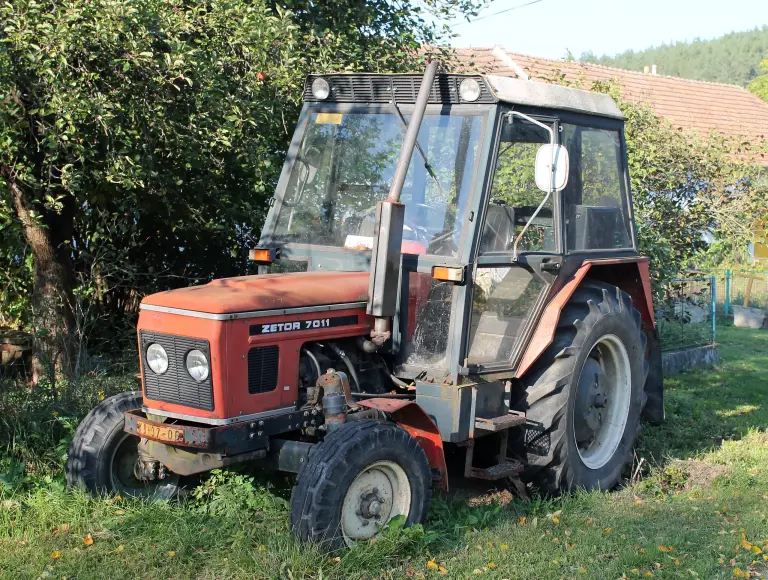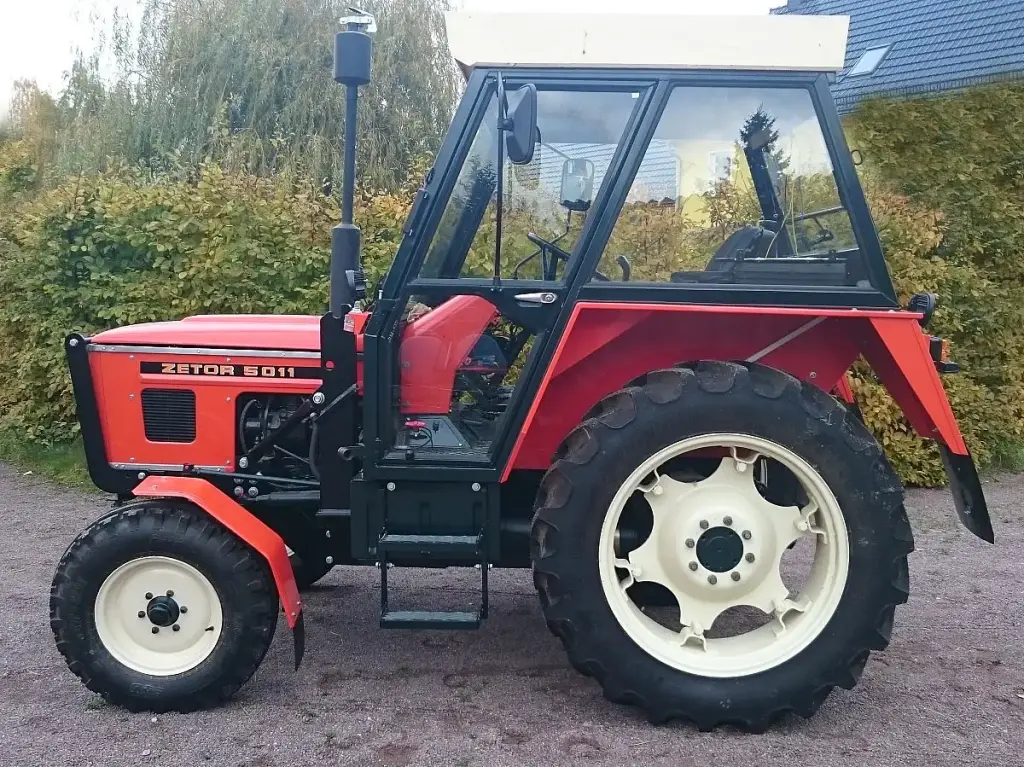
The Zetor 5011 was introduced in the fourth modernization of the Unified Series I, the family that carried Zetor through the 1960s, 1970s and 1980s. Launched in 1980–1981 with the 6011, 6045, 7011 and 7045, it was distinguished from earlier Zetors above all by its new design and cab.
Zetor 5011 at a glance
| Maker | Zetor, Brno, Czechoslovakia |
|---|---|
| Introduced | 1980–1981 |
| Family | Unified Series I, fourth modernization |
| Launched with | 6011, 6045, 7011, 7045 |
| Type number | about 50 hp |
| Suffix -11 | rear-wheel drive |
| Suffix -45 | front and rear drive |
| Where made | Brno-Líšeń, Czechoslovakia |
There is no separate Wikipedia article on the 5011; this page is based on the sections on Unified Series I in the Czech and English articles on the Zetor company.
History of the Zetor 5011
Zetor had introduced the idea of a unified range in the late 1950s, when the Unified Series I was launched with the 2011, 3011 and 4011, two-, three- and four-cylinder tractors built from a large number of shared parts. The series was then modernized step by step rather than replaced. The first modernization came in 1968–1969 with the 2511, 3511, 4511 and 5611; the second in 1972 with the 4712, 5711 and 6711; the third in 1977–1978 with the 4911, 5911 and 6911.
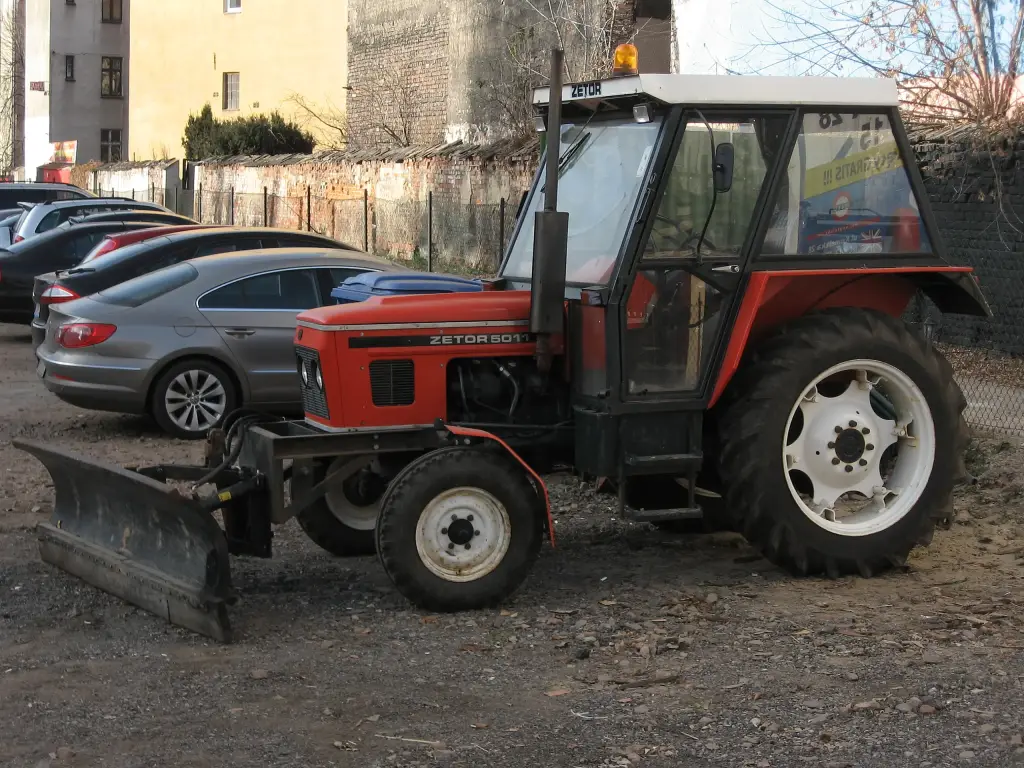
The fourth modernization
The fourth modernization of 1980–1981 produced the 5011, 6011, 6045, 7011 and 7045. Czech sources single out the visual and ergonomic changes: these tractors had a new, modern body design and a redesigned cab interior, and their hygienic conditions for the driver were improved. Mechanically they continued the established Unified Series I layout, so an owner moving from a 5911 or 6911 to a 5011 found the same basic tractor under new clothes.
Reading the type number
Zetor’s type numbers of the period describe the tractor. The first two or three digits give the approximate power in horsepower, so a 5011 points to about 50 hp. The third digit gives the drive layout, with 4 meaning both axles driven, and the fourth gives the intended use, with 1 for a universal tractor, 2 for cultivation, 3 for narrow rows, 5 for front-wheel drive, 6 for half-track and 7 for hill farms. In practice the system was simplified: the ending -11 means rear-wheel drive and -45 means both axles driven. A 5011 is therefore a roughly 50 hp universal tractor with rear-wheel drive, while a 5045 of the same generation would have had four-wheel drive.
Place in the range
The 5011 sat at the light end of the 1980 generation, with the 6011, 7011 and their four-wheel-drive counterparts above it. It was followed in 1984 by the 5211 and 5245 of the fifth modernization, and in 1986 by the 7711 and 7745. The line was finally replaced by the 3320–6340 range of Unified Series III, launched in 1992. Many 5011s are still at work in central Europe, and the type remains one of the most familiar Czech tractors of its era.
Design and features
- New design: the fourth modernization brought restyled bodywork and a modern cab interior to the Unified Series I.
- Driver comfort: hygienic conditions in the cab were specifically improved compared with earlier Zetors.
- Simplified numbering: -11 for rear-wheel drive, -45 for four-wheel drive, with the first digits giving approximate horsepower.
- Proven family layout: the 5011 kept the mechanical layout of the tractors it replaced.
- Part of a generation: launched with the 6011, 6045, 7011 and 7045 in 1980–1981.
Zetor 5011 versions
- Zetor 5011: the roughly 50 hp universal tractor with rear-wheel drive.
- Zetor 6011 and 7011: the larger two-wheel-drive models of the same modernization.
- Zetor 6045 and 7045: four-wheel-drive versions of the 6011 and 7011.
- Later 5211 and 5245: the fifth modernization of 1984, which followed the 5011.
The 5011 came after the 2511 and 3511 and was followed by the Zetor 5211 and the 7011 and 7045. More tractors are in the Zetor collection.
Video: New arrival: Zetor 5011
Video by Rolnik2000 on YouTube.
Sources
- Zetor, Czech Wikipedia: the five modernizations of Unified Series I, the type-numbering system
- Zetor, English Wikipedia: origin of the unified range and later series