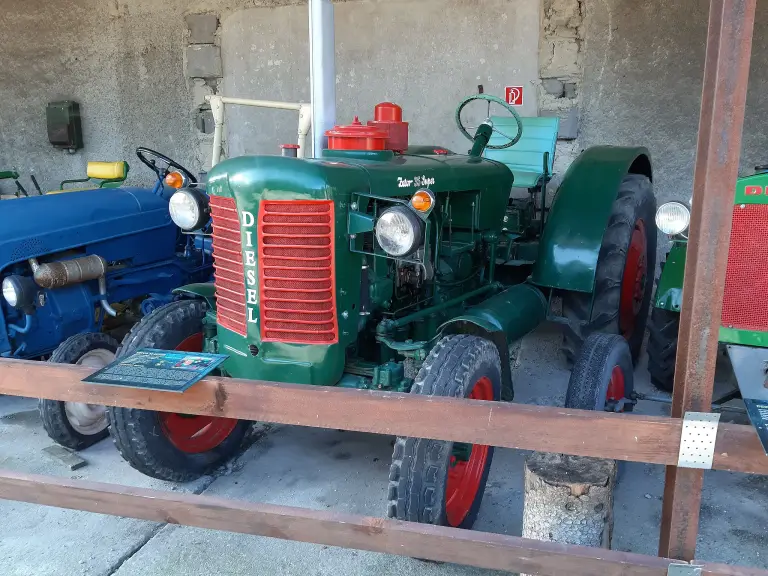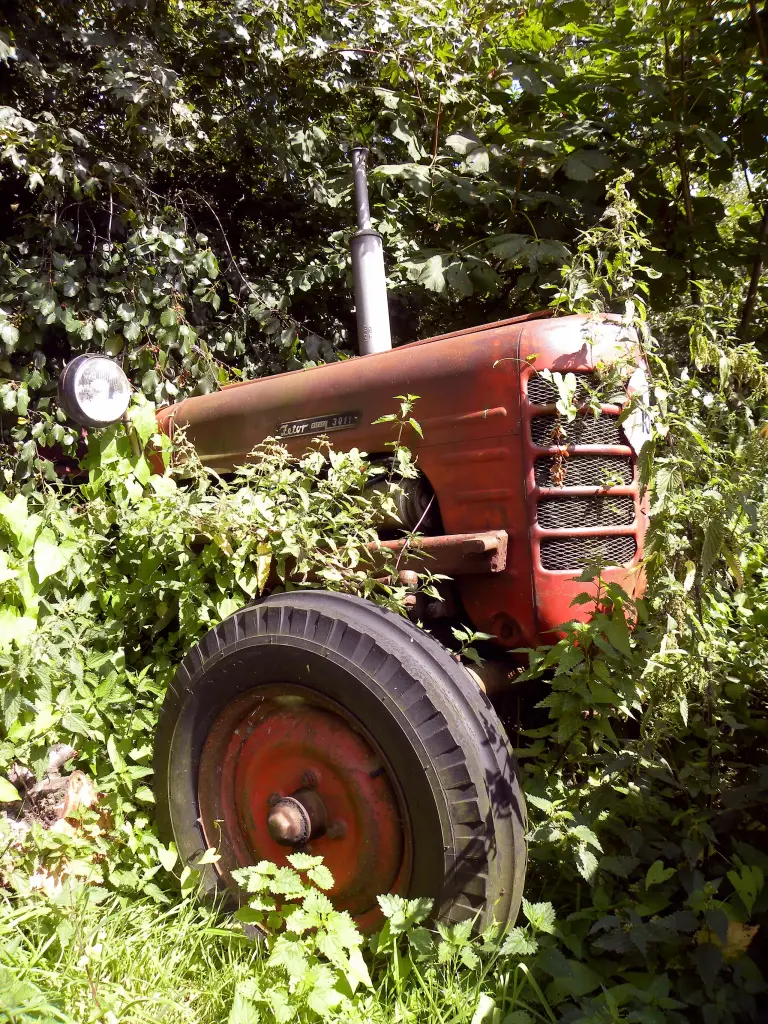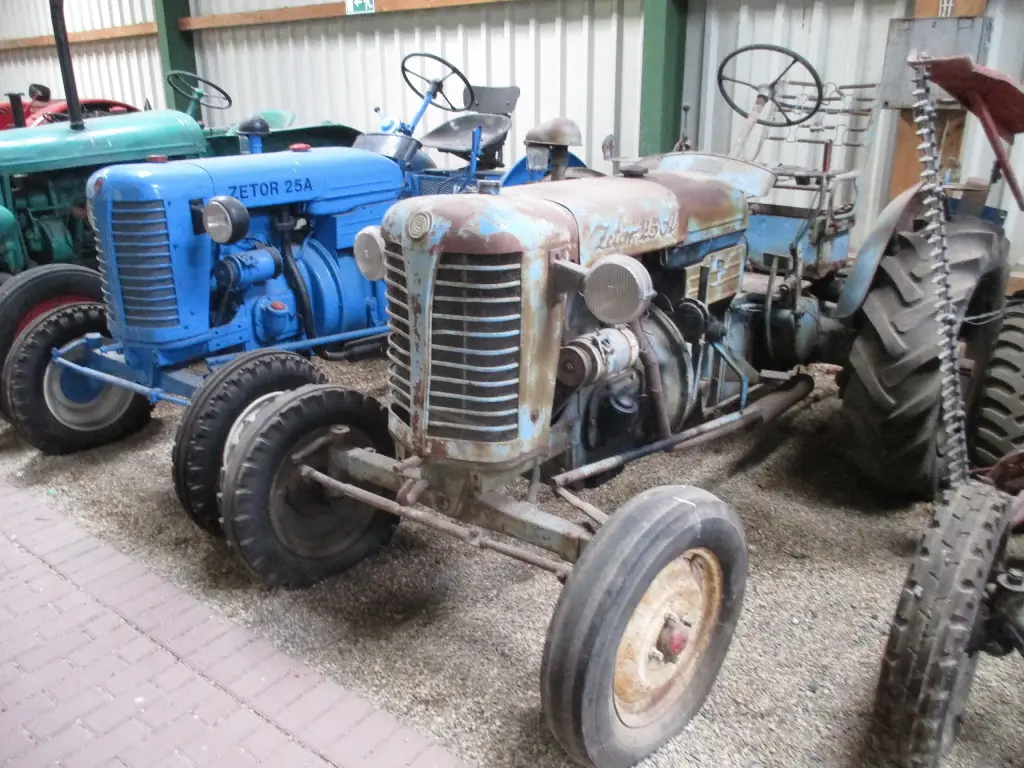
The Zetor 25 was the first tractor produced under the Zetor name. Designed at Zbrojovka Brno by František Musil and Jaroslav Miksch, it went into series production in August 1946 and was built, in increasingly developed forms, until 1961.
Zetor 25 at a glance
| Maker | Zbrojovka Brno / Zetor, Brno, Czechoslovakia |
|---|---|
| First prototype | 14 November 1945 |
| Series production | from 17 August 1946 |
| Production to | 1961 |
| Built | 158,570, of which over 97,000 exported |
| Engine | two-cylinder water-cooled diesel, 2,078 cm³ |
| Power | 26 hp at 1,800 rpm (25A and 25); 24 hp at 1,600 rpm (25K) |
| Gearbox | six speeds, three field and three road |
| Weight | 1,826 kg (25A) |
| Length | 3,200 mm |
| Ploughing consumption | 4 l/h, about 14.7 l/ha |
History of the Zetor 25
The tractor was developed inside Zbrojovka Brno, the Brno arms factory that had turned to peacetime products after the Second World War. Design work under František Musil began in the summer of 1945, and the first working prototype was finished on 14 November 1945. The first six tractors were handed over to customers on 15 March 1946, and by the following month another fifty had been built. The Zetor trademark itself was registered only in August 1946, after which the tractor was shown at the Prague trade fair and put into series production.
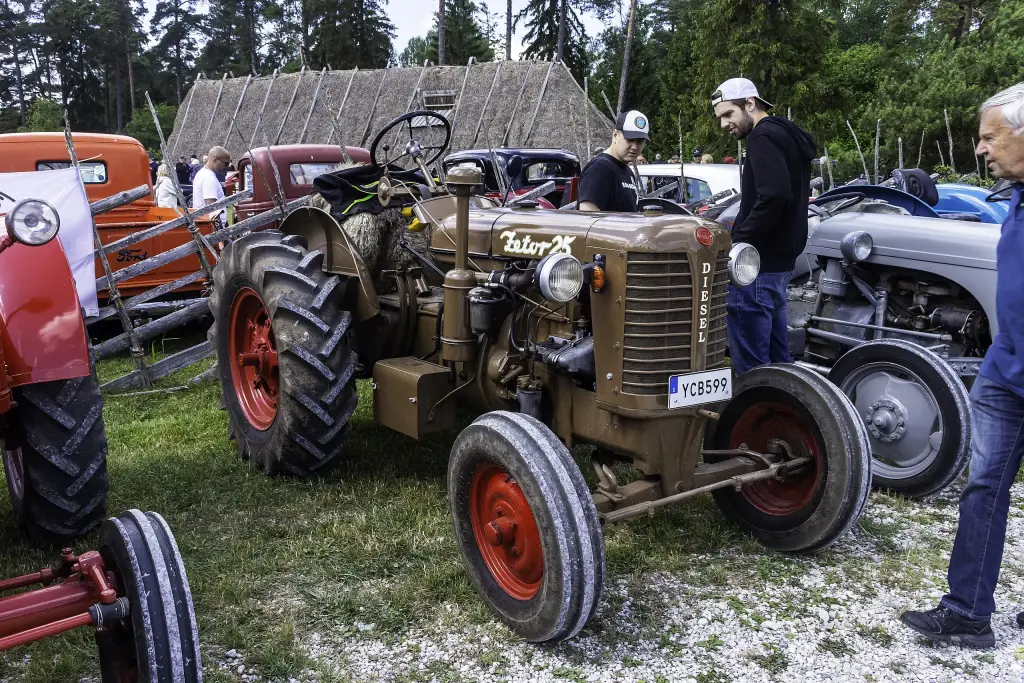
Types
The basic Zetor 25 was a general-purpose tractor supplied without lower links or a starter; it was later replaced by the 25A. The 25A was the aggregation version, intended as a hauling or carrying unit for agricultural machinery and implements. The 25K was a cultivation tractor with hydraulic equipment for mounted implements. The three differed mainly in front axle, rear tyre size, maximum engine speed, gear ratios and hitch design. A half-track version, the 25A Z-76, was also built, and the 25H orchard tractor was a conversion of used 25K machines carried out by the machine and tractor station at Hodonín rather than by the factory.
In service
The Zetor 25 spread quickly. By the end of 1947 some 3,400 had been built, about 60 per cent of all tractors then working in Czechoslovakia, and from 1947 the type was exported to Denmark, the Netherlands, Germany and Scandinavia. In 1952 production moved to the new Zetor works at Líšeń in Brno. The tractor had a power take-off and, on request, a pulley for driving farm machinery, and implements on the three-point linkage were raised by the tractor’s hydraulic system. The 25A and 25K remained in production until 1961, when the type was replaced by the 2011 and 2023 of the new Unified Series I.
Design and features
- Two-cylinder diesel: a water-cooled Zetor engine of 2,078 cm³ with 26 hp at 1,800 rpm in the 25A, giving about 4 l/h in ploughing.
- Six-speed gearbox: three field and three road ratios; on the basic 25 the sixth gear was blocked.
- Three-point linkage with hydraulics: mounted implements could be carried as well as towed.
- Factory options: a side mower, steel ploughing wheels for wet or loose soil, wheel weights and an air reservoir with compressor for trailer air brakes.
- Export success: over 97,000 of the 158,570 built were sold abroad.
Zetor 25 versions
- Zetor 25: the basic universal type, without lower links or starter, with the sixth gear blocked.
- Zetor 25A: aggregation version, 26 hp, 1,826 kg, 6-speed gearbox.
- Zetor 25K: cultivation tractor, 24 hp at 1,600 rpm, wider and taller than the 25A.
- Zetor 25A Z-76: half-track version.
- Zetor 25H: orchard conversion of the 25K made at Hodonín.
The 25 was followed by the more powerful Zetor 35 and, from 1960, by the tractors of the Unified Series I. More tractors are in the Zetor collection.
Video: ZETOR 25 S – first start and first drive
Video by MINITRACTORS – TRAKTORTURIST on YouTube.
Sources
- Zetor Z-25, Czech Wikipedia: development, types, technical data
- Zetor 25, Slovak Wikipedia: production figures, equipment, replacement
- Zetor 25, Hungarian Wikipedia: export markets, move to Líšeń
- Zetor, Czech Wikipedia: dating of the prototype and series production