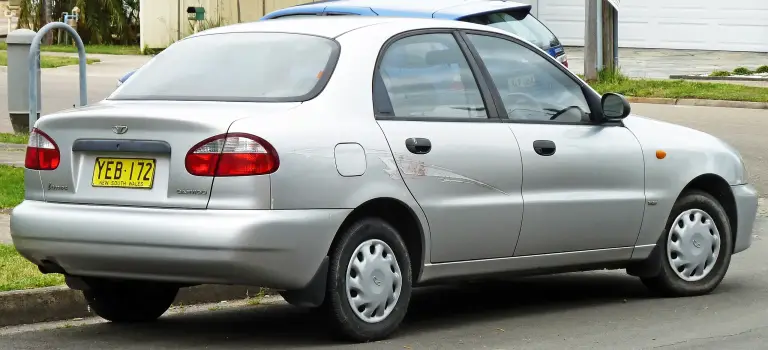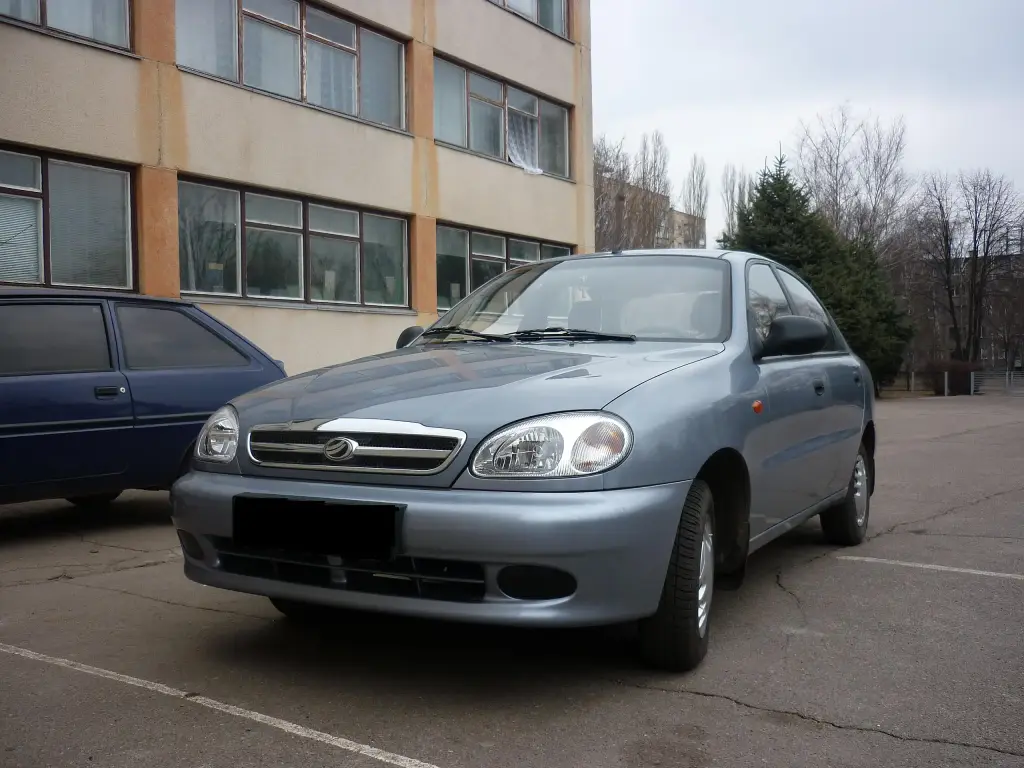
The ZAZ Chance is the name under which the Daewoo Lanos was sold in Russia by ZAZ. The Lanos itself was designed by Giorgetto Giugiaro, produced by Daewoo from 1997 to 2002 and then built under licence in several countries until 2017.
ZAZ Chance at a glance
| Model | ZAZ Chance, the Russian-market Lanos |
|---|---|
| Base car | Daewoo Lanos, designed by Giorgetto Giugiaro |
| Daewoo production | 1997–2002 |
| Licensed production | continued after 2002, ending in 2017 |
| Body styles | three-door hatchback, five-door hatchback, four-door sedan |
| Panel van | added by ZAZ in 2006 |
| Model codes | T100 at launch, T150 for the 1999 update |
| Engines | 1.3, 1.5 and 1.6-litre E-TEC four-cylinders |
| Suspension | based on the Daewoo Nexia, derived from the Opel Kadett E |
| Predecessor | Daewoo Nexia |
| Replaced by | Daewoo Kalos |
Based on one source. The ZAZ Chance is the Russian-market version of the Daewoo Lanos, and the English Wikipedia article on the Lanos covers the design, engines and production; details specific to the ZAZ-built Chance are not given there.
History of the ZAZ Chance
Daewoo started work on the Lanos in autumn 1993 as a replacement for the Nexia. The project compared rival cars from 20 manufacturers, among them the Toyota Tercel, Opel Astra and Volkswagen Golf, and four design studios produced clay models. The proposal by Giorgetto Giugiaro was chosen, and Italdesign was commissioned to develop the final exterior and interior styling. The programme took only 30 months from approval to large-scale production; the sedan was launched in South Korea in November 1996, and European production began in 1997.
The same car was marketed under many names: Daewoo Sens, ZAZ Sens and ZAZ Lanos in Ukraine, Doninvest Assol and ZAZ Chance in Russia, FSO Lanos in Poland, and Chevrolet Lanos in Ukraine, Russia and Egypt. The Chance therefore shares its body, suspension and engines with the Lanos. The chassis descends from the Daewoo Nexia and, before that, the Opel Kadett E, while the engines were E-TEC four-cylinders of 1.3, 1.5 and 1.6 litres. The 1.6 DOHC version had larger front brakes, a larger master cylinder and stiffer front springs than the smaller-engined cars.
Daewoo’s own production ended in 2002, after which the Lanos was assembled under licence in several countries. ZAZ added a panel van in 2006, and the family remained in production until 2017. The trim range ran from the basic S through the SE and SX to the SPORT of 2001–2002, which brought red and black leather seats, a silver dashboard trim and window switches moved from the centre console to the doors.
Design and features
- Giugiaro styling: Italdesign developed the production body after the design competition.
- Russian-market name: the Chance is the same Lanos sold by ZAZ in Russia, alongside the Ukrainian ZAZ Sens.
- Three body styles: three-door and five-door hatchbacks and a four-door sedan, plus a ZAZ-built panel van from 2006.
- E-TEC engines: 1.3, 1.5 and 1.6-litre four-cylinders, with the 1.6 DOHC as the most powerful.
- Kadett-derived chassis: the suspension came from the Nexia, itself based on the Opel Kadett E.
ZAZ Chance versions
- ZAZ Chance hatchback: the three-door and five-door Lanos bodies.
- ZAZ Chance sedan: the four-door body that opened the range in 1996.
- Panel van (2006): a commercial version built by ZAZ.
- SPORT (2001–2002): the final trim with leather seats and silver dashboard trim.
The Chance is the Russian-market twin of the ZAZ Sens and shares its platform with the ZAZ Slavuta and ZAZ Tavria. More cars are in the ZAZ collection.
Sources
- Daewoo Lanos, English Wikipedia: development, names, engines, trims, end of production