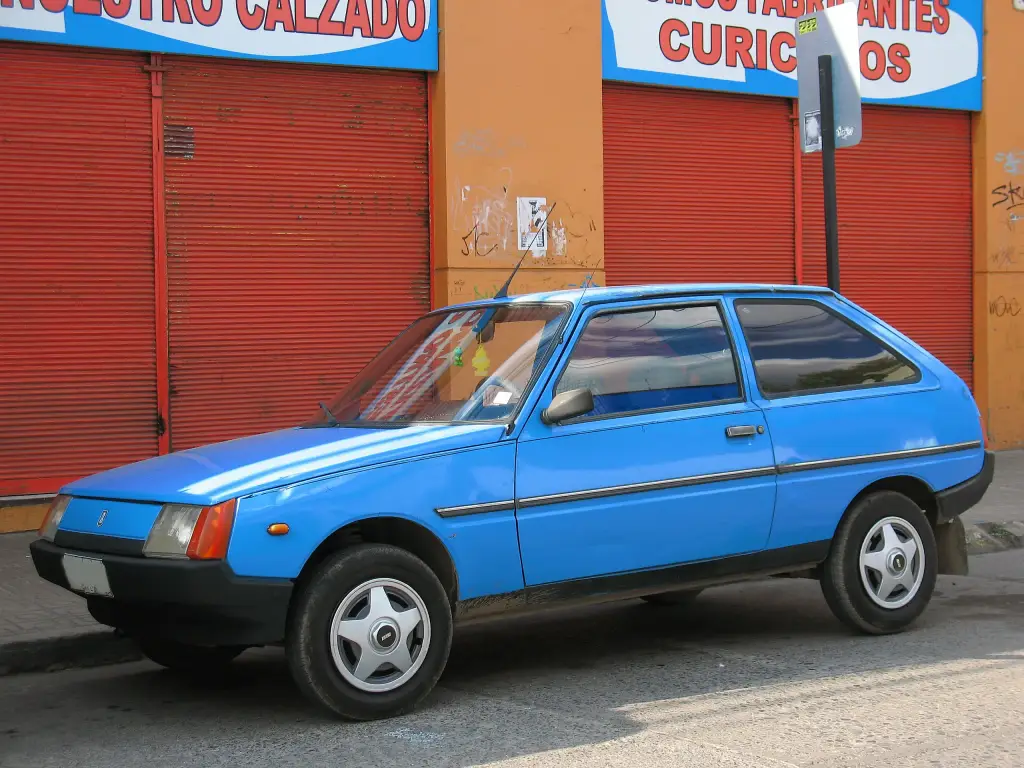
The ZAZ Tavria was a family of front-wheel-drive subcompacts that replaced the rear-engined Zaporozhets at ZAZ. Its first member, the three-door ZAZ-1102 hatchback, appeared in 1987 and introduced a water-cooled engine, MacPherson front suspension and a modern layout to the Zaporizhzhia plant.
ZAZ Tavria at a glance
| Maker | ZAZ, Zaporizhzhia, Ukrainian SSR and later Ukraine |
|---|---|
| Production | 1987–2007, with last batches in 2008–2009 |
| First model | ZAZ-1102 Tavria, three-door hatchback |
| Layout | front-wheel drive, front engine |
| Engine | water-cooled MeMZ-245 four-cylinder |
| Front suspension | independent MacPherson struts |
| Rear suspension | twist beam |
| Name | adopted in 1989, after Tauric, the Greek name of Crimea |
| Derivatives | 1103 Slavuta, 1105 Dana, 11055 Pick-Up |
| Variants | more than 40 modifications of the base car |
| Exports | Chile, Colombia, Argentina in the early 1990s |
History of the ZAZ Tavria
In the 1970s several experimental hatchbacks and two-door sedans were built in the Soviet Union, and the Tavria programme continued that search for a modern small car. The ZAZ-1102 Tavria, a three-door hatchback, was released in 1987 as the first model of the range and the first front-wheel-drive car from ZAZ. It had independent MacPherson strut suspension at the front and a twist-beam rear axle, while the water-cooled MeMZ-245 four-cylinder engine marked a major break with the air-cooled V4 of the Zaporozhets. The name Tavria was chosen in an internal factory contest in 1989 and refers to Tauric, the ancient Greek name of Crimea.
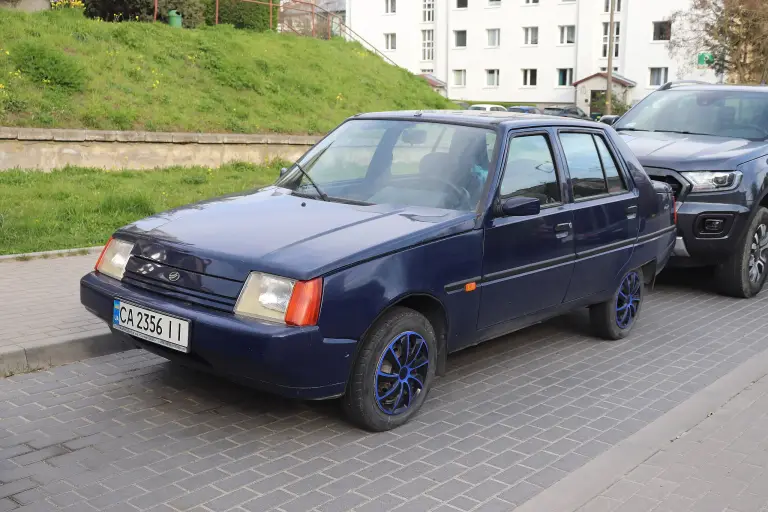
The 1102 became the basis of a whole line: more than 40 modifications of the base model, plus separate models on the same platform. These were the five-door liftback ZAZ-1103 Slavuta, the five-door station wagon ZAZ-1105 Dana and the commercial ZAZ-11055 Tavria Pick-Up. In 1999 the Tavria Nova appeared, a modification developed jointly with Daewoo to eliminate early deficiencies and improve reliability; it received a revised grille, headlights and tail lights, new wheel caps, a third brake light and a reinforced body that reduced noise in the cabin.
Mass production of the 1102 hatchback ended in 2007, although at least two more batches were assembled in 2008 and 2009. The Slavuta saloon and the Pick-Up outlived it, with the Slavuta built until 2011. The Tavria was positioned as an economy car and was exported to several markets: it was sold in Chile as the Lada Tavria in the early 1990s, in Colombia between 1992 and 1995, and three-door hatchbacks went to Argentina from 1992 to 1995. In 1989 the Soviet Ministry of the Automobile Industry made a promotional video for the Western market that won the Cannes Bronze Lion for trade advertising.
Design and features
- Front-wheel drive: a complete change of layout from the rear-engined Zaporozhets.
- Water-cooled MeMZ-245 engine: the first liquid-cooled engine in a ZAZ car.
- MacPherson struts and a twist beam: a modern chassis for a small economy car.
- Hatchback body: practical loading through a large rear door.
- Wide family: the platform supported a liftback, a wagon and a pickup.
ZAZ Tavria versions
- ZAZ-1102 Tavria (1987–2007): the three-door hatchback that started the range.
- ZAZ-1102 Tavria Nova (1999–2007): the Daewoo-assisted update with new lights and a strengthened body.
- ZAZ-1105 Dana (1992–1999): a five-door wagon, with a commercial van from 1996.
- ZAZ-11055 Tavria Pick-Up: a commercial pickup with a fibreglass cargo compartment and a 420 kg payload.
- Exports: Lada Tavria in Chile, Tavria in Colombia and Argentina.
The Tavria replaced the rear-engined ZAZ-968 and shared its platform with the ZAZ Slavuta; the Lanos-based ZAZ Sens came later. More cars are in the ZAZ collection.
Video: ZAZ – Tavria Lux Engine Starting
Video by BareszFilm on YouTube.
Sources
- ZAZ Tavria, English Wikipedia: 1102, Nova, Dana, Pick-Up, exports
- ЗАЗ, Ukrainian Wikipedia: factory history and the end of the Zaporozhets line