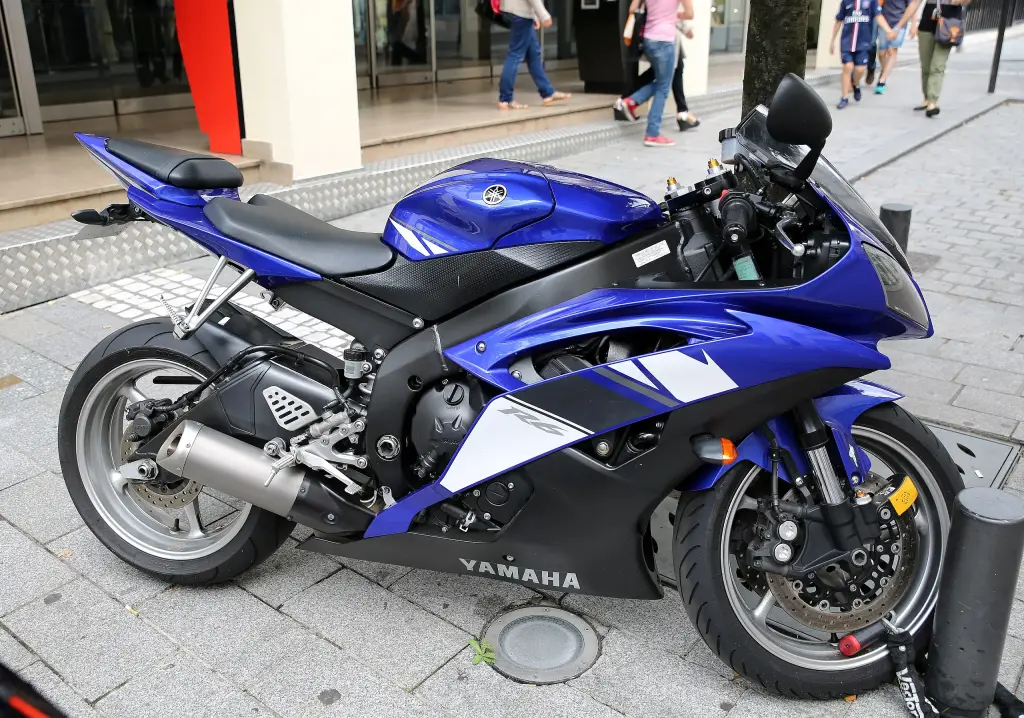
The Yamaha YZF-R6 is a 600 cc supersport motorcycle that Yamaha produced from 1999 to 2020. From 2021 it has been available only as a race-only machine in most markets, and it remains the benchmark of the class.
Yamaha YZF-R6 at a glance
| Maker | Yamaha Motor Company |
|---|---|
| Class | 600 cc supersport motorcycle |
| Production | 1999–2020 |
| From 2021 | race-only specification in most markets |
| First engine | over 108 hp |
| Claim to fame | first 600 cc production four-stroke over 100 hp |
| 2003 update | fuel injection and a new headlight design |
| 2006 update | YCC-T ride-by-wire and slipper clutch |
| 2008 update | YCC-I variable intake and revised Deltabox frame |
| 2017 update | R1-inspired aerodynamics, ABS, riding modes and traction control |
| Redline claim | 17,500 rpm advertised, 15,800 rpm actual |
Based on one source (English Wikipedia).
History of the Yamaha YZF-R6
The YZF-R6 was introduced in 1999 as the supersport version of the YZF-R1 and as a companion to the more street-oriented YZF600R. Its completely new engine produced over 108 hp, making the R6 the world’s first 600 cc production four-stroke motorcycle with more than 100 hp in stock form.
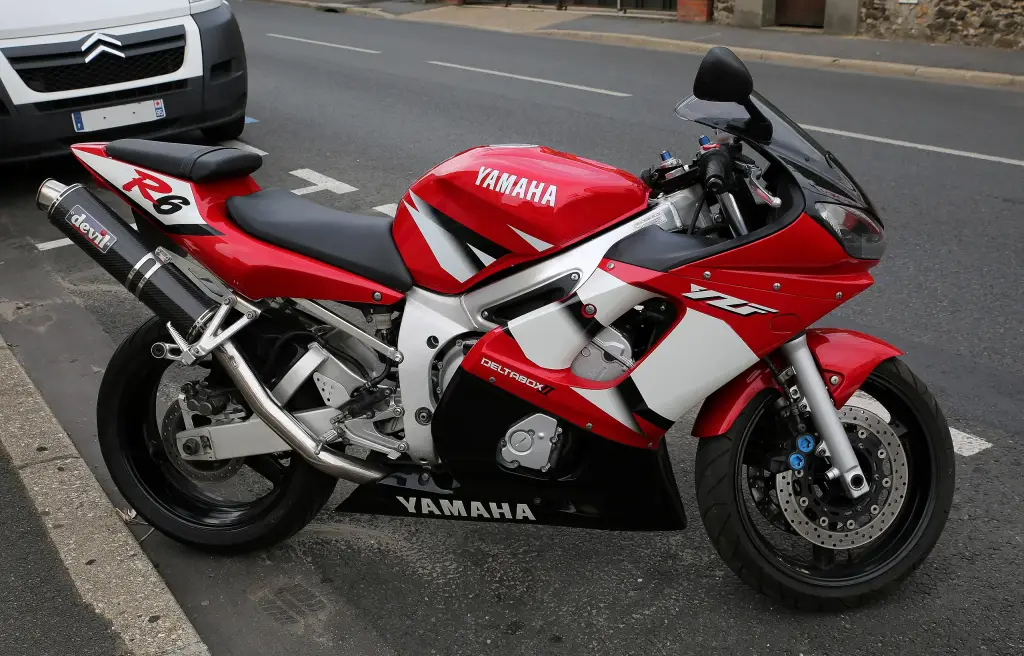
Yamaha revised the R6 several times. From 2003 it used fuel injection and gained a new headlight design closer to the R1. The 2006 model was a significant upgrade with Yamaha’s YCC-T ride-by-wire throttle and a multiplate slipper clutch. In 2008 the R6 added YCC-I variable-length intake, revised bodywork for better aerodynamics and an improved Deltabox frame. The 2017 model took styling and aerodynamics from the 2015 R1, along with its 43 mm inverted front fork and front brakes, a new rear shock, an aluminium fuel tank, a magnesium subframe, ABS, riding modes and traction control; Yamaha claimed the new bodywork reduced drag by 8 per cent, while the engine was unchanged at about 120 hp at the rear wheel.
The R6’s tachometer became a controversy in 2006. Yamaha advertised a 17,500 rpm redline, 2,000 rpm higher than before and the highest of any 2006 production four-stroke, but the ECU limited the engine to 15,800 rpm. In February 2006 Yamaha admitted that the true redline was more than 1,000 rpm lower than advertised and offered to buy back any R6 from an unhappy customer. In racing, Chaz Davies helped Yamaha win both the riders’ and manufacturers’ titles in the 2011 Supersport World Championship, and the R6 won the supersport class at the 2008 North West 200. Production for the road ended in 2020, with the YZF-R9 widely seen as its successor, although Yamaha never officially said so.
Design and features
- Class-leading engine: the first production 600 cc four-stroke to exceed 100 hp.
- Ride-by-wire: YCC-T arrived in 2006, followed by YCC-I variable intake in 2008.
- R1-derived chassis: the 2017 model took its fork, brakes and aerodynamic ideas from the R1.
- Racing record: titles and wins in Supersport and road racing.
Yamaha YZF-R6 versions
- R6 (1999–2002): carburetted original with over 108 hp.
- R6 (2003–2005): fuel injection and new headlights.
- R6 (2006–2007): YCC-T and slipper clutch; the tachometer controversy.
- R6 (2008–2016): YCC-I, revised bodywork and Deltabox frame.
- R6 (2017–2020): R1-inspired body, ABS, riding modes and traction control.
- Race-only R6 (2021–): non-homologated competition version.
The R6 is the 600 cc companion to the YZF-R1, and its engine also powered the first FZ6. More models are in the Yamaha collection.
Sources
- Yamaha YZF-R6, English Wikipedia: history, engines, updates, redline controversy, racing