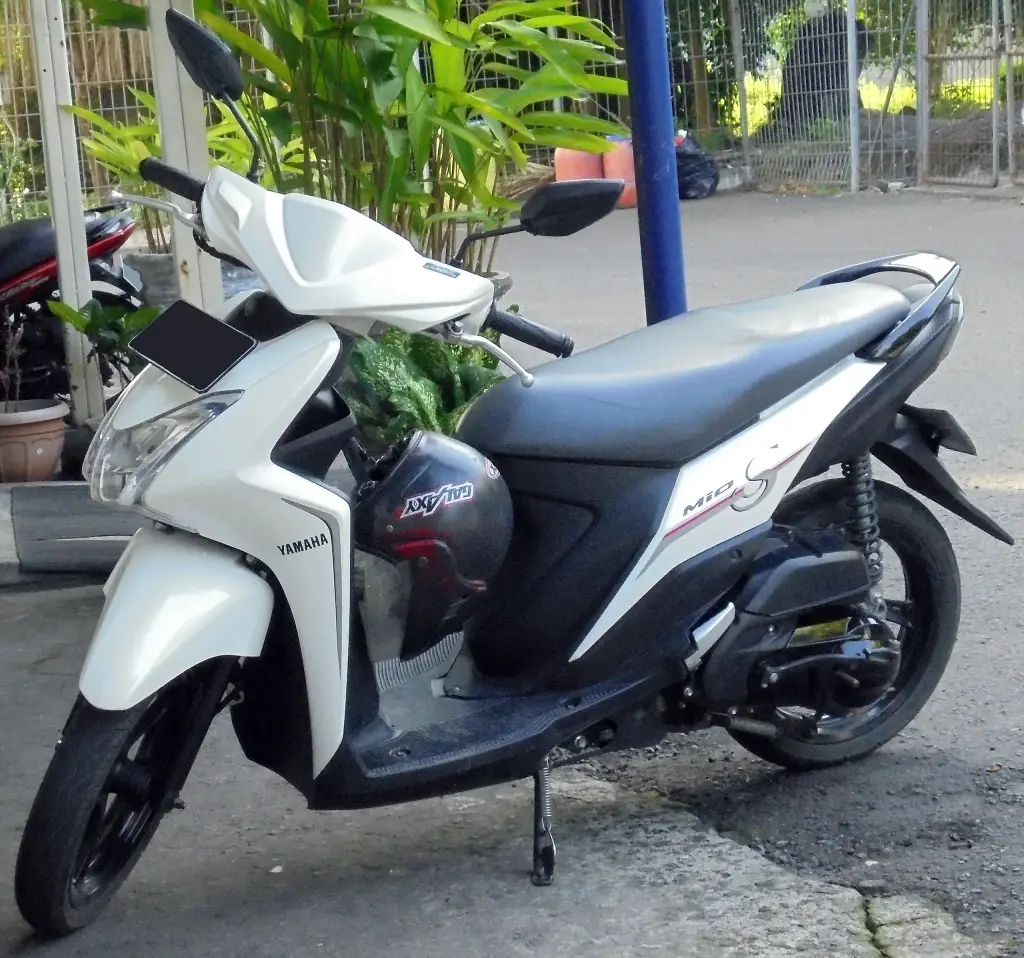
The Yamaha Mio is a small scooter with a continuously variable transmission that Yamaha introduced for Southeast Asia in 2003. It replaced the Nouvo and became the basis for a wide range of models across the region.
Yamaha Mio at a glance
| Maker | Yamaha Motor Company |
|---|---|
| Class | Small scooter with CVT |
| Introduced | 2003, Southeast Asia |
| Predecessor | Yamaha Nouvo |
| Malaysian name | Yamaha Ego |
| 2006 update | renamed Mio Soul outside Malaysia |
| 2007 Malaysian model | Ego S |
| 2012 update | fuel injection, larger CVT pulley |
| 2014 update | 125 cc engine across the range |
| 2014 engine details | DiaSil cylinder, forged piston, lighter body |
Based on one source (English Wikipedia).
History of the Yamaha Mio
Yamaha developed the Mio in 2003 after studying the sales and technical performance of its predecessor, the Nouvo. The scooter was launched in Southeast Asia and reached Malaysia in March 2004, where Hong Leong Yamaha renamed it the Yamaha Ego. By 2007 there were about 76,000 Ego customers in Malaysia.
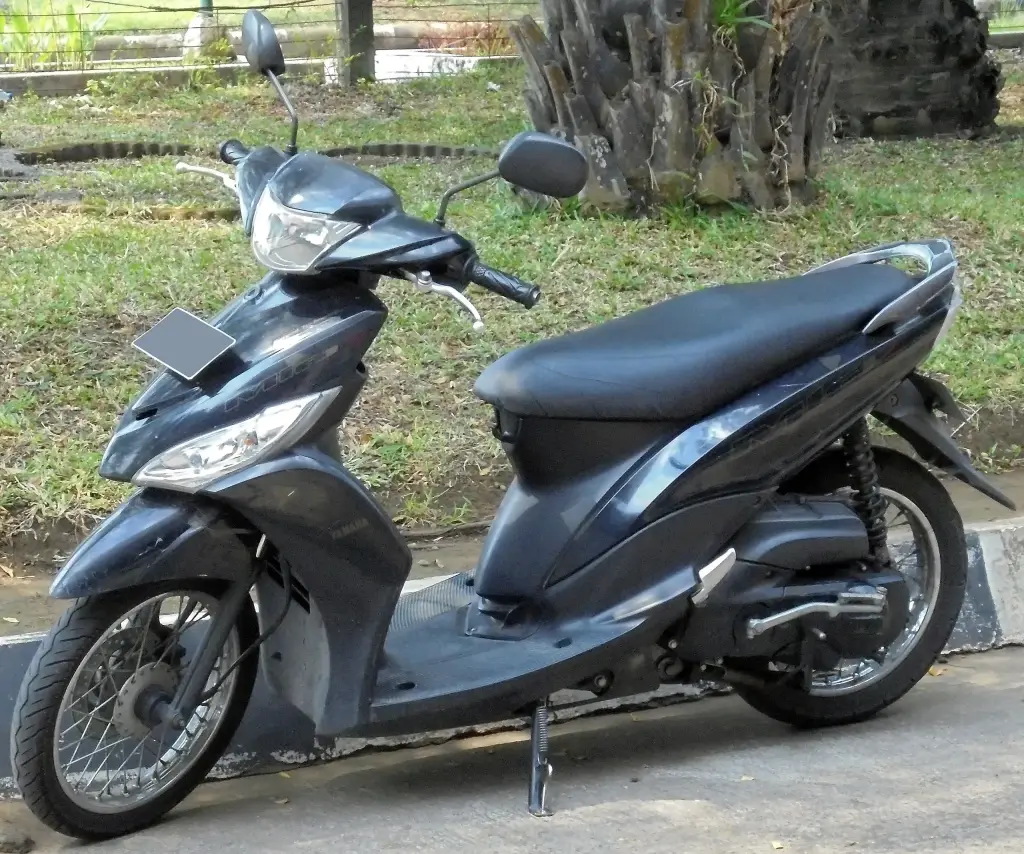
The 2006 model brought a facelift and a new name: outside Malaysia the scooter became the Mio Soul. It gained a V-shaped headlight for better night vision, new body stripes and a redesigned tail light with a retroreflector, while the engine stayed the same as in 2003. In Malaysia the revised model was launched as the Ego S in October 2007.
The Mio changed technically in 2012, when the carburettor gave way to fuel injection and the CVT gained a larger pulley, with a DiaSil cylinder and a forged piston to reduce engine weight. In 2014 the whole range moved to a 125 cc engine with the largest CVT pulley and a short-range belt, giving more constant speed and easier acceleration uphill. The DiaSil cylinder, forged piston and lighter body also improved fuel economy. Together with the Nouvo, the Mio became a platform for customisation in Thailand, Malaysia, Indonesia, Vietnam and the Philippines, and Yamaha has sold many derivatives under names including Mio Soul, Mio J, Mio M3, Mio S, Mio Gear and Mio Fazzio.
Design and features
- CVT transmission: a simple twist-and-go scooter layout for city use.
- Malaysian twin: the same scooter sold as the Yamaha Ego and later Ego S.
- Fuel injection: introduced in 2012 together with a larger CVT pulley.
- 125 cc range: from 2014 every Mio used the larger engine, DiaSil cylinder and forged piston.
Yamaha Mio versions
- Mio (2003–2005): original carburettor model.
- Mio Soul (2006–2011): facelifted version with a V-shaped headlight.
- Yamaha Ego and Ego S (Malaysia): local names for the same scooter.
- Mio (2012–2013): fuel injection and larger CVT pulley.
- Mio 125 (2014–): larger engine with DiaSil cylinder and forged piston.
The Mio succeeded the Nouvo and shares its engine family with the Fino 125. More models are in the Yamaha collection.
Sources
- Yamaha Mio, English Wikipedia: launch, Malaysian names, 2006, 2012 and 2014 updates, model range