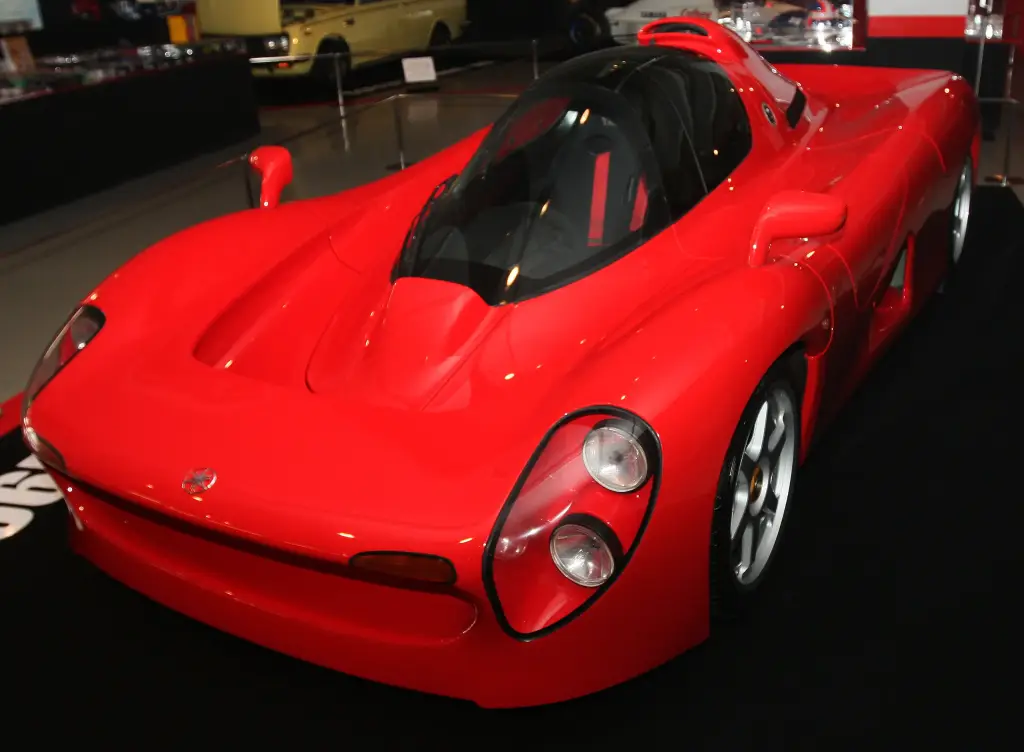
The Yamaha OX99-11 was a sports car project designed to bring Formula One technology to the road. It was supposed to enter production in 1994 with a 3.5-litre V12, but rising costs and the early-1990s recession ended it.
Yamaha OX99-11 at a glance
| Maker | Yamaha, with Ypsilon Technology and IAD |
|---|---|
| Class | Sports car project |
| Planned production | 1994 |
| Engine | 3.5-litre V12 derived from Yamaha’s Formula One engine |
| Power | 400 hp (300 kW) at 10,000 rpm |
| Layout | longitudinal, six-speed manual |
| Chassis | carbon fibre monocoque |
| Body | hand-beaten aluminium panels |
| Seating | central driver, passenger behind |
| Estimated cost | $800,000 to $1,000,000 per car |
| Prototypes | three, one at Yamaha Communication Plaza |
Based on one source (English Wikipedia).
History of the Yamaha OX99-11
The OX99-11 began as a collaboration between Yamaha and International Automotive Design, but disagreements over the budget led Yamaha to hand the project to its subsidiary Ypsilon Technology. The aim was to put Formula One technology into a road car: a compact, high-revving engine in a light chassis with a central driving position.
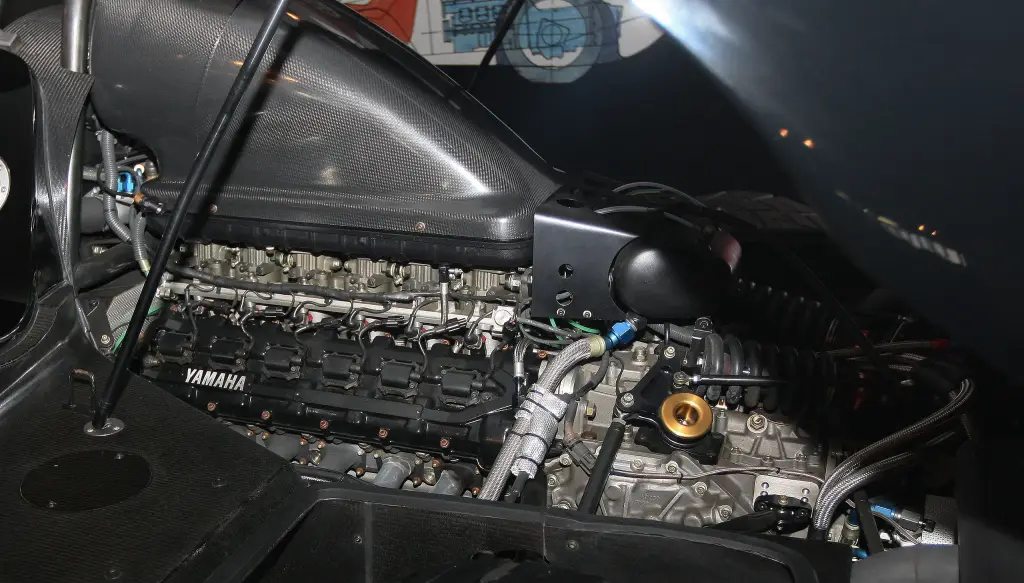
The car was built on a carbon fibre monocoque with hand-beaten aluminium body panels. The driver sat in the centre with a passenger behind, an arrangement borrowed from racing cars. Power came from a 3.5-litre V12 derived from Yamaha’s Formula One engine, detuned to 400 hp at 10,000 rpm and mounted longitudinally, driving through a six-speed manual gearbox.
The global recession of the early 1990s made the project difficult to sustain. Each car was expected to cost between $800,000 and $1,000,000, and a six-month build time added to the delays and financial pressure. The project was finally cancelled. One known prototype is kept at Yamaha Motor Company’s Communication Plaza in Iwata, Shizuoka, and the other two are in private hands.
Design and features
- Formula One V12: a 3.5-litre engine derived from Yamaha’s racing unit, detuned to 400 hp.
- Carbon monocoque: a racing-style chassis with hand-beaten aluminium bodywork.
- Central driving position: the driver sat in the middle with the passenger behind.
- Rare survivor: only three prototypes are known.
Yamaha OX99-11 versions
- OX99-11 prototype: the only version built, never put into production.
- Communication Plaza car: one prototype retained by Yamaha in Iwata.
- Private cars: the other two prototypes are privately owned.
Yamaha’s racing technology also produced the MotoGP team; the OX99-11 is the company’s best-known road-car project. More Yamaha history is in the Yamaha collection.
Sources
- Yamaha OX99-11, English Wikipedia: project history, design, engine, cancellation