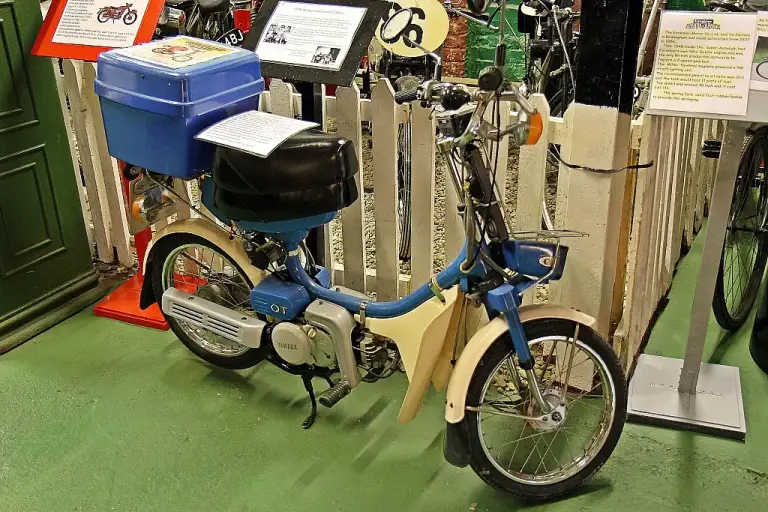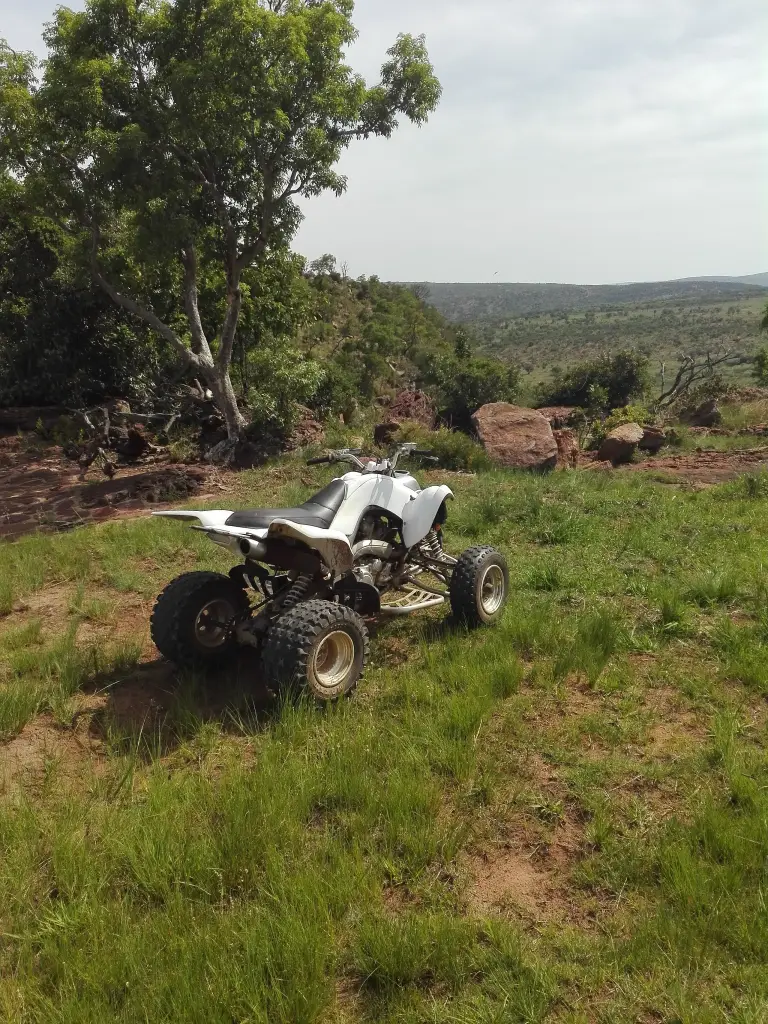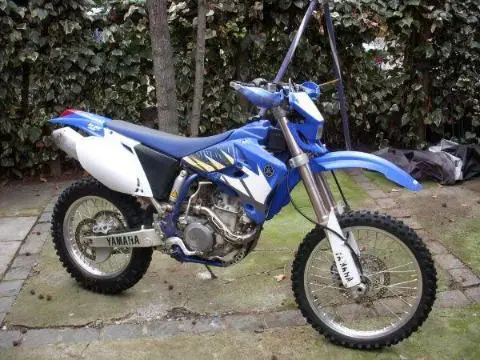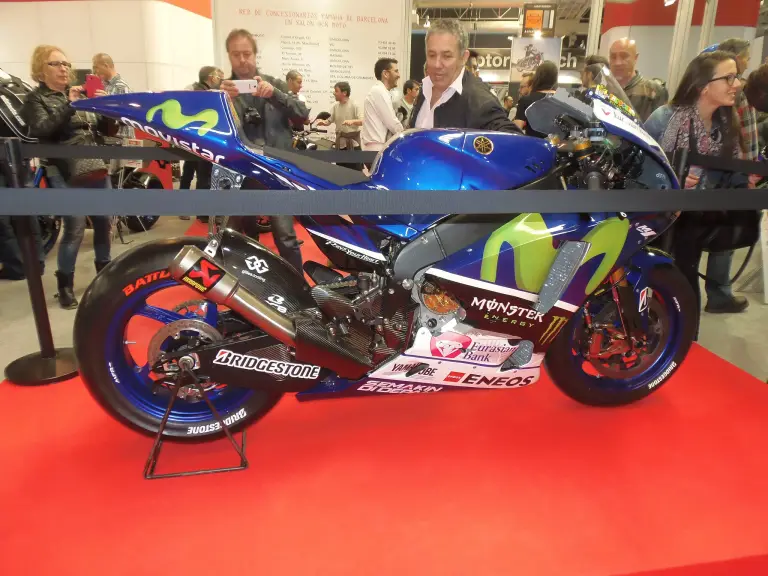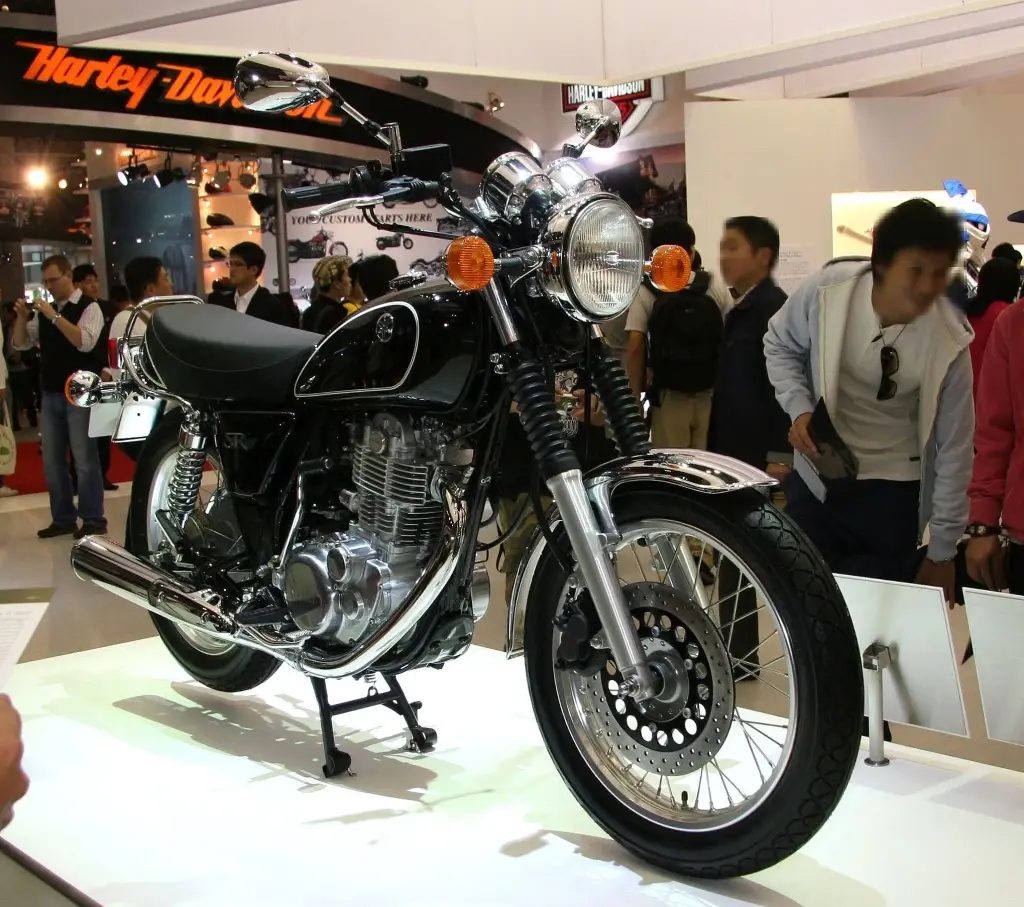
The Yamaha SR400 and SR500 are air-cooled single-cylinder motorcycles introduced in 1978 as street versions of the XT500. Both use kick starting only, and the SR400 remained in production until 2021.
Yamaha SR400 & SR500 at a glance
| Maker | Yamaha Motor Company |
|---|---|
| Class | Single-cylinder street motorcycle |
| SR400 production | 1978–2021 |
| SR500 production | 1978–1999 |
| Engine | air-cooled four-stroke single, SOHC two-valve |
| Starting | kick only, with decompression lever and sight glass |
| SR400 lubrication | dry sump, frame downtubes as oil tank |
| SR400 fuel injection | from 2010, with catalyst muffler |
| SR400 export | Europe, Americas and Oceania from 2014 |
| SR500 markets | Asia and Oceania 1978–1999, US 1978–1981, Europe 1978–1983 |
| Award | Moto of the Year from Motorrad, twice |
| Brakes | front disc and rear drum (US SR500 1978–1979 had a rear disc) |
Based on one source (English Wikipedia).
History of the Yamaha SR400 & SR500
The SR was developed under the credo “easy to use”. When Yamaha’s technical director sprained his ankle while testing a prototype, easier starting became a priority, and the company developed a decompression lever and a sight glass to help riders find the right piston position. The bike was styled by Atsushi Ishiyama, who presented a pre-production prototype to US dealers in late 1975 and described the design as a strong family image linked to Yamaha’s first four-stroke, the XS650 twin.
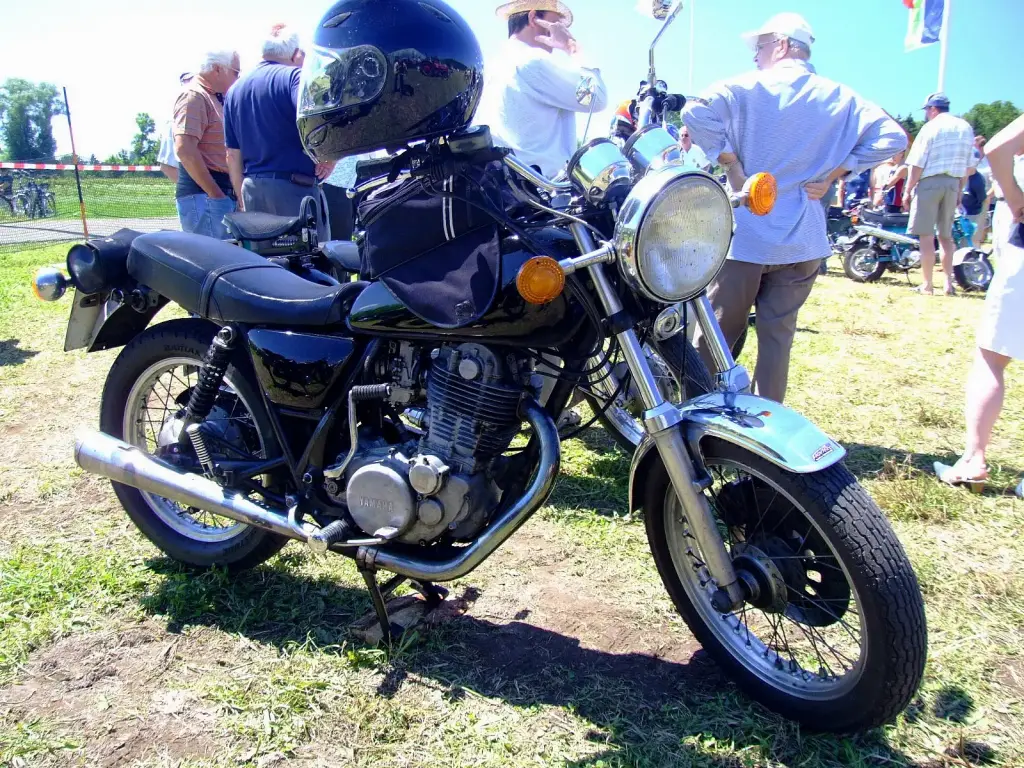
The SR400 and SR500 differ in their engines: the SR400 has a lower displacement, achieved with a different crankshaft and a shorter piston stroke. The SR400 was sold in Japan from 1978 to 2021, with a production break for 2008 and 2009, and was introduced to Europe, the Americas and Oceania in 2014 because its 400 cc capacity suits Japanese licence rules. The SR500 was sold in Asia and Oceania from 1978 to 1999, in North America from 1978 to 1981 and in Europe from 1978 to 1983, but never in Japan.
The SR400 uses an air-cooled four-stroke SOHC two-valve engine with a dry sump, the frame downtubes acting as the oil reservoir. Its semi-double cradle frame is made of high-strength steel. Kick starting is aided by a sight glass on the right of the cylinder head and a decompressor on the left handlebar. From 2010 the SR400 gained fuel injection and a catalyst muffler, with a throttle position sensor, an O2 sensor, a temperature sensor and a lean-angle sensor among its electronics. It has 18-inch spoked wheels with aluminium rims, a front disc and rear drum brake, a centre stand and chrome mudguards. The SR500 used a slightly modified XT500/TT500 engine with electronic ignition and a handlebar compression release, and it won Moto of the Year twice from the German magazine Motorrad.
Design and features
- Easy starting: a decompression lever and sight glass make kick starting manageable.
- Dry-sump engine: the SR400 frame downtubes double as the oil tank.
- Long life: the SR400 stayed in production in Japan until 2021.
- Classic styling: a simple single-cylinder layout recalling 1970s universal Japanese motorcycles.
Yamaha SR400 & SR500 versions
- SR400 (1978–2021): Japanese-market 400, exported from 2014.
- SR500 (1978–1999): larger-capacity version for export markets.
- SR400 with fuel injection (2010–2021): catalyst muffler and electronic sensors.
- US SR500 (1978–1981): early models with front and rear disc brakes.
The SR range was derived from the XT500 and inspired the later SRX. More models are in the Yamaha collection.
Sources
- Yamaha SR400 & SR500, English Wikipedia: history, engines, markets, equipment, awards