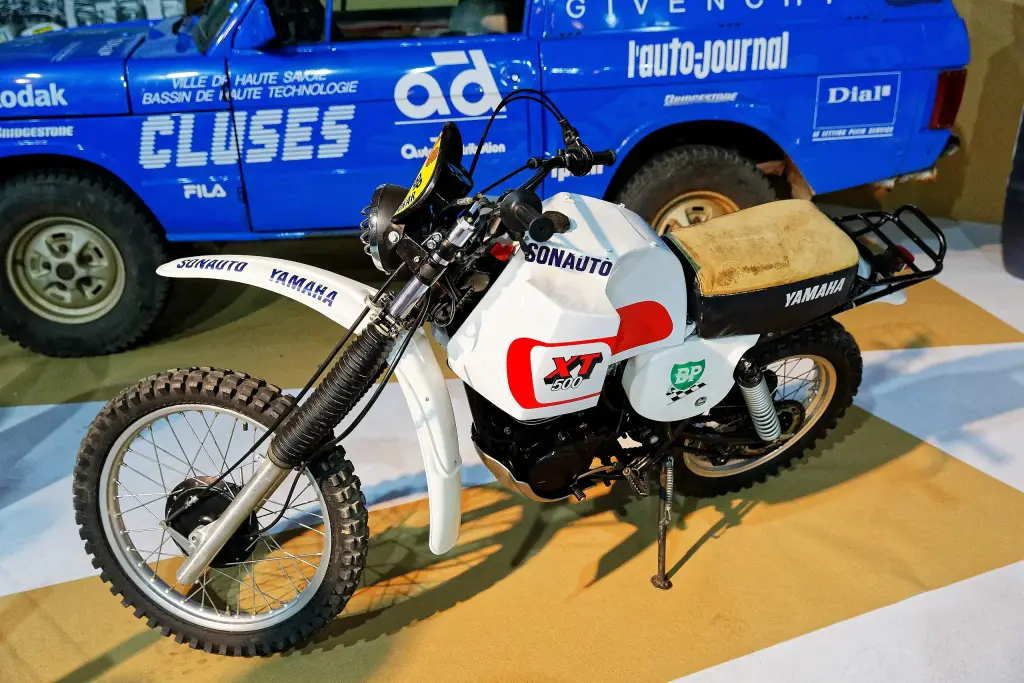
The Yamaha XT500 is a twin-valve single-cylinder enduro-adventure motorcycle that Yamaha made from 1975 to 1989. It shares its engine with the street-going SR500 and the off-road TT500, and it became famous for winning the early African rallies.
Yamaha XT500 at a glance
| Maker | Yamaha Motor Company |
|---|---|
| Class | Enduro-adventure motorcycle |
| Production | 1975–1989 |
| Engine | 500 cc twin-valve single |
| Shared engine | SR500 and TT500 |
| Shown | US dealer convention, September 1975 |
| European debut | summer 1976 |
| Replaced | by four-valve engines in 1981 |
| Wheels | 21-inch front, 18-inch rear |
| French sales | 62,000 from 1976 to 1990 |
Based on one source (English Wikipedia).
History of the Yamaha XT500
The first XT500 was shown at the US dealer convention in September 1975 and reached Europe in the summer of 1976. It became an instant success and was produced until 1981, when it was replaced by four-valve engines. Its engine was shared with the street SR500 and the off-road TT500, and all major parts, including the transmission and chassis, were made in Japan.
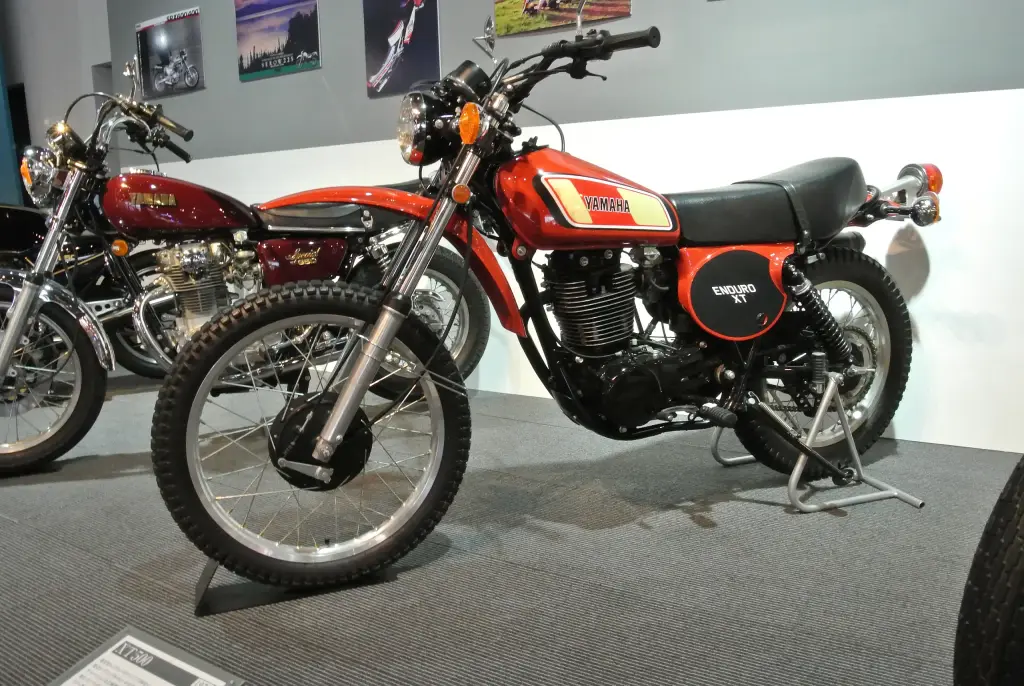
The XT500 laid the groundwork for the later XT range, which grew from the 125 cc XT125 to the 660 cc XT660Z Ténéré, and it contributed greatly to Yamaha’s image. In France alone, 62,000 XT500s were sold between 1976 and 1990.
The bike also proved itself in competition. It won the first big African rallies as they grew in the late 1970s, starting with Paris–Abidjan–Nice and then the Paris–Dakar Rally, which confirmed the XT500’s supremacy. In 1977 Bengt Åberg raced a heavily modified XT500, built with former world champions Torsten Hallman and Sten Lundin, in the 500 cc Motocross World Championship; he won the first moto of the Luxembourg Grand Prix and finished ninth overall. The 21-inch front and 18-inch rear wheels with enduro tyres made the XT500 suitable for both road and trail use. After 1982, four-valve XT600s were sold in some markets in 500 cc form until 1989, but these were not the original twin-valve XT500.
Design and features
- Twin-valve single: a simple, robust 500 cc engine shared with the SR500 and TT500.
- Rally success: wins in the Paris–Abidjan–Nice and Paris–Dakar rallies.
- Dual-purpose chassis: 21-inch front and 18-inch rear wheels for road and trail.
- XT family: the model that started Yamaha’s long line of XT and Ténéré bikes.
Yamaha XT500 versions
- XT500 (1975–1981): the original twin-valve model.
- TT500: off-road brother with the same engine.
- SR500: street version with the same powerplant.
- Later 500 cc XT600-based models: sold until 1989 but not the original design.
The XT500’s engine also powered the SR500, and its rally heritage continued in the XTZ 750. More models are in the Yamaha collection.
Sources
- Yamaha XT500, English Wikipedia: production, engine, rallies, racing, market success