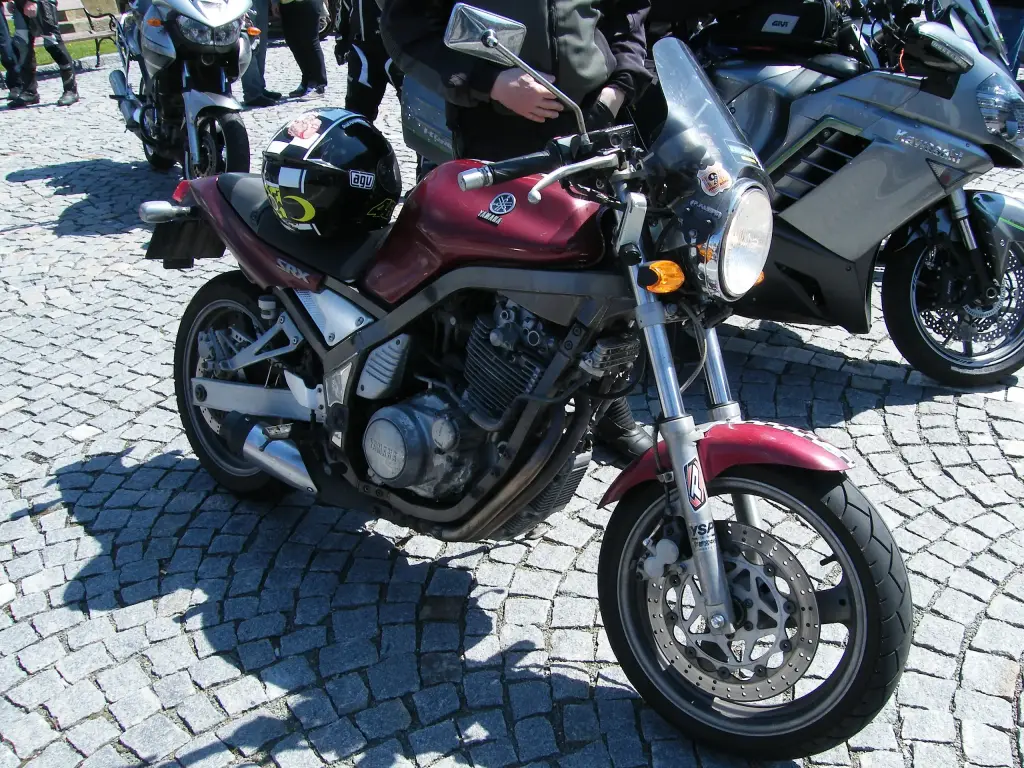
The Yamaha SRX is a light sporting single-cylinder motorcycle that Yamaha built from 1985 to 1997. It tried to repeat the success of the SR500 with a more modern engine, but it sold best in Japan rather than internationally.
Yamaha SRX at a glance
| Maker | Yamaha Motor Company |
|---|---|
| Class | Sporting single-cylinder motorcycle |
| Production | 1985–1997 |
| Engine | 608 cc air-cooled SOHC four-valve single |
| Bore and stroke | 96 × 84 mm |
| Compression | 8.5:1 |
| Power | 45 hp at 6,500 rpm |
| Torque | 46 N·m at 5,500 rpm |
| Carburation | two-stage YDIS |
| Gearbox | five-speed |
| Dry weight | 149 kg |
| Units sold | about 19,000 |
Based on one source (English Wikipedia).
History of the Yamaha SRX
Yamaha created the SRX to repeat the success of the SR500. The company took a more modern engine derived from the XT600 and fitted it to a light, sporty street bike. The engine was still an air-cooled overhead-camshaft single, but it had a four-valve cylinder head, a two-stage carburettor, a balance shaft and other improvements. The chassis used a lightweight steel frame, alloy wheels, a double disc brake at the front and a single disc at the rear.
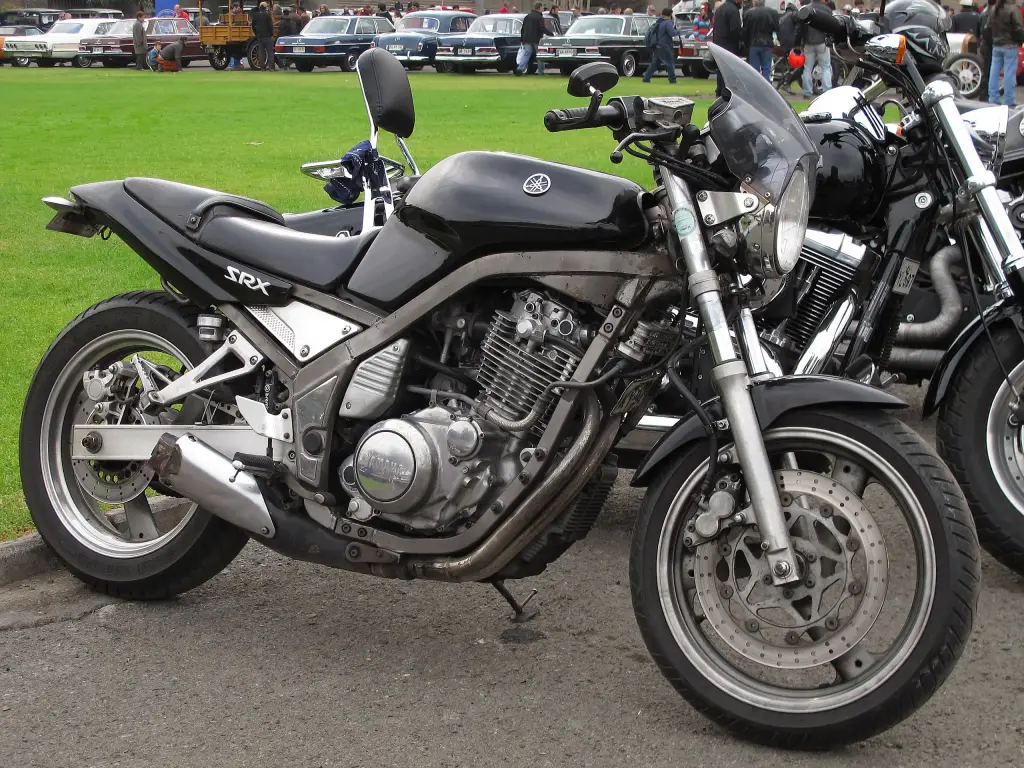
Unlike the cheaper SR500, the SRX600 did not do well in international markets. Its light weight, nimble handling and unusual styling could not compete with heavier, faster multi-cylinder bikes at a similar price. Even so, Yamaha claims to have sold about 19,000 SRXs. In the United States the SRX was officially sold only in 1986, in Germany sales continued until 1990, and in Japan the model was produced until 1997.
In Japan the SRX was sold with a reduced 400 cc displacement for tax reasons, as well as the 608 cc version, and Japanese models had an oil cooler. From 1988 the 2NX model came with a 17-inch front wheel and a single 320 mm front disc. There was also an SRX250 with a headlight fairing and electric start. When international sales ended, Japan received a new 3VN production line with an engine derived from the newer XT600E, an electric starter and a mono-shock rear in place of the twin shocks. That version lasted until 1997, and the SRX was outlived by the SR400, which was still available in 2015.
Design and features
- Four-valve single: a 608 cc engine with a modern cylinder head and balance shaft.
- Light chassis: a 149 kg dry weight with alloy wheels and double front discs.
- Japanese variants: 400 cc and 608 cc versions, oil cooler and a 17-inch front wheel on the 2NX.
- Late 3VN: XT600E engine, electric start and mono-shock suspension.
Yamaha SRX versions
- SRX600 (1985–1990): the international model.
- SRX400: Japanese-market version with reduced displacement.
- SRX 2NX (1988–): 17-inch front wheel and single 320 mm disc.
- SRX250: smaller model with fairing and electric start.
- SRX 3VN (to 1997): Japanese final version with electric start and mono-shock.
The SRX followed the SR400 and SR500 and used an engine related to the XT500 family. More models are in the Yamaha collection.
Sources
- Yamaha SRX, English Wikipedia: history, engine, chassis, markets, Japanese versions, specifications