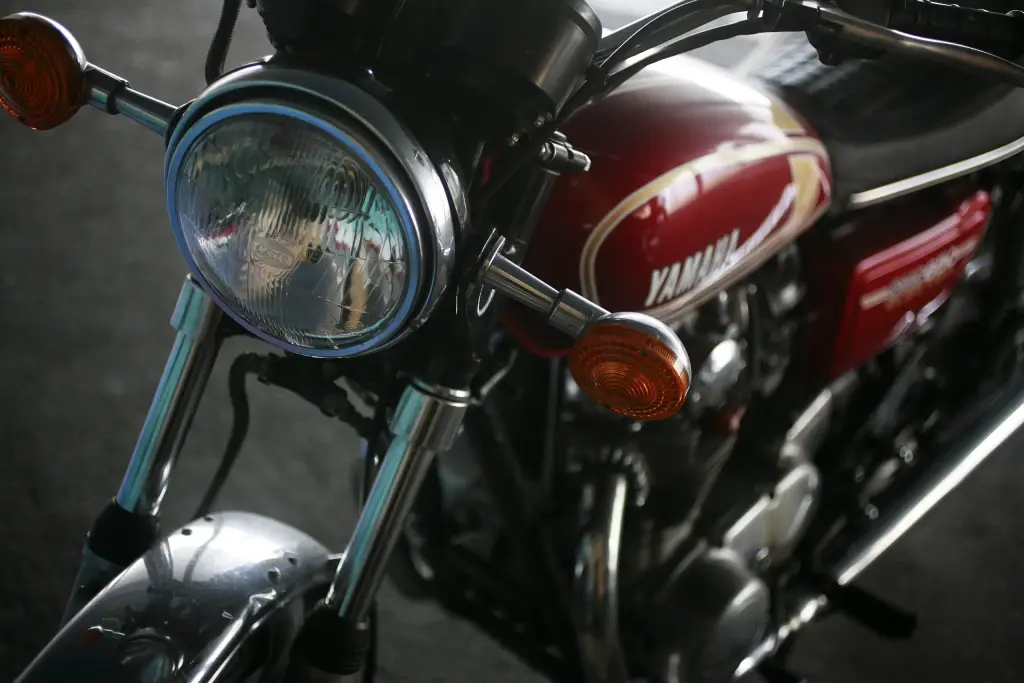
The Yamaha XS650 is a mid-size parallel-twin motorcycle introduced in October 1969. Its advanced engine and classic British-inspired styling made it one of the most influential Japanese twins of its era.
Yamaha XS650 at a glance
| Maker | Yamaha Motor Company |
|---|---|
| Class | Parallel-twin motorcycle |
| Standard model | October 1969–1979 |
| Special model | 1978–1985 |
| Engine | 650 cc air-cooled SOHC parallel twin |
| Crankcase | horizontally split, unit construction |
| Crankshaft | 360 degrees |
| Starting | kick only until 1972, then electric with compression release |
| Standard rear tyre | 110/90-18 |
| Special rear tyre | 130/90-16 |
| Last model year | 1983 in the US, 1985 elsewhere |
Based on one source (English Wikipedia).
History of the Yamaha XS650
The XS650 began with the 1955 Hosk SOHC 500 twin. After about ten years of building the 500, Hosk engineers designed a 650 cc twin. Showa Corporation later acquired Hosk, and in 1960 Yamaha acquired Showa together with the early 650 design.
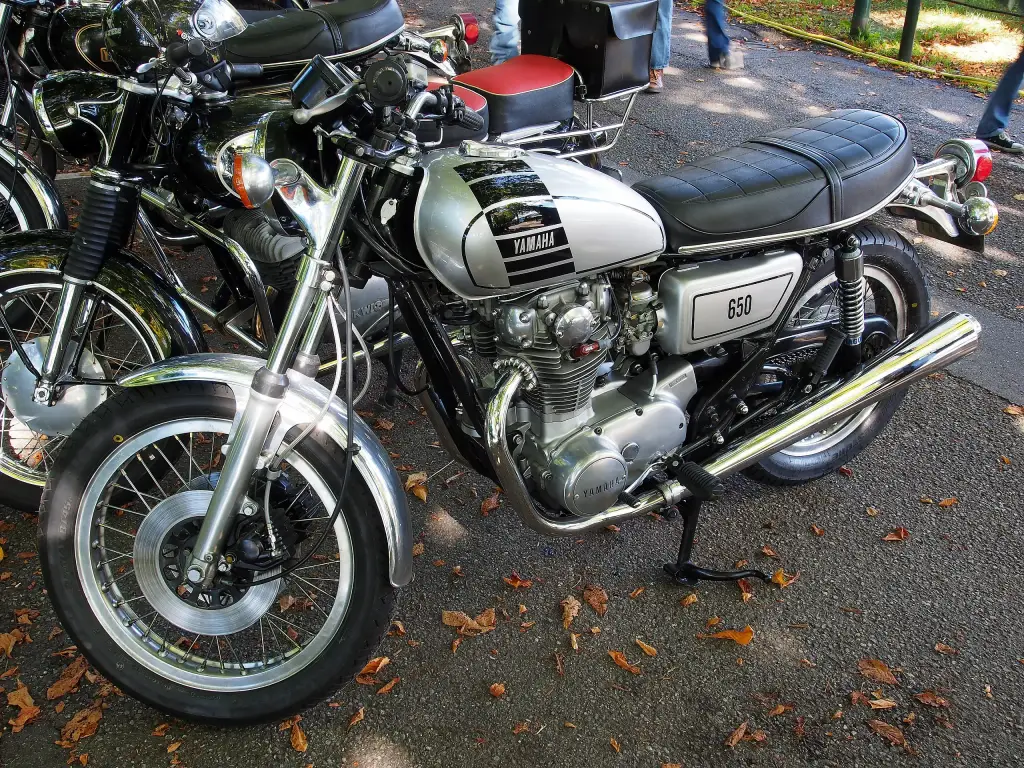
When the XS650 was launched in October 1969 it had one of the most advanced reciprocating engines in the large parallel-twin class. Engine and gearbox were built as a unit with the crankcase split horizontally for easy assembly, while nearly all rivals of 1969 used either a vertically split crankcase or separate engine and gearbox. The engine was used in AMA Professional Dirt Track Racing by national champion Kenny Roberts. Only the Laverda 750S and the Honda CB350, also new that year, matched the XS650’s unit construction and single-overhead-cam valve operation.
The 1970 model was the XS-1, followed by the XS-1B, XS-2, TX650 and a succession of XS650 models through the XS-F of 1979, the last of the so-called Standards. The Special, with pullback bars and a tear-drop tank, arrived in 1978 and continued to 1985; the Special II used less chrome, wire wheels and a drum rear brake. The first two model years were kick start only, and an electric starter with a compression release was added for 1972. The engine used a 360-degree crankshaft, giving even firing but noticeable vibration at idle, and from 1974 Yamaha added vibration damping to the engine and handlebar mountings. Early bikes had a reputation for speed wobbles, cured by changes to the 1975 setup, and the front forks were redesigned in mid-1977 with 35 mm tubes in place of 34 mm items. Production ended in 1985, although the last American model year was 1983.
Design and features
- Unit construction: a horizontally split crankcase that was advanced for 1969.
- SOHC twin: overhead camshaft operation instead of the pushrods used by most rivals.
- Racing pedigree: the engine was raced by Kenny Roberts in AMA dirt track.
- Standard and Special: two characters, with different bars, tanks and rear wheels.
Yamaha XS650 versions
- XS-1 (1970) and XS-1B (1971): kick-start only.
- XS-2 (1972) and TX650 (1973): electric starting introduced.
- XS650B to XS-F (1975–1979): the later Standards.
- Special (1978–1985): cruiser-styled version with pullback bars and a tear-drop tank.
- Special II (1978–1985): simpler trim, wire wheels and a drum rear brake.
The XS650 inspired the later SR400 and SR500 in style. More models are in the Yamaha collection.
Sources
- Yamaha XS650, English Wikipedia: history, engine, models, running changes, end of production