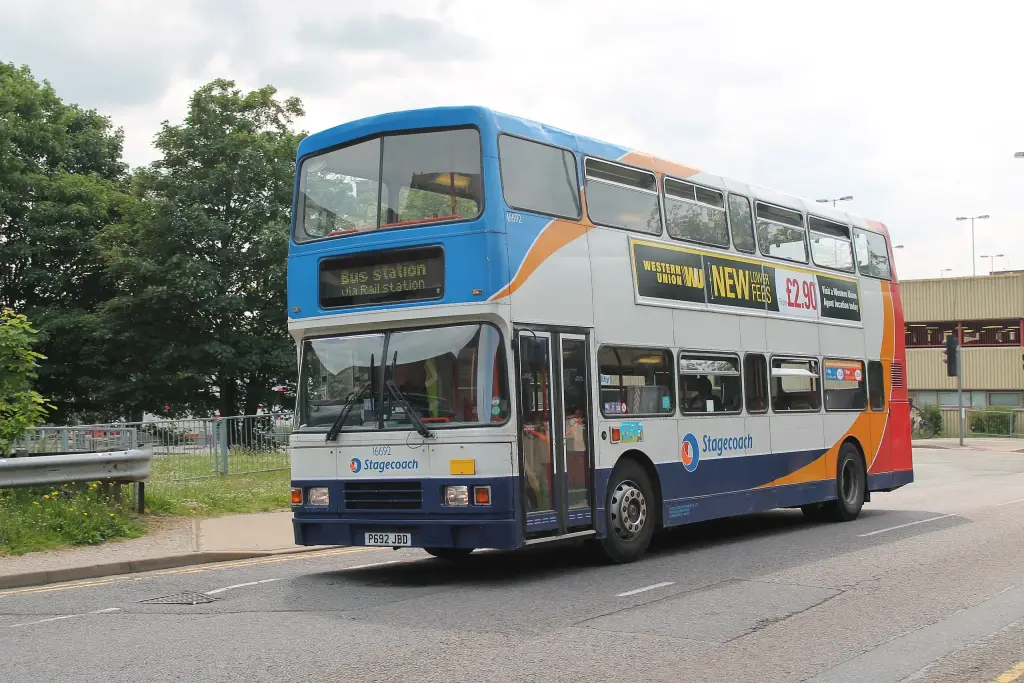
The Volvo Olympian was a rear-engined two-axle and three-axle double-decker bus chassis built by Volvo at Irvine in Scotland. The first was built in 1993 and production ran until 2000, continuing a line that began with the Leyland Olympian.
Volvo Olympian at a glance
| Production | 1993–2000 |
|---|---|
| Built in | Irvine, Scotland |
| Types | two-axle and three-axle double-decker chassis |
| Engines | Cummins L10 or Volvo TD102KF at first |
| From late 1996 | 9.6-litre Volvo D10A-245 Euro II with electronic diesel control |
| Gearboxes | Voith DIWA or ZF Ecomat |
| London fleet | 746 chassis |
| Hong Kong | 531 eleven-metre and 338 twelve-metre buses for KMB |
| Singapore | 301 ordered in 1993 |
| Successors | Volvo B7TL and Super Olympian |
History of the Volvo Olympian
The Olympian was based on the Leyland Olympian, but Volvo changed so much that only the chassis design and layout remained: even the grade of steel in the chassis members was different, and Volvo’s own electrical system, steering and Z cam braking were used. Early buses came with a Cummins L10 or Volvo TD102KF engine and a Voith DIWA or ZF Ecomat gearbox; from late 1996 only the 9.6-litre D10A-245 Euro II engine with electronic diesel control was offered.
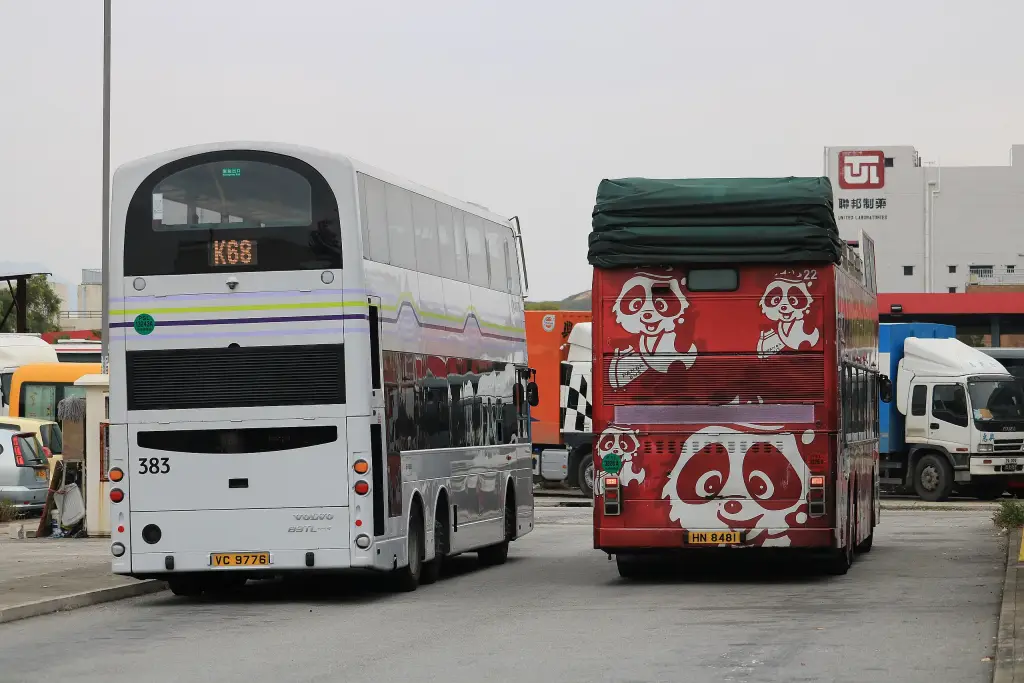
The Volvo Olympian stayed as popular as the Leyland in Britain and Ireland, and large numbers were exported to Hong Kong and Singapore, most of them air-conditioned. Production ended in 2000, concluding a run of more than 10,000 Leyland and Volvo Olympian chassis.
Britain and Ireland
London operators bought 746 Olympians over the production run, continuing the large Leyland orders placed by London Transport; most had Alexander R-Type or Northern Counties Palatine bodies, with smaller numbers on East Lancs E Type or Pyoneer. Nottingham City Transport was among the first customers, with seven East Lancs-bodied buses in September 1993, and Stagecoach made the Olympian its standard double-decker outside London, mainly with Alexander RL low-height bodies, until the Dennis Trident 2 arrived in 1999. Dublin Bus ordered 315 Volvo Olympians from January 1997 and withdrew its last ones by the end of 2012.
Asia
Kowloon Motor Bus took 531 eleven-metre, 338 twelve-metre and 30 non-air-conditioned Olympians between 1994 and 1999, while Citybus bought ten 10.4-metre, 310 twelve-metre and 142 eleven-metre buses. China Motor Bus took 64 between 1996 and 1998, most of which passed to New World First Bus. In Singapore, Singapore Bus Services ordered 301 Olympians in 1993, 201 of them tri-axle air-conditioned buses and 100 conventional two-axle models replacing Leyland Atlanteans.
The chassis had two low-floor successors, the two-axle B7TL and the three-axle Super Olympian. Volvo had intended the B7L to replace the Olympian, but very few two-axle double-deck B7Ls were built, so the B7TL, launched in 2000, took on the role and stayed in production until 2007.
Design and features
- Leyland heritage: the Olympian layout carried into Volvo ownership.
- Volvo systems: standard electrics, steering and Z cam brakes.
- Two or three axles: for British and Asian operating conditions.
- Export success: Hong Kong and Singapore took most of the air-conditioned buses.
- Over 10,000 chassis: the combined Leyland and Volvo total.
Volvo Olympian versions
- Two-axle Olympian: the standard British double-decker chassis.
- Three-axle Olympian: for Hong Kong and Singapore.
- Low-height bodies: Alexander RL for Stagecoach and others.
- D10A-245 version: the single-engine specification from late 1996.
- Super Olympian: the three-axle low-floor successor.
The Olympian followed the Leyland Olympian and was replaced by the Ailsa-lineage of Scottish-built double-deckers; its chassis family fed into the B7R-era buses. More buses are in the Volvo collection.
Sources
- Volvo Olympian, English Wikipedia: design, engines, operators by country, successors