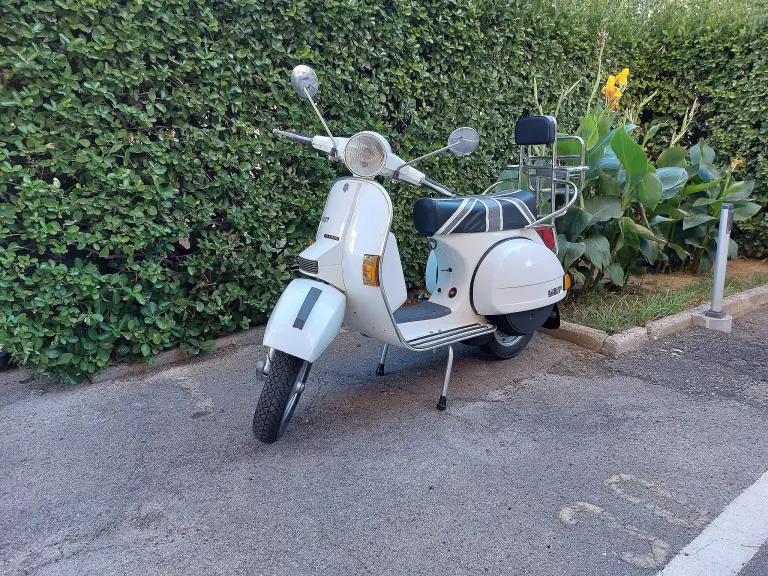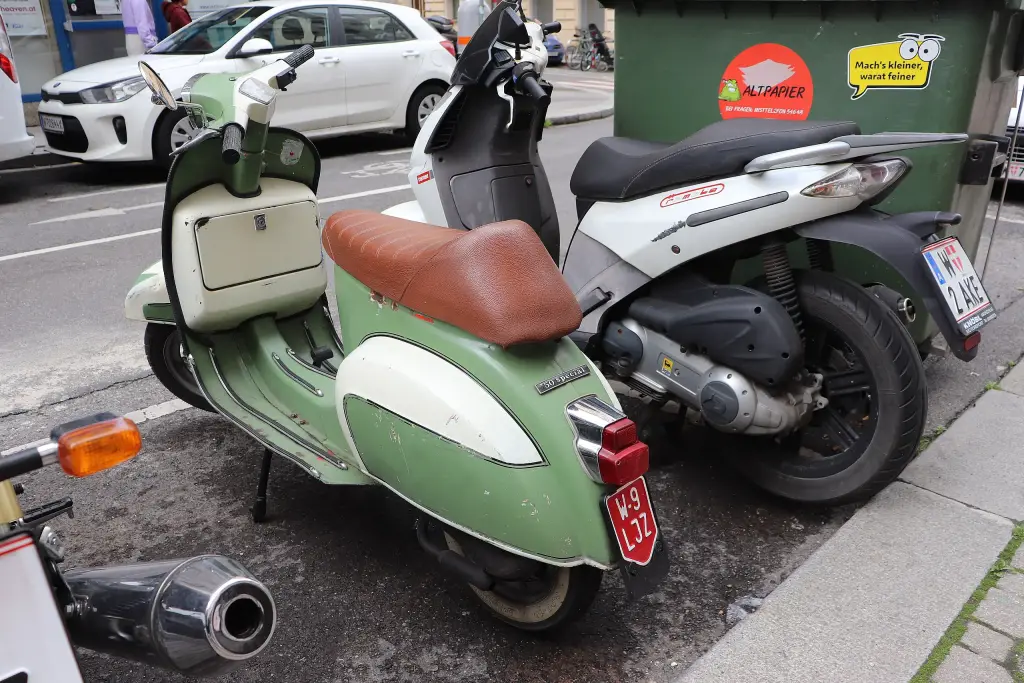
The Vespa 50 Special was a moped built by Piaggio at Pontedera from 1969 to 1982. It was the small Vespa of the 1970s, sold in huge numbers to fourteen-year-olds, and it is remembered for its square headlight and for the separate plastic nose that hides the horn.
Vespa 50 Special at a glance
| Maker | Piaggio, Pontedera |
|---|---|
| Production | 1969–1982 |
| Class | 50 cc moped |
| First series | V5A2T, from 1969 |
| Second series | V5B1T, from 1972 |
| Third series | V5B3T, from 1975 |
| Restyling | improved third series, 1978 |
| Price | 132,000 lire in 1969, 289,000 lire in 1975 |
| First series output | 189,682 |
| Second series output | 563,955 |
| Wheels | 9 inch, then 10 inch five-spoke |
| Gearbox | three-speed, four-speed from 1975 |
Based on one source: the Italian Wikipedia article on the 50 Special.
History of the Vespa 50 Special
Successor of the 50 L
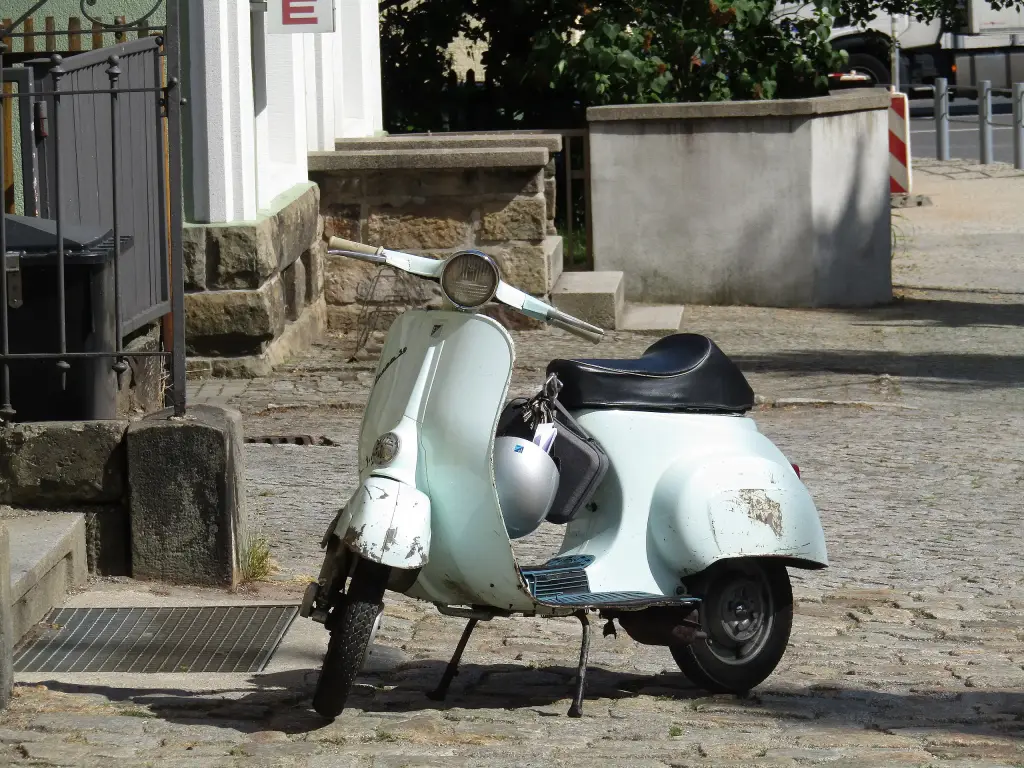
The 50 Special followed the 50 L and was more carefully finished than the earlier small Piaggio mopeds. It was aimed at the fourteen-year-old rider who could legally use a 50 cc machine, and its advertising helped it become one of the best-selling models ever built at Pontedera; the slogan “Chi Vespa mangia le mele” is still quoted. What set it apart was the new square headlight and the plastic nose, separate from the steel body, which contained the horn.
First series, 1969
The first series, coded V5A2T, was presented at the Milan show in 1969 and cost 132,000 lire. It had a three-speed engine, 9-inch wheels, the model name set obliquely on the leg shield and on the rear, and a black nose and rear light cover. Piaggio built 189,682 of them.
Second series, 1972
The second series, V5B1T, was shown at Milan in 1972 and became the most numerous: 563,955 were made. The name moved to a horizontal position, the nose and rear light cover changed from black to light grey, the wheels grew from the 9-inch four-spoke type to 10-inch five-spoke wheels, and the stand went from 16 mm to 20 mm for strength and stability. The engine was carried over.
Third series and the 1978 update
The third series, V5B3T, arrived at Milan in 1975 at 289,000 lire. At first the changes were thicker brake and clutch levers, a new four-speed engine for better fuel consumption and a repositioned homologation number. In 1978 the improved third series added a reinforcement inside the left rear panel, a square-section rear brake pedal and the circular steering lock housing taken from the ET3.
Revival
In 1991 Piaggio brought the model back as the 50 Special Revival, code V5R1T. Only 3,000 numbered examples were made between 16 May and the summer, using the original presses and steel frame with interchangeable wheels, at 2,680,000 lire. Car number one has been kept at the Piaggio Museum since 2004.
Design and features
- Square headlight: the detail that marked the Special out from the round-lamp 50 L.
- Plastic nose: a separate panel hiding the horn, cheap to replace and easy to colour.
- Smallframe steel body: the classic pressed-steel monocoque in its smallest form.
- Huge production: nearly 190,000 first-series and over 560,000 second-series machines.
- 1970s colours: metallised moon white, hawthorn white, chrome yellow, coral and Tenerife red and others.
Vespa 50 Special versions
- V5A2T (1969): first series, three speeds, 9-inch wheels, black nose.
- V5B1T (1972): second series, 10-inch five-spoke wheels, light grey nose.
- V5B3T (1975): third series with the four-speed engine.
- Third series improved (1978): extra panel reinforcement and the ET3-style steering lock.
- 50 Special Revival (1991): 3,000 numbered machines on the original tooling.
The Special sat below the larger classic Vespas such as the Vespa 125, and its square headlight returned on the modern Vespa S. More are in the Vespa collection.
Sources
- Piaggio Vespa 50 Special, Italian Wikipedia: series, production figures, prices, revival