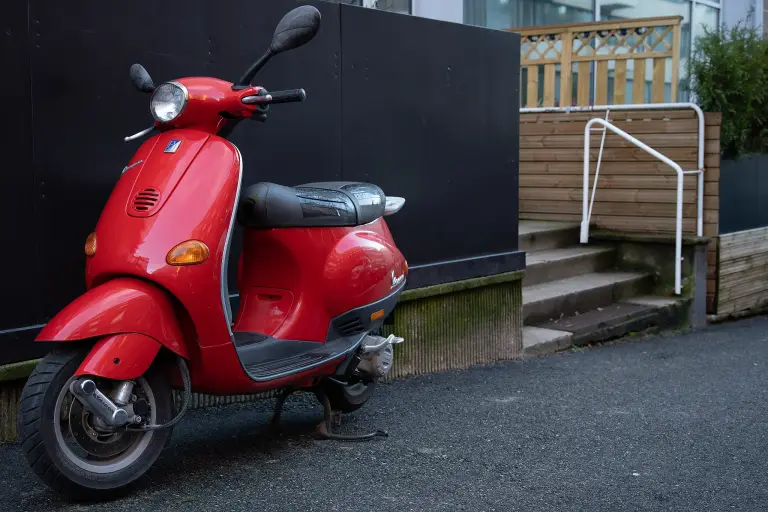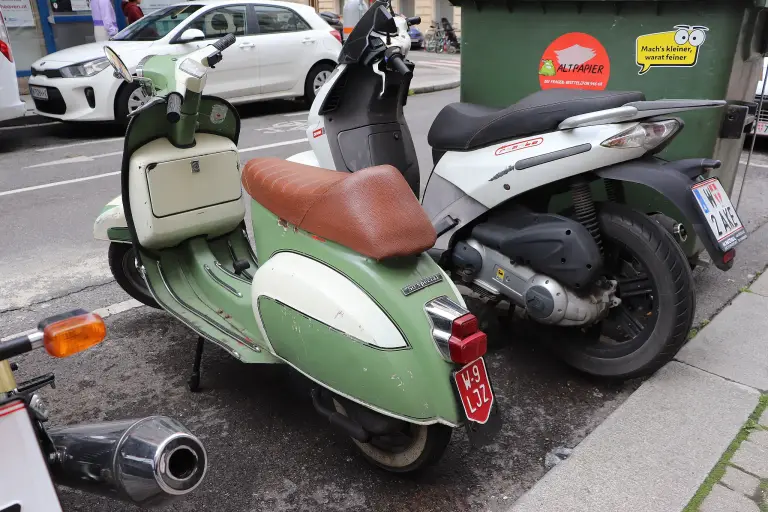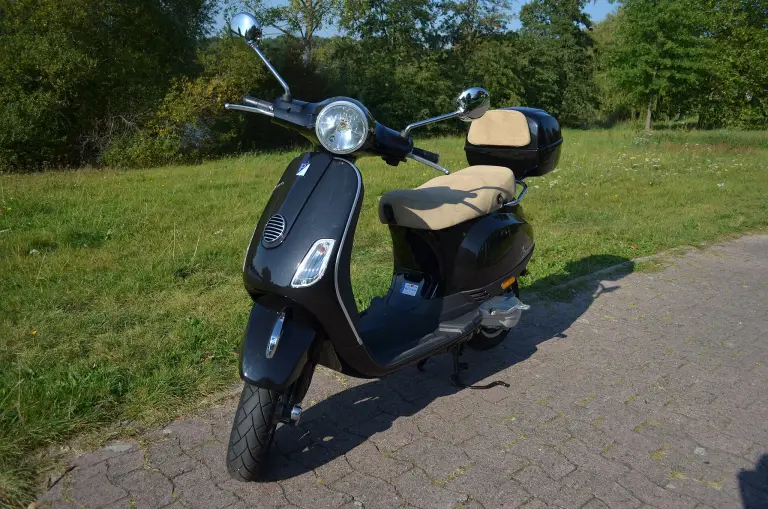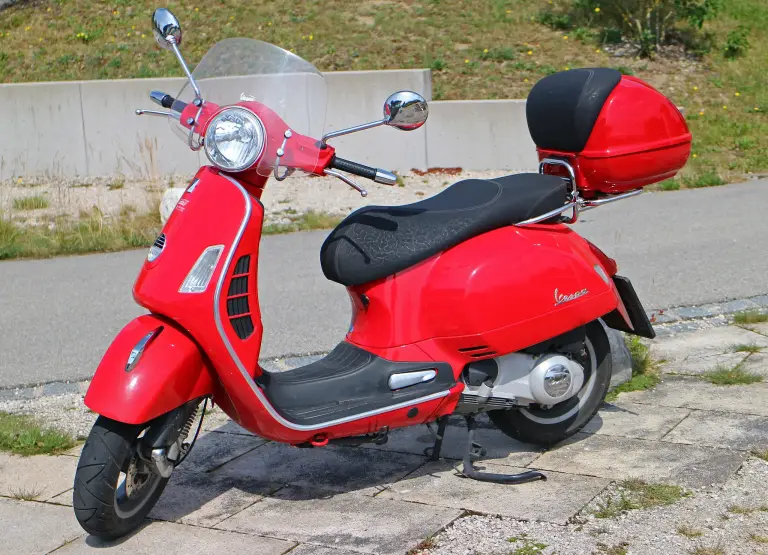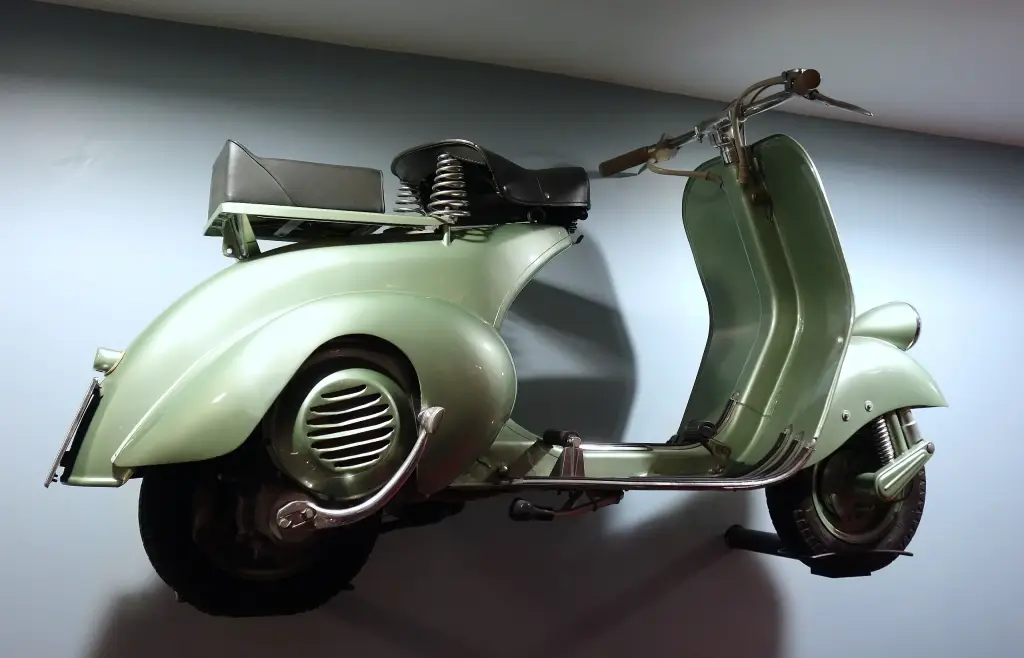
The Vespa 125 was the version of the Piaggio scooter that established the model with the public after the first 98 cc machines of 1946. It belongs to the line usually called the largeframe, the family of pressed-steel Vespas that grew through the 150 and the 200, and it kept the layout drawn by Corradino D’Ascanio for the original scooter.
Vespa 125 at a glance
| Maker | Piaggio, Pontedera |
|---|---|
| Designer | Corradino D’Ascanio |
| Patent | 23 April 1946, Florence |
| First production | 1946 |
| Vespa 125 | in production from 1948 |
| Body | pressed steel monocoque with stress-bearing panels |
| Layout | step-through, flat floor, tall front shield |
| Engine | single-cylinder two-stroke, air-cooled |
| Early engine | 98 cc, three-speed |
| Cooling | fan blades on the magneto flywheel |
| Gear change | twistgrip with rod linkage |
| Family | 125, 150, 200 and 125 D |
There is no separate Wikipedia article on the Vespa 125; the model is described here from the brand histories, which cover the early scooters and the success of the 125 from 1948.
History of the Vespa 125
The scooter before the 125
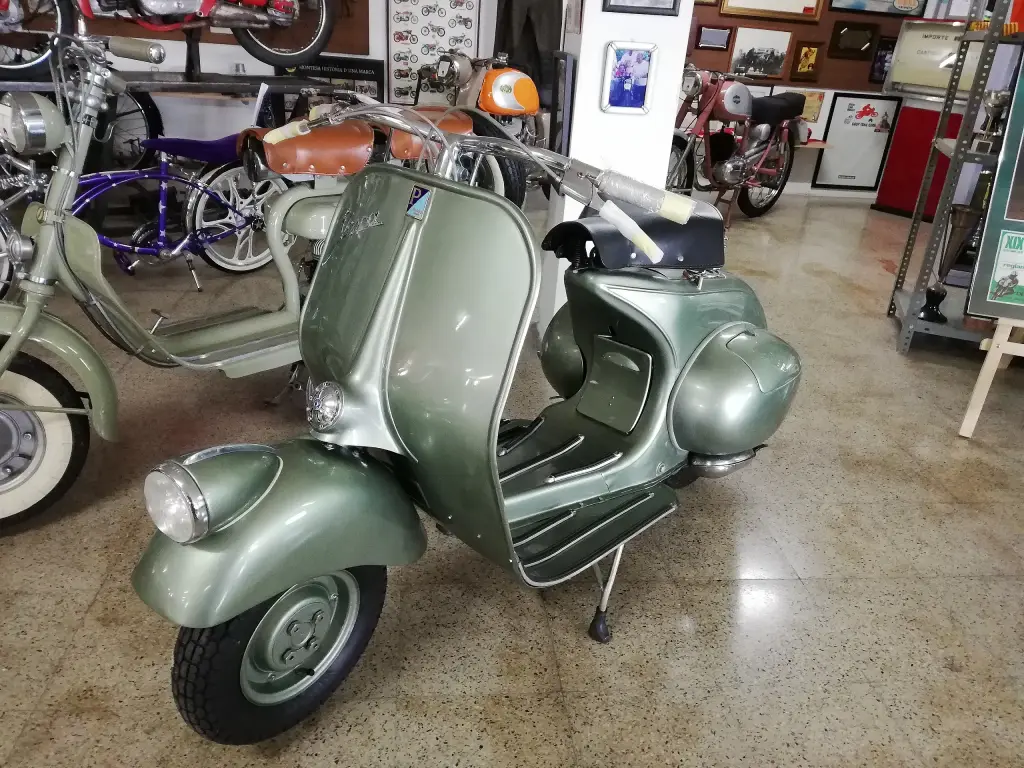
The first Vespa came out of Piaggio’s wartime aircraft experience. In 1944 the engineers Renzo Spolti and Vittorio Casini drew the MP5, a motorcycle with fully enclosing bodywork and a tall splash guard, nicknamed Paperino. Enrico Piaggio disliked its high central section and asked Corradino D’Ascanio to redesign it. D’Ascanio’s MP6 put the engine beside the rear wheel, drove the wheel directly from the transmission without a chain, and used a unit spar frame with stress-bearing steel outer panels. That allowed a step-through body instead of a machine to be straddled. On seeing it, Piaggio is said to have exclaimed “Sembra una vespa!” — it looks like a wasp — and the name stayed.
Into production
Piaggio filed the patent in Florence on 23 April 1946 for a motorcycle with a frame, mudguards and a casing covering all the mechanical parts. The first 13 examples appeared in the spring of 1946. They had rigid rear suspension, small 8-inch wheels, a 98 cc two-stroke engine mounted horizontally and a three-speed transmission with a twistgrip gear change worked by rods. Cooling was by fan blades attached to the magneto flywheel, and that system is still used on Vespa engines today.
The 125 makes the Vespa a success
The 125 followed in 1948 and gave the scooter the performance and capacity buyers wanted. Italian sources date the real public success of the Vespa to the arrival of the 125: production reached 171,200 scooters in 1953, the millionth Vespa was celebrated in 1956 and the two-millionth in 1960. From the 125 grew the classic largeframe range, with the 150 and the 200 as larger-engined versions and the 125 D as an early variant of the 125. These were the models with the wide, rounded side panels and the leg shield that defined the Vespa silhouette for a generation.
Design and features
- Pressed steel body: a monocoque of stressed steel panels that hides the engine and keeps oil and dirt off the rider.
- Step-through frame: no fuel tank between the knees and a flat floor for the feet.
- Engine beside the rear wheel: direct drive without a chain, one of D’Ascanio’s key changes.
- Forced-air cooling: fan blades on the flywheel push air over the cylinder fins.
- Twistgrip gear change: three speeds worked by rods rather than a foot lever.
Vespa 125 versions
- Vespa 125: the model that made the range a success from 1948.
- Vespa 125 D: an early variant of the 125.
- Vespa 150: the larger-engined classic largeframe.
- Vespa 200: the biggest of the classic largeframe line.
The smallframe line that followed is covered by the Vespa 50 Special, the last of the classic designs by the Vespa PX, and the modern range by the Vespa GTS. More are in the Vespa collection.
Video: BellaVespa: Vespa 125 Primavera ET3, Baujahr 1978
Video on YouTube.
Sources
- Vespa, English Wikipedia: design, patent, engine, frame, cooling
- Piaggio, Italian Wikipedia: the 125 of 1948, production figures