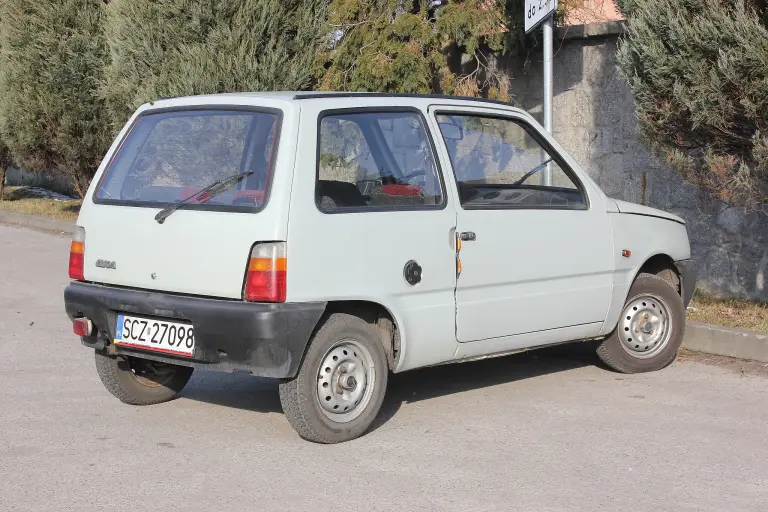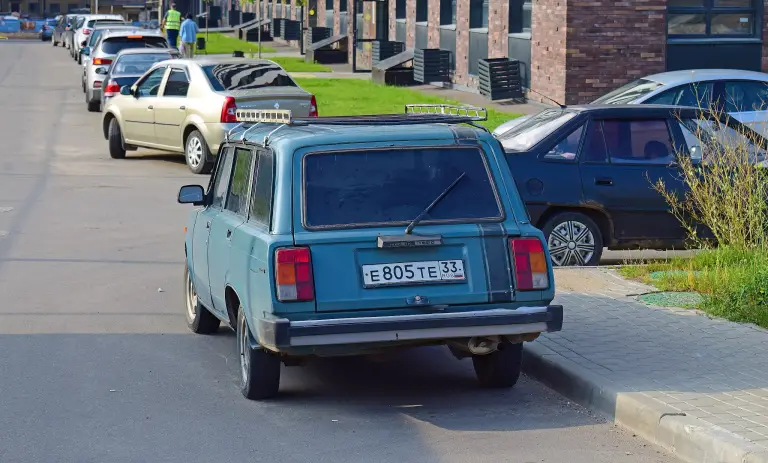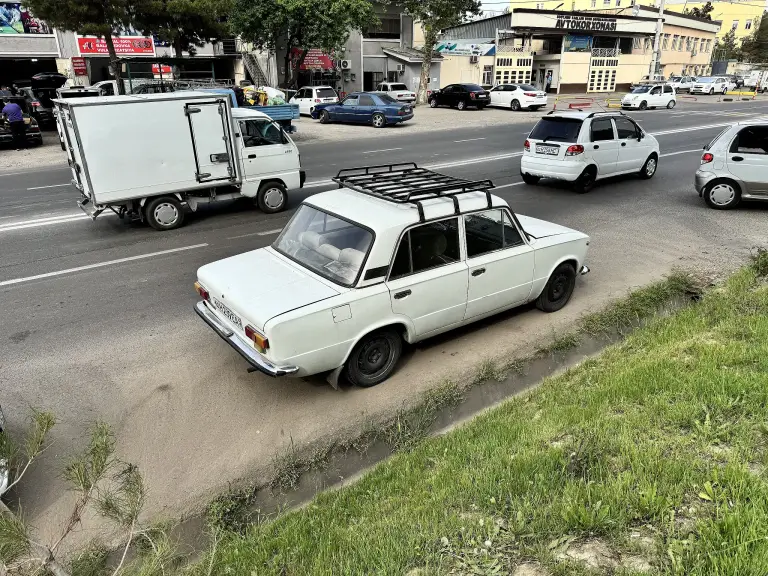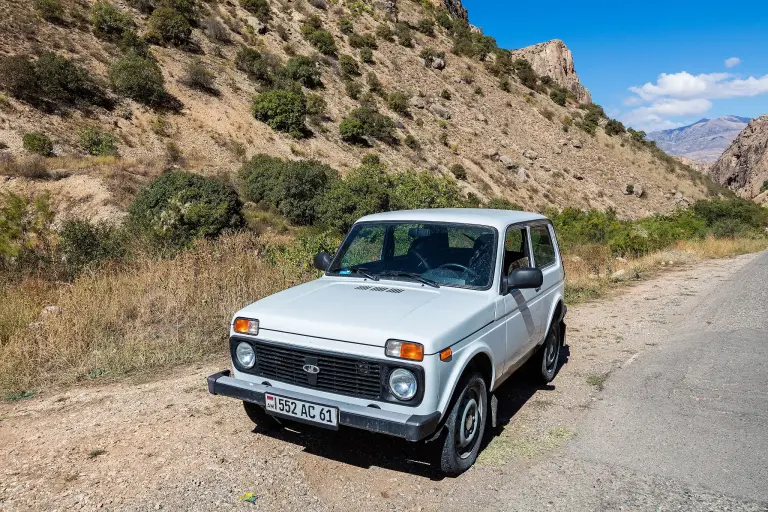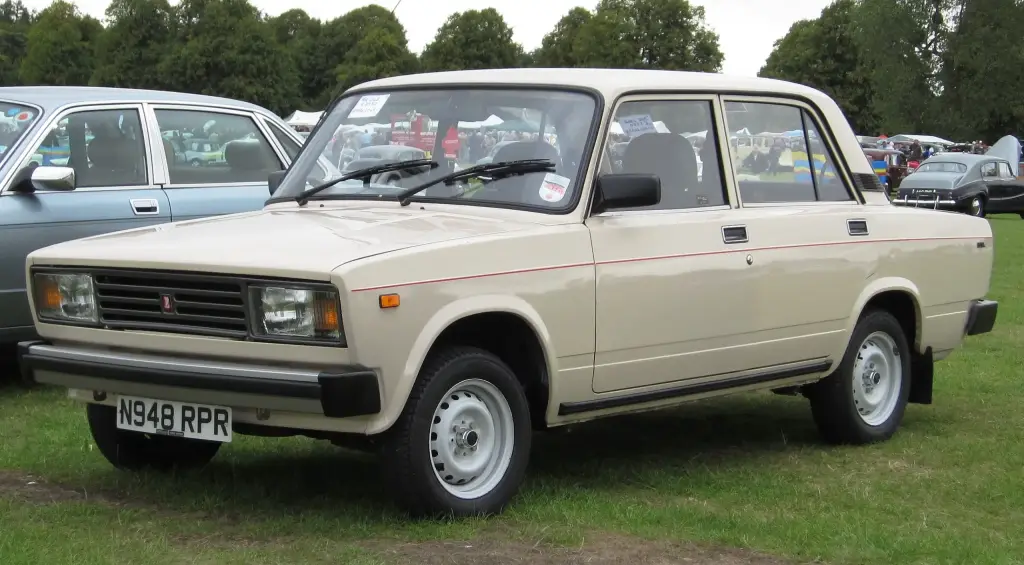
The Lada Riva is the collective name for the VAZ-2105, 2104 and 2107, the modernised versions of the original Zhiguli. Introduced in 1979 and built until 2012, they were sold in Britain and New Zealand as the Riva, in Germany as the Nova, and at home simply as the Pyatyorka, Chetvyorka and Semyorka — the five, the four and the seven.
Lada Riva at a glance
| Maker | AvtoVAZ, Tolyatti; later Izh, LuAZ and ZAZ |
|---|---|
| Production | 1979–2012 |
| Also called | Lada Riva (UK, New Zealand), Lada Nova (Germany), Lada Classic |
| Bodies | 2105 saloon, 2104 estate, 2107 deluxe saloon |
| 2105 engine | 1,294 cc, 65 hp, belt-driven camshaft |
| 2107 engines | 1,294 cc or 1,570 cc |
| 2104 engines | 1,294 cc, 1,198 cc or 1,452 cc |
| Platform | Fiat 124-derived, rear-wheel drive |
| UK sales | from July 1983 as the 1300GL |
| British market | more than 20,000 Ladas sold in 1986 |
| End of production | 2105 in 2010, 2104 and 2107 in 2012 |
| Special version | 21079 with a Wankel engine |
History of the Lada Riva
Introduction
The Riva is a modernised and restyled version of the original VAZ-2101 Zhiguli, itself a modified licence copy of the Fiat 124. VAZ began work on the facelift as early as 1975, and the first prototypes were built in 1977, although the car did not reach Western Europe until 1983, three years after its Soviet launch. It was introduced in 1979 and built in quantity from 1980. Officially the family consists of the VAZ-2105 base saloon, the VAZ-2104 station wagon and the VAZ-2107 deluxe saloon with its large chromed grille. In Russia they are considered different cars rather than variants, but all belong to the single Klassika family along with older models such as the VAZ-2101.
Mechanical layout
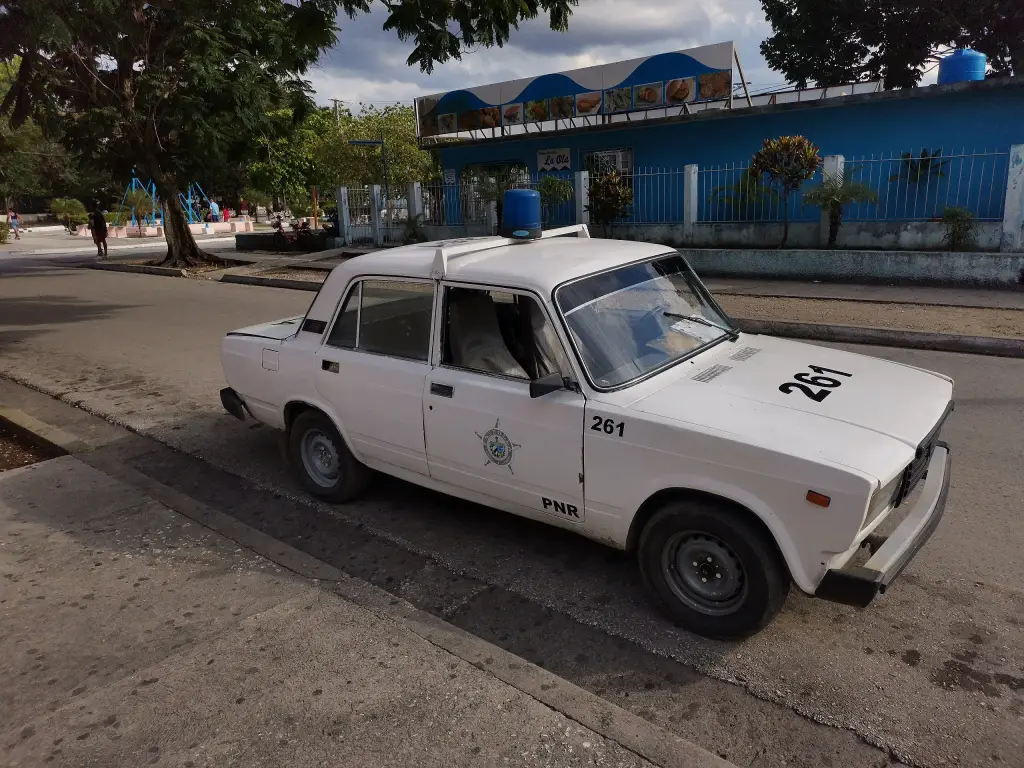
Mechanically the Riva is virtually identical to the first-generation VAZ-2101, with Fiat-derived manual transmissions, coil-spring suspension all round and aluminium alloy drum brakes with cast-iron shoes at the rear. The smaller-engined 2105 used a 65 hp 1,294 cc engine whose overhead camshaft was driven by a toothed belt instead of the old chain. Some versions of the larger-engined 2107 kept the 1,452 cc chain-driven engine from the Lada 1500, while others received the later 1,569 cc unit from the VAZ-2106. In 1992 single-point fuel injection and catalytic converters were specified to meet emissions legislation.
The 2107 and 2104
The 2107 was announced in 1982 as the luxury version and the most expensive of the family, with an improved interior including front headrests, a new instrument panel and a chrome grille; it came with either the 1,294 cc engine as the 21072 or the 1,570 cc unit as the 21074. A Wankel-engined version, the 21079, was also built. The first 2104 station wagon appeared in 1984 in three models: the 2104 with 1,294 cc, the 21041 with 1,198 cc and the 21043 with the 1,452 cc VAZ-2103 engine.
Export and the end
The Riva sold well in Eastern Europe and had a smaller presence in Britain, the Netherlands, New Zealand, where it served as a taxi, and Canada, the only market to offer whitewall tyres. Canadian 2107s were briefly sold as the Dennis Signet. The family was also exported in large numbers to Jamaica, where it became a popular taxi and was paid for in bauxite ore under a barter agreement. The British market first received the Riva as the 1300GL in July 1983, and the 21051 Riva 1200L used the 1,198 cc engine; in 1986 more than 20,000 Ladas were sold in Britain, almost all of them Rivas. Tightening safety and emissions rules and the instability of the 1990s pushed the Riva out of most Western European markets by 1997, Canadian sales ended on 4 July 1997, but production continued in Russia. After about thirty years the 2105 was discontinued in 2010, followed by the 2104 and 2107 in 2012.
Design and features
- Modernised classic: the proven VAZ-2101 platform with a restyled body and a more comfortable interior.
- Belt-driven camshaft: the 2105’s 1.3-litre engine replaced the old chain drive.
- Three body styles: saloon, estate and the chrome-grilled 2107 deluxe saloon.
- Easy to maintain: simple mechanics and cheap spare parts kept it popular as a second-hand car.
- Long life: more than thirty years in production, ending only in 2012.
Lada Riva versions
- VAZ-2105 (1979–2010): the base saloon with the 1.3-litre engine.
- VAZ-2104 (1984–2012): the station wagon, offered with three engine sizes.
- VAZ-2107 (1982–2012): the deluxe saloon with a chrome grille and a richer interior.
- VAZ-21079: rare Wankel-engined version.
- Riva 1300GL and 1200L: British-market models from 1983.
The Riva was the direct successor of the VAZ-2101 and shared its engine with the VAZ-2106. The modern front-wheel-drive replacement was the Lada Samara, and more models are in the VAZ collection.
Video: 2012 LADA VAZ 2104. Start Up, Engine, and In Depth Tour.
Video on YouTube.
Sources
- Lada Riva, English Wikipedia: history, versions, export markets, end of production