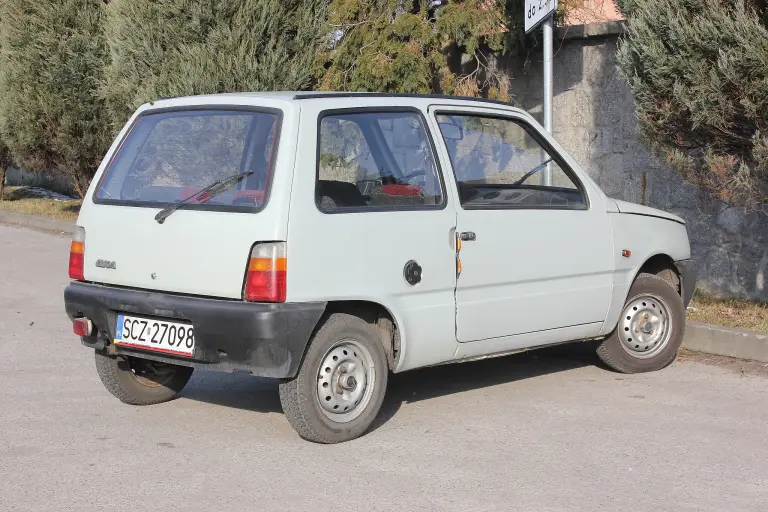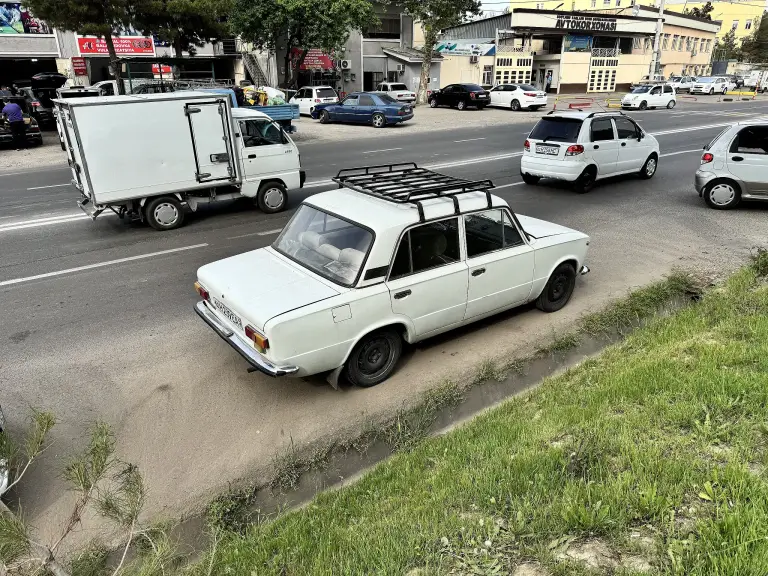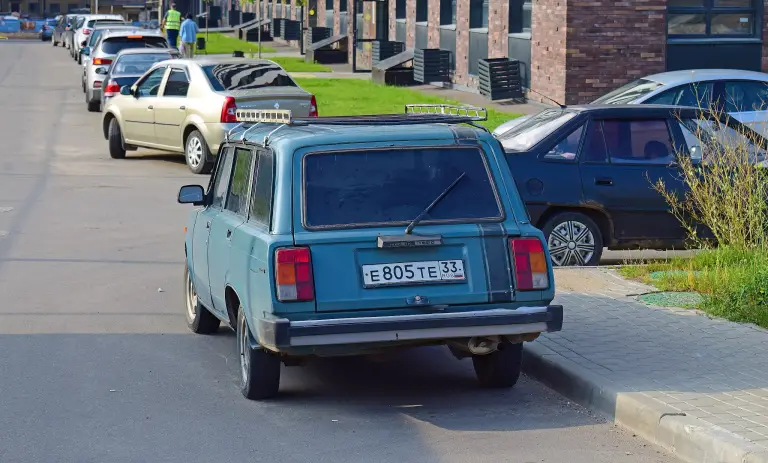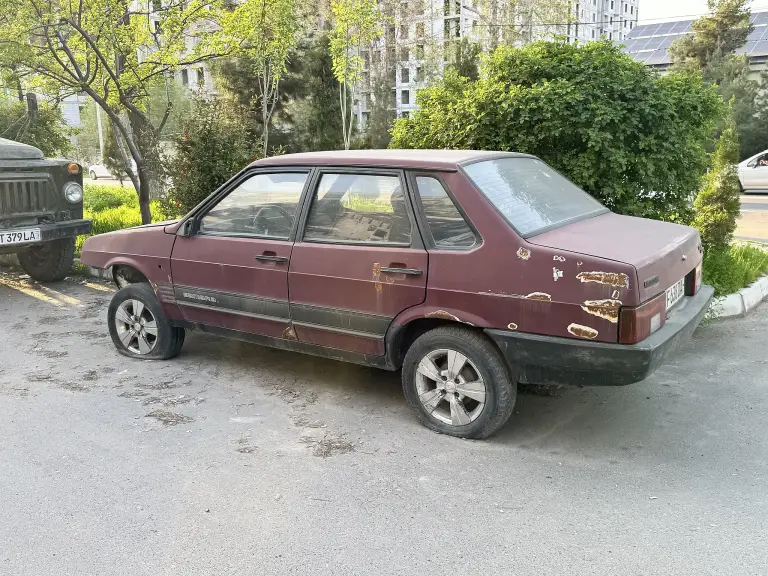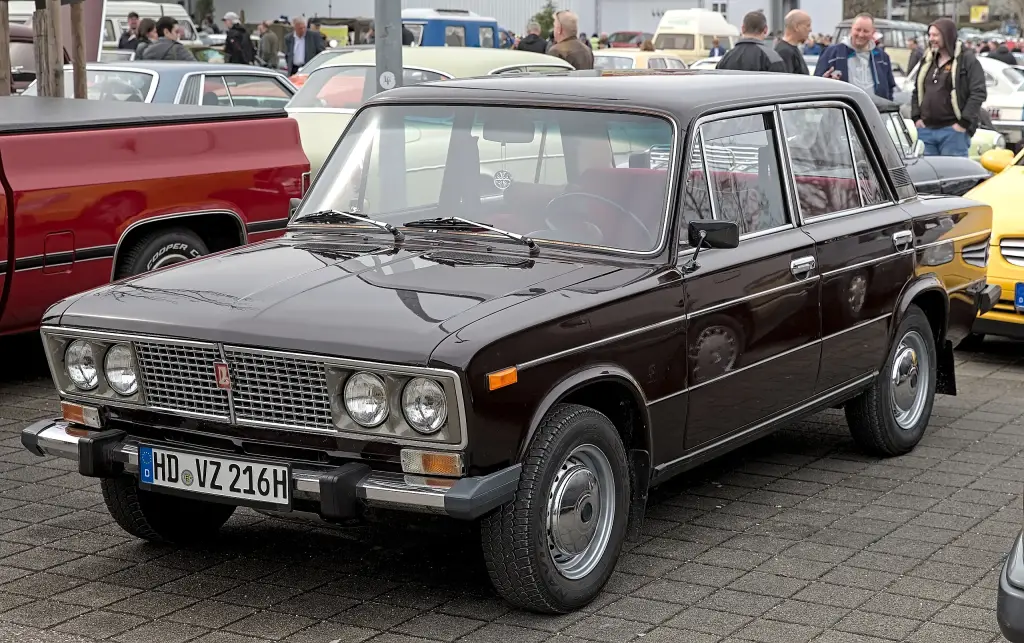
The VAZ-2106 Zhiguli was the most numerous of the classic Ladas, produced from 1976 to 2006. It was developed from the VAZ-2103 as a simpler and cheaper alternative, with a new 1.6-litre engine and a slightly restyled body. Abroad it was sold as the Lada 1600, and at home it was nicknamed Shestyorka, the sixth one.
VAZ-2106 at a glance
| Maker | AvtoVAZ, Tolyatti; later IzhAvto and Anto-Rus |
|---|---|
| Production | 1976–2006 |
| Domestic name | VAZ-2106 Zhiguli, nicknamed Shestyorka |
| Export names | Lada 1600, Lada 2106 |
| Body | 4-door saloon |
| Engine | 1,568 cc SOHC inline-four, 78 hp |
| Torque | 117 N·m |
| Top speed | 150 km/h |
| 0–100 km/h | 16 seconds |
| Base | VAZ-2103 |
| Other variants | 21061 with 1.5 litres, 21063 with 1.3 litres |
| Production split | VAZ plant until 2001, Izhevsk until 2006 |
History of the VAZ-2106
Development and design
The 2106 was derived from the VAZ-2103 and created as its alternative, because the chrome elements of the 2103 were expensive and complex to produce. It kept the four-door, four-seat saloon layout but used a more powerful 78 hp 1,568 cc overhead-camshaft engine of Lada’s own design, built with the pistons of the 1,294 cc VAZ-21011 and the crankshaft of the 1,452 cc VAZ-2103. Although only marginally more powerful than the 2103, it produced more torque, 117 N·m instead of 103, which made it easier to drive. Top speed was 150 km/h and acceleration from 0 to 100 km/h took 16 seconds. It debuted in December 1975 and became the most popular and most numerous VAZ product.
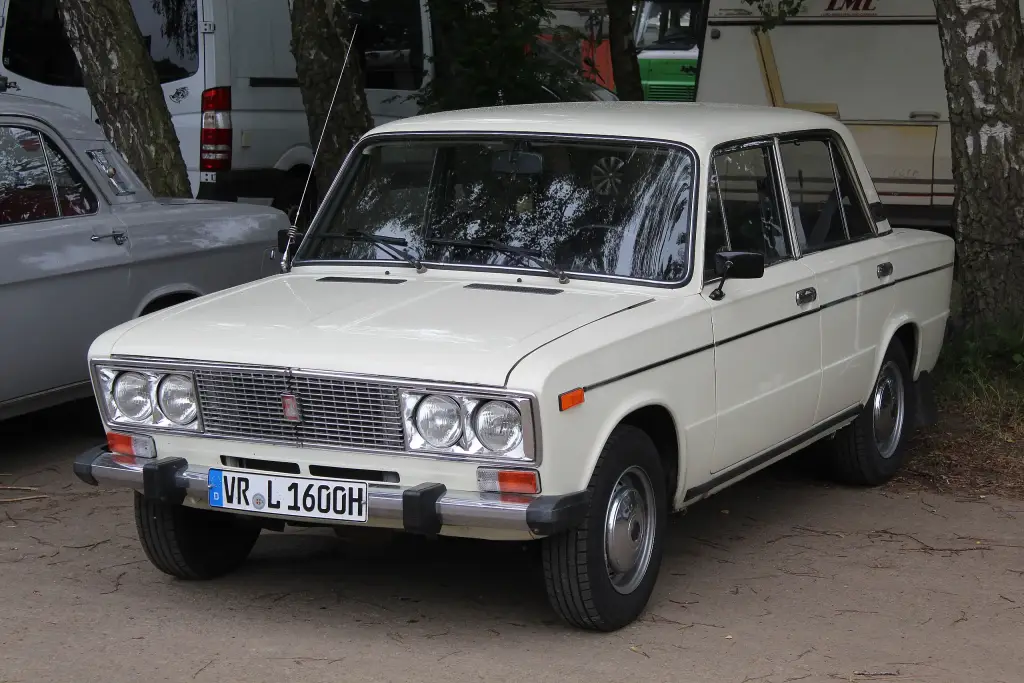
Externally the 2106 differed from the 2103 by a smaller grille with plastic headlight surrounds, different bumpers and wider taillights that included reverse lights, then a new feature for VAZ. Inside it was almost the same as its predecessor, but it was the first VAZ model with height-adjustable headrests on the front seats, and its steering wheel was decorated with classic Russian ornaments and the Lada logo. In 1976, as the newest model in the VAZ range, it served as the basis for the prototype that became the VAZ-2121 Niva, which borrowed its 1.6-litre engine, lights, mirrors, headrests, steering wheel and instruments. In the second half of the 1990s the car was restyled again: the grille became black plastic with a new Lada badge, chrome trim on the mirrors and wheel covers was removed, the wood-imitation dashboard was replaced by a black one, and the original folding seats gave way to more modern ones.
Production and versions
The 21061, with the 75 hp 1,452 cc VAZ-2103 engine, and the 21063, with the 64 hp 1,294 cc unit, appeared in 1979. The 21063 disappeared in 1993, while the cheaper 21061 became the sales leader and helped make the 2106 the top-selling Lada model. In Canada the car was sold from late 1978 to 1979 as the Lada Signet, officially the VAZ 21061-37, and it remained on the Canadian market until 1984. Production at the VAZ plant ended after 25 years in 2001, when manufacture moved to IzhAvto in Izhevsk for the final five years, until January 2006; the car was also built in Ukraine by Anto-Rus.
Rally versions and safety
Special rally-prepared 2106s had up to 135 hp from the 1.3-litre engine and up to 150 hp from the 1.6, while a turbocharged sixteen-valve 1.8-litre version delivered 240 hp. By modern standards the car was far behind: in 2002 the IZhmash-built version was awarded zero stars out of four by the Russian ARCAP safety programme, whose reviewers noted that the design dated back to the 1960s. Yet the model remained a familiar sight for decades, and in 2017 an old 2106 crossed twelve European and African countries in 15 days in the Banjul Challenge.
Design and features
- 1.6-litre engine: more torque than the 2103, which made the car easier to drive in everyday use.
- Comfort upgrades: the first VAZ model with height-adjustable front headrests and a distinctive ornamented steering wheel.
- Recognisable styling: a smaller grille, different bumpers and wider taillights with reverse lights.
- Late-1990s restyle: black plastic grille, less chrome and a modernised interior.
- Simple mechanicals: the Fiat-derived layout could be serviced almost anywhere.
VAZ-2106 versions
- VAZ-2106 (1976–2006): the base 1.6-litre saloon, exported as the Lada 1600.
- VAZ-21061 (from 1979): 1.5-litre version with 75 hp and the best sales figures.
- VAZ-21063 (1979–1993): 1.3-litre version with 64 hp.
- Lada Signet: Canadian version, officially the VAZ 21061-37, sold until 1984.
- Rally cars: factory-prepared versions from 135 to 240 hp.
The 2106 was developed from the VAZ-2103 and shared its engine with the Lada Niva. The first car of the line was the VAZ-2101, and more models are in the VAZ collection.
Video: Avtomobil Vaz 2106 Mashin4x4
Video on YouTube.
Sources
- VAZ-2106, English Wikipedia: development, production, versions, safety