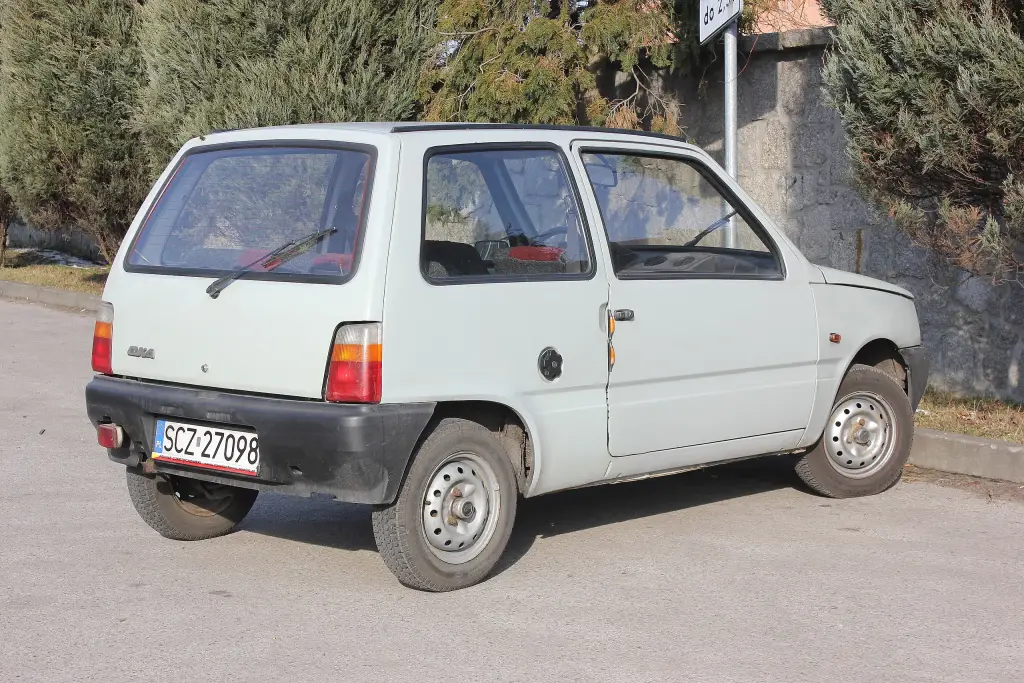
The Lada Oka, known as the VAZ-1111, SeAZ-1111 and KamAZ-1111, was a small city car designed at AvtoVAZ in the late 1970s and built from 1988. It was powered by a 644 cc two-cylinder engine and replaced the ZAZ Zaporozhets as the Soviet people’s car. Almost 700,000 were built over nearly two decades.
Lada Oka at a glance
| Designer | AvtoVAZ, team led by Yuri Kuteev |
|---|---|
| Builders | SeAZ in Serpukhov and ZMA in Naberezhnye Chelny |
| Production | 1988–2008 |
| Names | VAZ-1111, SeAZ-1111, KamAZ-1111, Astro 11301 |
| Body | 3-door hatchback |
| Engine | 644 cc SOHC two-cylinder |
| Drive | front-wheel drive |
| Built | about 700,000 |
| Electric version | VAZ-111E of 1989, range about 100 km |
| Later engines | 750 cc and a 1.0-litre Chinese unit |
| Safety rating | zero stars in ARCAP, 2002 |
| End of production | 2008 |
History of the Lada Oka
Origins
The Oka was conceived as an affordable, lightweight and simple car to replace the air-cooled, rear-engined ZAZ Zaporozhets 966-968 series. The SeAZ factory in Serpukhov specialised in vehicles for handicapped drivers, and by the 1970s its S-3D was a spartan two-seat sedan with a motorcycle engine. When SeAZ engineers under factory manager Alexander Popov proposed a new product, they turned to their VAZ colleagues, and the project was approved in 1983. The design by exterior designer Yuri Vereschagin was inspired by Japanese kei cars such as the Daihatsu Cuore, and in size and proportions by the Fiat Uno and Panda and the Renault 5. The Soviet ministry preferred it over other microcar projects from SeAZ and NAMI. The car was named after the Oka River, on which Serpukhov stands.
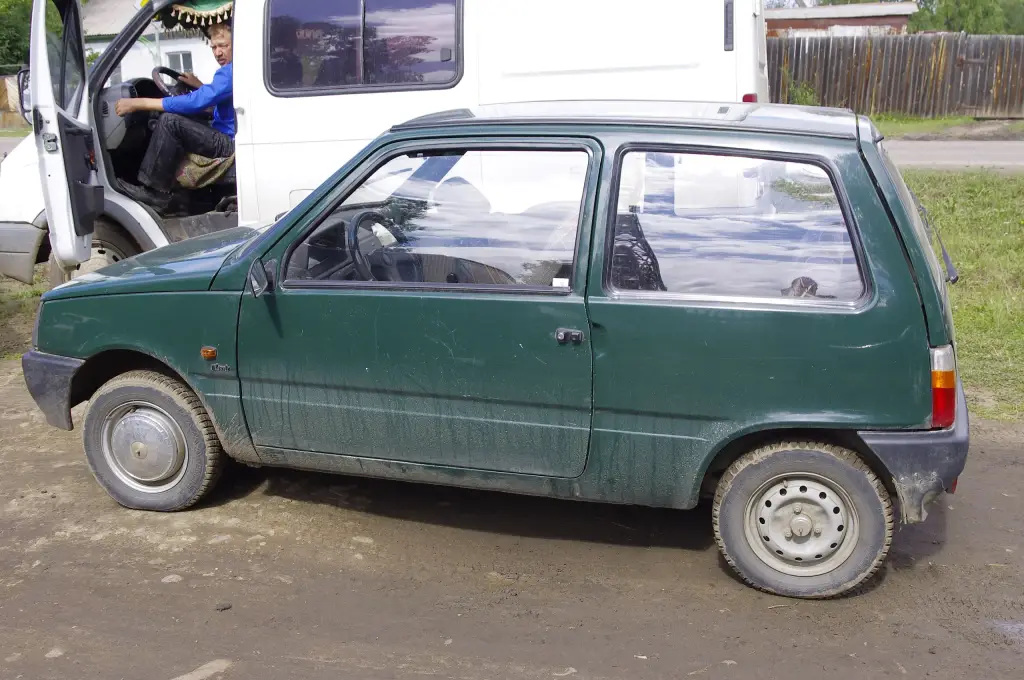
A three-cylinder engine proposed by Andrei Rozov was not ready in time, so the Oka received a two-cylinder variant of the VAZ-2108 four-cylinder engine, made by cutting the latter in half. Although designed at AvtoVAZ, no production models were built there: manufacturing was outsourced to SeAZ in Serpukhov and ZMA in Naberezhnye Chelny, then owned by Kamaz, and the car was also assembled in Azerbaijan by the Gyandzha Auto Plant. It was a true people’s car, a vehicle that every factory engineer could afford.
Production
The first cars were made in December 1987 and series production began in 1988. During test drives on roads and in the Caucasus Mountains the car proved to have good handling, roadholding and, surprisingly for its size, excellent off-road ability. Some 700,000 examples rolled off the assembly lines over nearly two decades. At the 1989 Moscow International Motor Show VAZ showed a battery-electric version, the VAZ-111E, with 120 V of batteries stored in the engine bay, beneath the seats and in the cargo bay, giving a range of about 100 km; it was built to special order until 1998. In 2002 the Oka was awarded zero stars out of four by the Russian ARCAP safety programme, with the ZMA-built version found to be marginally safer than the SeAZ one. By 2006 four versions were on sale: the basic VAZ-11113 with 33 hp and a 125 km/h top speed at 3.2 litres per 100 km, the 49 hp Astro 11301, and the Toyma light delivery vehicle with a cargo compartment instead of the rear seats. Series production ended in Russia in 2008, when SeAZ built the last batch with Chinese EURO-2 engines; in 2023 the government began talking about a possible revival of the brand.
Versions
The original VAZ-1111 with the 650 cc engine was produced from 1988 to 1996. It was followed by the VAZ-11113 with a larger 750 cc engine from 1996 to 2007. The SeAZ-11116 used a Chinese 1,000 cc three-cylinder fuel-injected engine in 2007–2008. SeAZ also built special versions for disabled drivers, the SeAZ-1111-01, -02 and -03, adapted for different disabilities, and the 11113 equivalents. The Astro 11301 was a more powerful custom version, while the Toyma was a light delivery van.
Design and features
- Very small and cheap: a simple city car intended as the Soviet people’s car.
- Two-cylinder engine: half of the VAZ-2108 four, chosen to save development time.
- Front-wheel drive: modern layout for a microcar of its era.
- Surprising off-road ability: tests in the Caucasus showed good handling for its size.
- Accessibility versions: SeAZ built adapted cars for disabled drivers.
Lada Oka versions
- VAZ-1111 (1988–1996): the original 650 cc model.
- VAZ-11113 (1996–2007): 750 cc engine and more power.
- SeAZ-11116 (2007–2008): 1.0-litre Chinese three-cylinder engine.
- Astro 11301: custom version with 49 hp.
- Toyma: light delivery vehicle with a cargo compartment.
- SeAZ-1111-01/02/03: adapted versions for drivers with disabilities.
- VAZ-111E: experimental electric car of 1989.
The Oka’s engine was derived from the Lada Samara four-cylinder, and the car sat below the classic Zhiguli in the range. More models are in the VAZ collection.
Sources
- Oka (automobile), English Wikipedia: origins, production, versions, safety