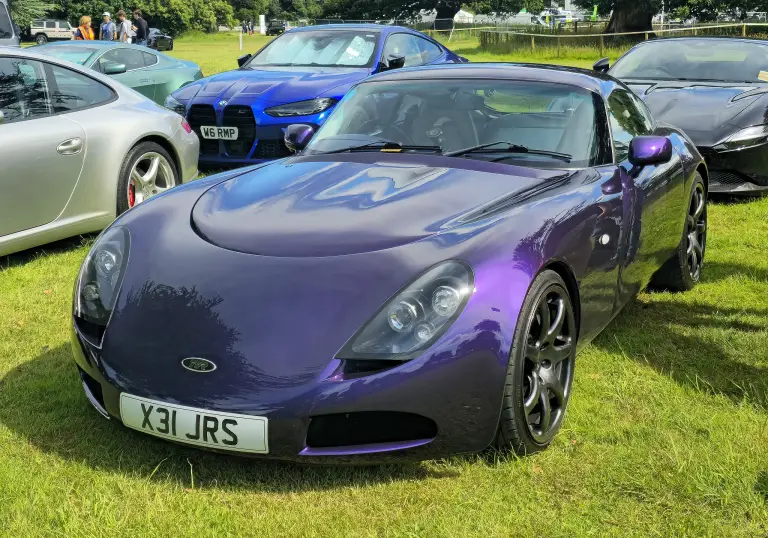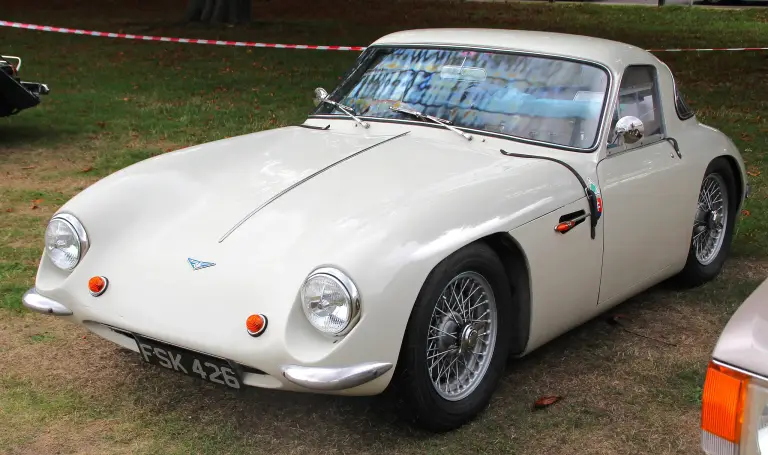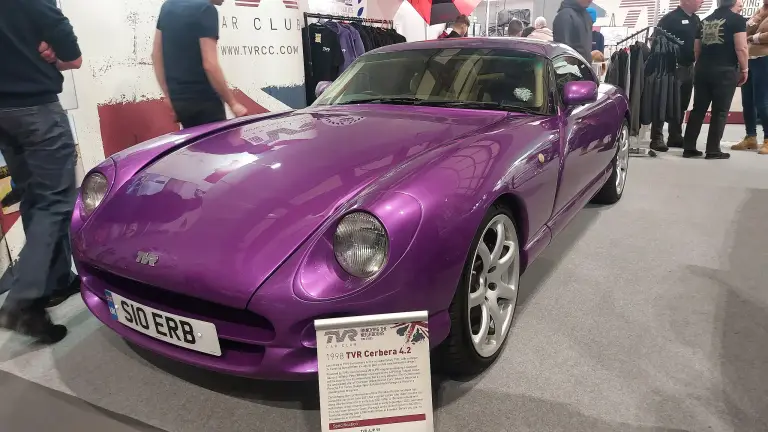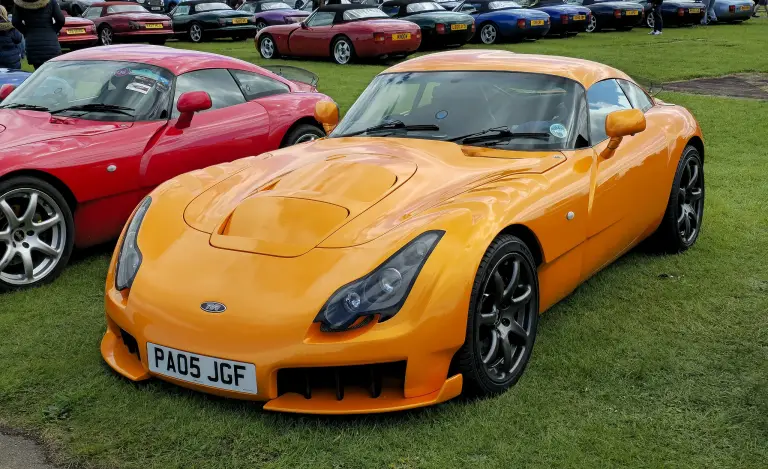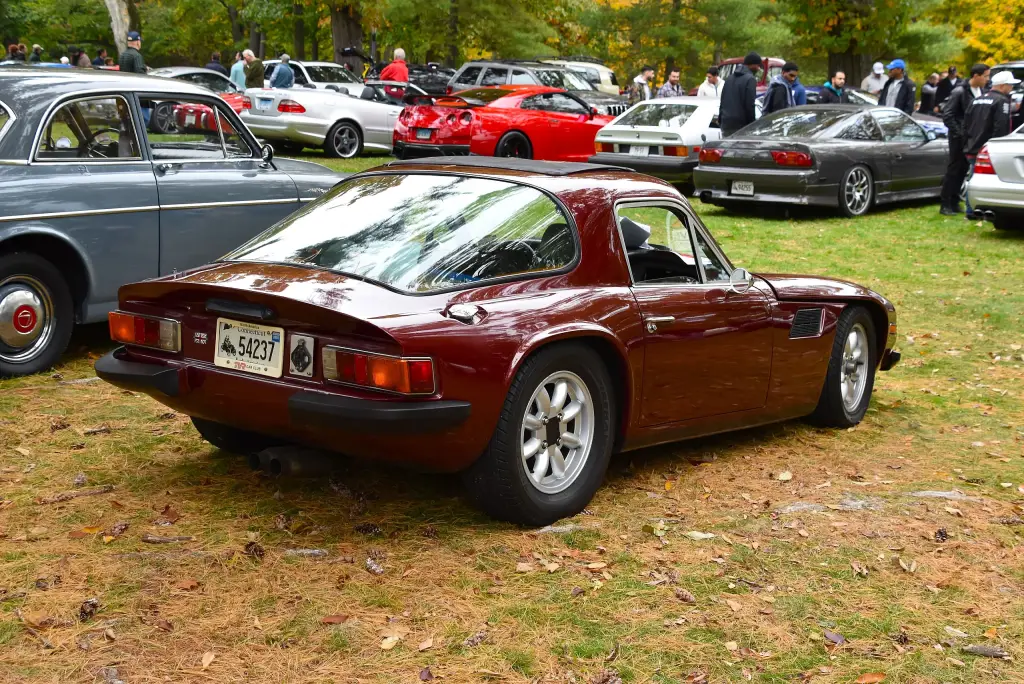
The TVR M series replaced the Vixen and Tuscan in 1972 and ran until 1979. Every car shared the same chassis and body style, and the range grew from the 2500M through the 1600M, 3000M, 3000S and Taimar to turbocharged versions and the V8-powered 5000M.
TVR M series at a glance
| Maker | TVR, Blackpool |
|---|---|
| Production | 1972–1979 |
| Models | 1600M, 2500M, 3000M, 3000S, Taimar, plus turbocharged versions |
| First model | 2500M, March 1972, after a 1971 prototype |
| Chassis | central backbone with perimeter tubes, designed by Mike Bigland |
| Construction | body-on-frame with glass-reinforced plastic body |
| Layout | front mid-engine, rear-wheel drive |
| Suspension | double wishbones and coil springs front and rear |
| Brakes | 11-inch discs front, 9-inch drums rear, from the Triumph TR6 |
| Total built | 2,465 |
Based on one source: the English Wikipedia article on the TVR M series.
History of the TVR M series
The M series arrived in 1972 with the 2500M, built as a prototype in 1971, and continued to 1979. The cars kept the front mid-engine, rear-wheel drive layout and body-on-frame construction of earlier TVRs, with glass-reinforced plastic bodies. Reviewers of the day called them loud, fast and possessed of excellent roadholding, though the ergonomics were unusual and the heating and ventilation sometimes troublesome. The series is associated with Martin Lilley, who with his father had taken over the company on 30 November 1965.
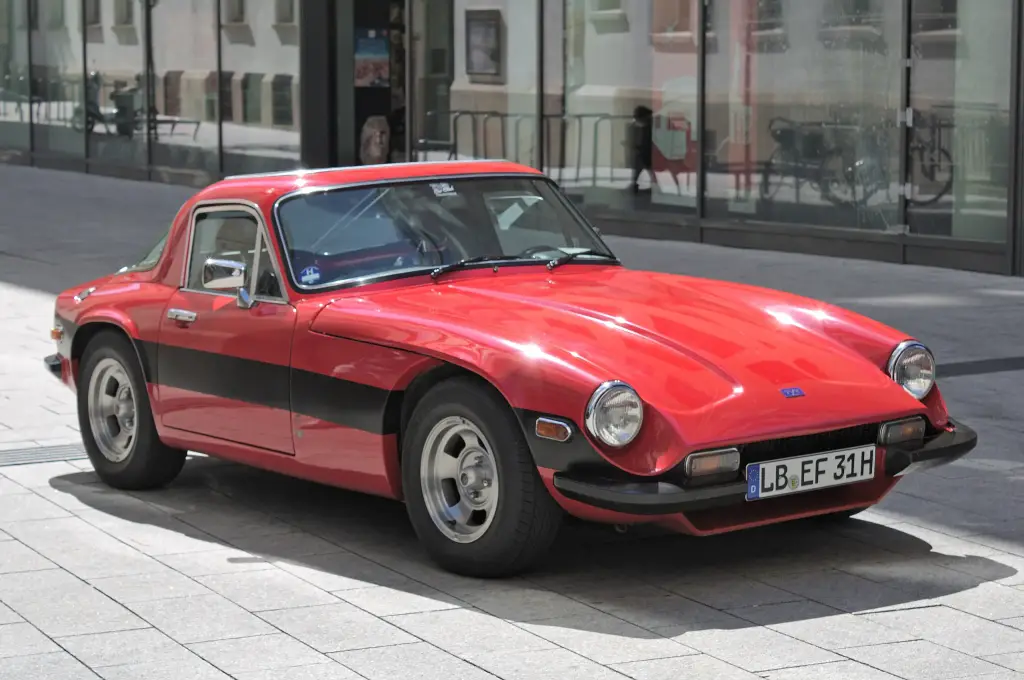
The backbone chassis was designed in 1971 by the engineer and dealer Mike Bigland, hired after he showed Lilley suspension and steering improvements he had made to a 1967 TVR Tuscan SE. It used a central backbone with perimeter tubes, in round and square sections of 14- and 16-gauge steel, the square tube making it easier to join the frame to the body. To build it, Lilley upgraded the workshop so that two welders could produce five chassis a week. TVR offered a five-year guarantee against corrosion on the chassis, unusual at the time; rust was prevented by leaving a film of oil from the manufacturing process on the metal, capping the tube ends and avoiding fasteners driven through the tube walls.
The shallow radiator allowed the spare wheel to sit in front of the engine, which freed luggage space behind the seats and gave some extra crash protection. An M-series car was crash tested by the Motor Industry Research Association in 1971 and was the only vehicle that stayed steerable after a 30 mph impact with a concrete wall; the engine stayed in place, the doors still opened and the steering column moved away from the driver. Suspension was by double wishbones and coil springs at both ends, with TVR-designed wishbones and aluminium hub carriers, Triumph TR6 brakes of 11-inch discs at the front and 9-inch drums at the rear, and rack-and-pinion steering by Alford & Alder. The American market mattered greatly to TVR: Gerry Sagerman handled import and distribution from Long Island through about thirty eastern dealers, while John Wadman distributed the cars in Canada through JAG Auto Enterprises. A small number of 5.0-litre Ford V8 cars were finished or converted by the North American importer and sold as the 5000M. In all, 2,465 M-series cars were built in nine years.
Design and features
- One shared platform: a single chassis and body style across five model names.
- Backbone chassis: Mike Bigland’s design with a five-year corrosion guarantee.
- Crash-test surprise: the only car to stay steerable after a 30 mph wall impact.
- Parts-bin engineering: Triumph TR6 brakes and rack-and-pinion steering.
TVR M series versions
- 2500M (1972): the first M-series model.
- 1600M: the smallest-engined version.
- 3000M: the mainstay of the range.
- 3000S: the open version of the 3000M.
- Taimar: the hatchback-bodied model.
- Turbocharged 3000M, 3000S and Taimar: added from 1976.
- 5000M: a few Ford V8 cars converted by the US importer.
The M series replaced the Vixen and the Tuscan, and its chassis thinking carried into the Tasmin wedge. More cars are in the TVR collection.
Video: 1977 TVR 3000M Review
Video by ClassicCarsDriven on YouTube.
Sources
- TVR M series, English Wikipedia: models, chassis, crash test, production