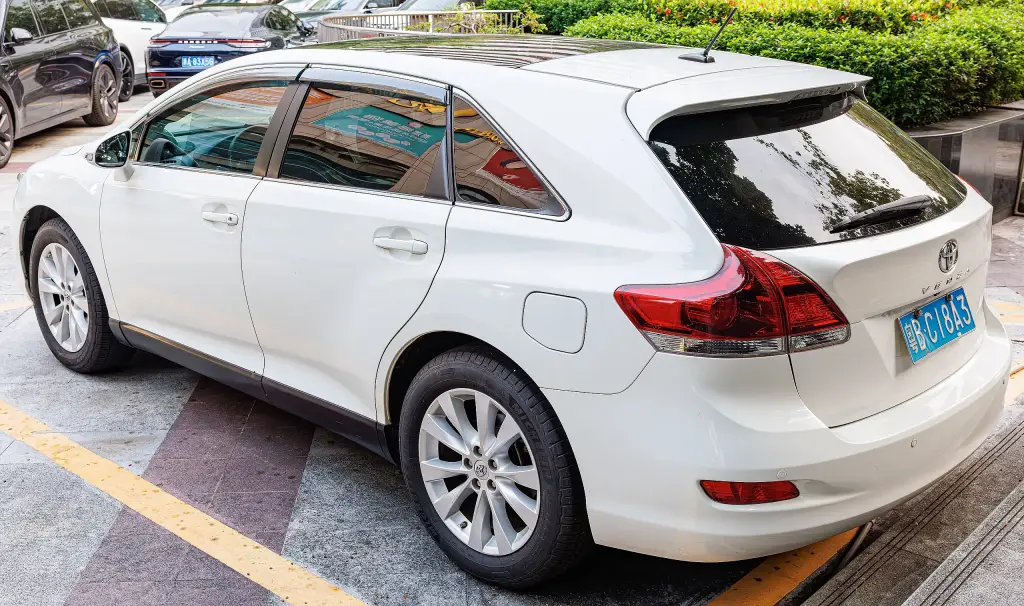
The Toyota Venza is a five-passenger mid-size crossover sold mainly in North America in two generations, with a gap between the model years 2018 and 2020. The first car was based on the Camry, while the second is a rebadged Japanese-market Harrier.
Toyota Venza at a glance
| Maker | Toyota |
|---|---|
| Production | 2008–2017, then from 2020 |
| Market | North America |
| Class | Mid-size crossover SUV |
| First generation | AV10, on the XV40 Camry platform |
| First engines | 2.7-litre four and 3.5-litre V6 |
| Gearbox | Six-speed automatic |
| Built in | Georgetown, Kentucky |
| Second generation | Rebadged Harrier XU80, from 2020 |
| Name | A mix of “venture” and “Monza” |
Based on one source: the English Wikipedia article on the Toyota Venza.
History of the Toyota Venza
First generation (AV10; 2008)
The Venza was unveiled at the North American International Auto Show in 2008, designed at Calty in Newport Beach on the basis of the FT-SX concept and engineered mainly at Toyota’s Michigan technical centre. Production began at Toyota Motor Manufacturing Kentucky in Georgetown in November 2008, with the 2.7-litre model following in February 2009. It was built on the XV40 Camry platform, the K platform, and shared it with the AL10 Lexus RX, and it was powered by a 2.7-litre 1AR-FE four-cylinder or a 3.5-litre 2GR-FE V6 through a six-speed automatic, with front- or all-wheel drive. With the 2.7-litre engine the EPA estimated 21 mpg in the city and 29 on the highway.
Equipment and updates
The first Venza had a single trim with many packages. Standard were fog lamps, 19-inch alloy wheels on the four, 20-inch on the V6, satellite radio, a six-disc CD changer, dual-zone climate control, an eight-way power driver’s seat and hill-start assist. Options included automatic high beams with HID lighting, a power liftgate, leather, a panoramic glass moonroof, smart key, a 13-speaker JBL system, touch-screen navigation, a reversing camera and a rear entertainment system. For 2010 a USB input and Bluetooth became standard, replacing the six-disc changer with a single CD unit. For 2012 the American range split into LE, XLE and Limited, the last with the V6 only, and a 2013 facelift brought restyled 19-inch wheels and the Entune multimedia system. The Venza earned the Insurance Institute for Highway Safety’s Top Safety Pick in 2009, 2010 and 2011, and more than 70 per cent of its components came from American suppliers.
The second generation
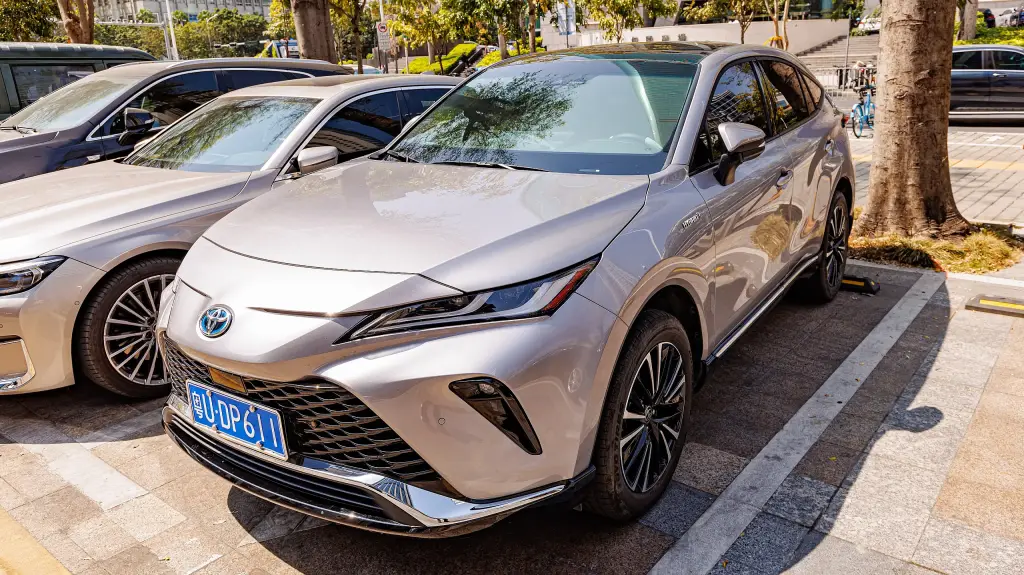
After a gap in model years 2018 to 2020, the Venza returned in September 2020 as a rebadged version of the XU80 Toyota Harrier. In North America it is offered only as an all-wheel-drive hybrid, and unlike the Harrier it lacks the grille-mounted fog lamps on all trims. The first generation was built at Georgetown until June 2015 for the American market, and it was one of two North American-built Toyotas, with the Avalon, that were never sold in Mexico.
Design and features
- Camry platform: the first Venza shared the K platform with the Camry and Lexus RX.
- American build: made in Kentucky with over 70 per cent US components.
- Top Safety Pick: an IIHS award in 2009, 2010 and 2011.
- Hybrid-only return: the 2020 generation is a Harrier with standard all-wheel drive.
Toyota Venza versions
- AV10 (2008): first generation with 2.7 and 3.5-litre engines.
- 2012 trims: LE, XLE and Limited in the United States.
- 2013 facelift: new wheels and the Entune system.
- Second generation (2020): rebadged Harrier, hybrid and all-wheel drive only.
The first Venza used the Camry platform, and the second is a rebadged Harrier. Its larger relative is the Highlander, and more cars are in the Toyota collection.
Sources
- Toyota Venza, English Wikipedia: generations, engines, equipment