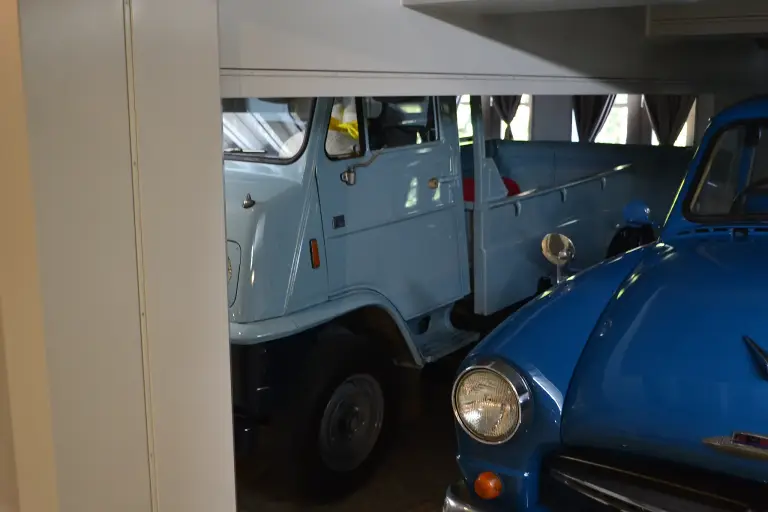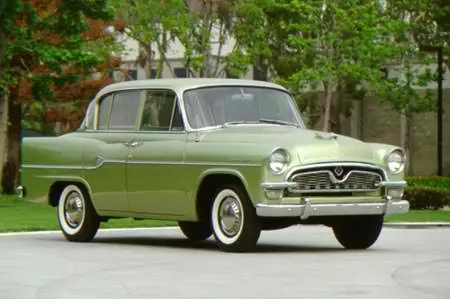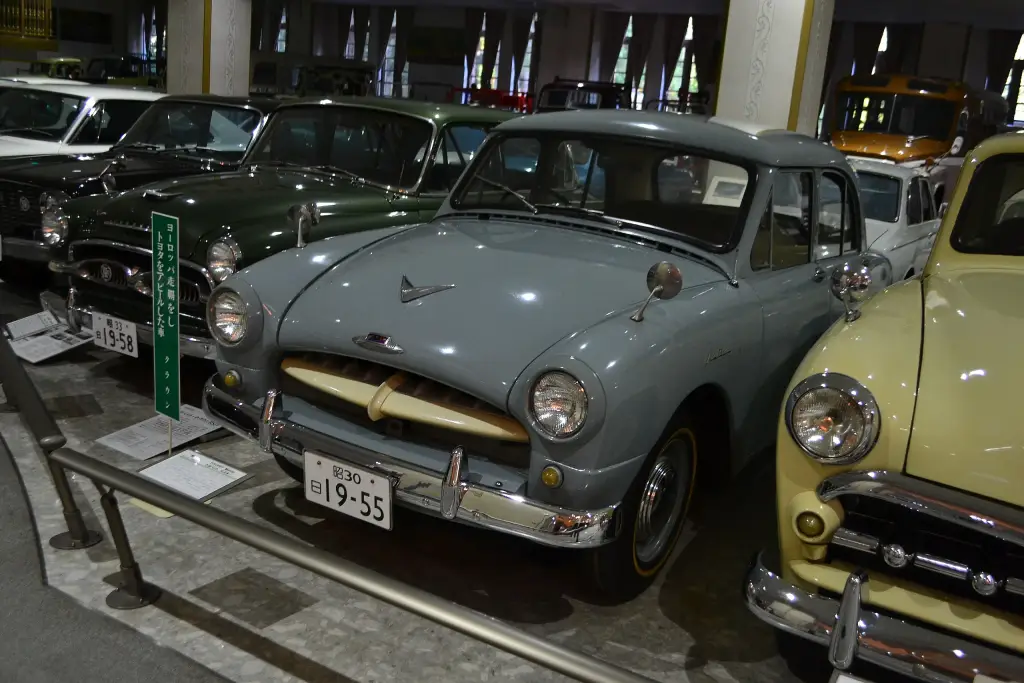
The Toyopet Master was introduced in January 1955 as a robust, simply equipped saloon for taxi work, sold beside the more modern Crown. It kept a ladder frame and solid axles, and its commercial derivatives, the Masterlines, became Japan’s first car-based light trucks.
Toyopet Master at a glance
| Maker | Toyota, bodies by Kanto Auto Works |
|---|---|
| Master sedan production | January 1955 – November 1956 |
| Predecessor | Toyota SF/RH (Super) |
| Engine | 1.5 L R, 48 PS (35 kW) |
| Chassis | ladder frame |
| Suspension | leaf-sprung solid axles front and rear |
| Gearbox | three-speed, fully synchronised |
| Masterline introduced | November 1955 (RR16 pickup, RR17 van) |
| Masterline RR19 | August 1956, double-cab pickup, 55 PS |
| Power by 1958 | 58 PS (43 kW) |
| Masterline production | until March 1959 |
| Total built | 19,400 Master and Masterlines |
The Masterline records are covered in this article, as the English Wikipedia page describes the Masterline as part of the Master range. Based on one source.
History of the Toyopet Master
A conservative taxi beside the Crown
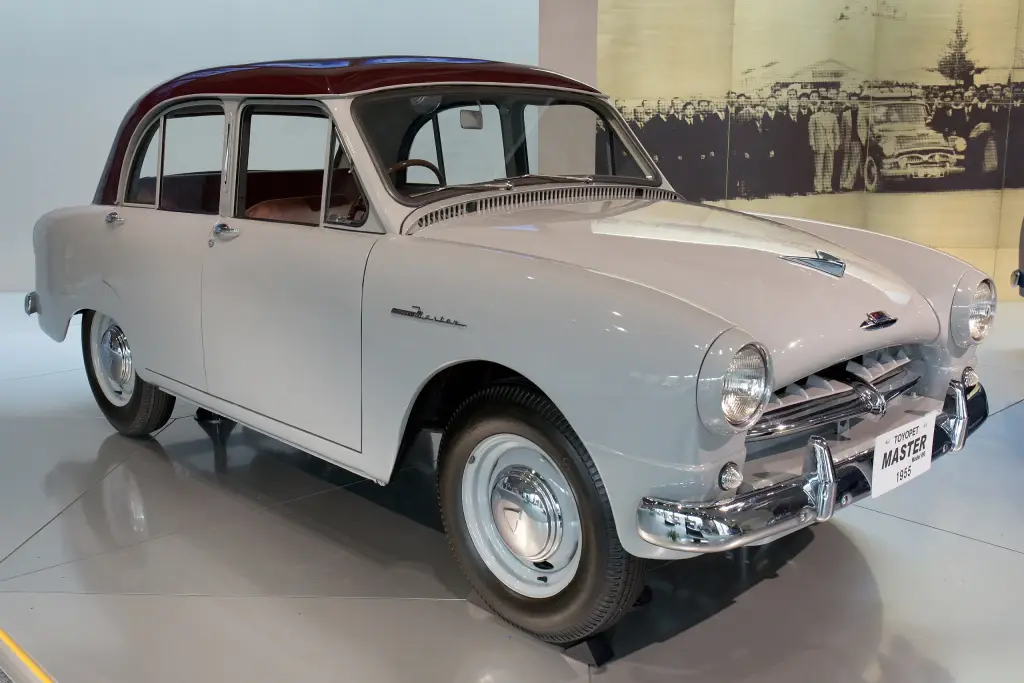
The Master was an evolution of the earlier Toyota SF/RH sedan, also known as the Super, with a modernised body but the same ladder-frame truck chassis and leaf-sprung solid axles at both ends. Project manager Tozo Yabuta developed it using a large number of RHK parts, and the first prototype ran in March 1954. The move from the RH’s four-speed gearbox to a three-speed was deliberate: the new unit was fully synchronised, and Japanese buyers of the time associated many gears with a weak engine. Toyota was not sure whether the Crown’s independent front suspension and rear-hinged doors would suit the taxi market, so the Master was offered as the safe alternative. When the Crown sold well, the Master sedan was discontinued in November 1956. Its body was built by Kanto Auto Works, and its body panels were later cut down to create the first Corona in 1957.
Masterline (RR)
The Masterline commercials arrived in November 1955 as the RR16 pickup and RR17 van, replacing the SG commercial models and becoming the first car-based trucks produced in Japan. The chassis were built at Toyota’s Aichi plant and taken overland to Kanto Auto Works in Yokosuka, where the bodies were assembled largely by hand. In August 1956 a double-cab pickup, the RR19, joined the range and the engine was raised to 55 PS; by 1958 output had reached 58 PS. The double cab seated six with a maximum load of 500 kg and qualified for the lower tax on commercial vehicles, which made it popular with construction firms. The Masterline outlived the Master sedan: in 1957 the light van was lightly changed and received full glazing in place of pressed steel rear side windows, and the first generation was built until March 1959. A total of 19,400 Master and Masterline vehicles were built by Kanto Auto Works.
Master Ribbon and later Masterlines
In the first half of 1956 a further variant appeared in export catalogues as the Master Ribbon. It combined Masterline body panels with the more modern Crown chassis, including its independent front suspension, and was offered as a two-door pickup or chassis-cab (RS16) and a two-door light van (RS17), also with left-hand drive. Later in 1956 a two-seat pickup joined the lists with the RS19 chassis code. When the Crown was facelifted, the Masterline name moved to the commercial versions of the Crown, starting with the RS26 pickup and RS26V van. The longer and wider RS30 Crown of June 1960 brought the RS36 Masterlines with a 1.9-litre 3R engine, new double-cab and four-door van bodies and smaller 13-inch wheels. The RS46 generation arrived in October 1962 with 80 PS from the same 1.9-litre engine.
Design and features
- Separate ladder frame: a truck-type chassis chosen for durability in taxi service rather than comfort.
- Solid axles: leaf springs front and rear, in contrast to the Crown’s independent front suspension.
- Shared R engine: the same 48 PS 1.5-litre unit as the Crown, detuned for the commercial role.
- Kanto Auto Works bodies: assembly was subcontracted to Toyota’s affiliate in Yokosuka.
- Masterline utility: pickup, van and double-cab bodies on the same mechanicals.
Toyopet Master versions
- Master RR sedan (1955): the four-door taxi and private car with the 48 PS R engine.
- Masterline RR16 pickup (1955): single-cab light truck, the first car-based truck built in Japan.
- Masterline RR17 van (1955): light van with pressed-steel rear side panels until 1957.
- Masterline RR19 (1956): double-cab pickup seating six with a 500 kg load.
- Master Ribbon (1956): export commercials with Masterline bodies on the Crown chassis.
- Masterline RS36 and RS46 (1960–1962): later Crown-based generations with 1.9-litre engines.
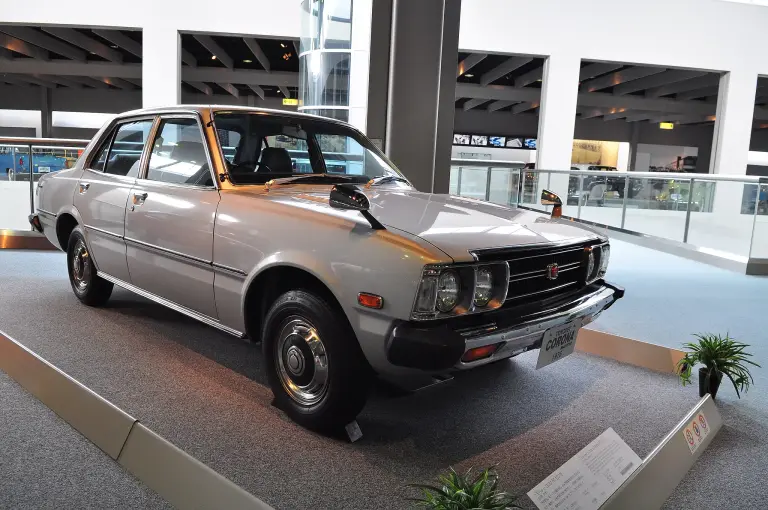
The Master was sold beside the Toyopet Crown, and its body panels were cut down to make the first Toyopet Corona. More cars are in the Toyopet collection.
Sources
- Toyopet Master, English Wikipedia: history, Masterline, later variants