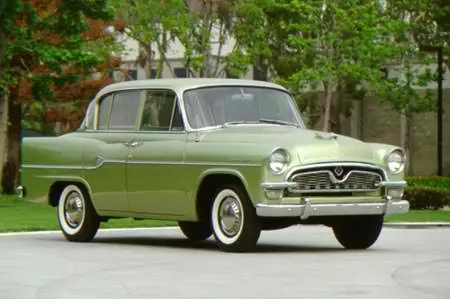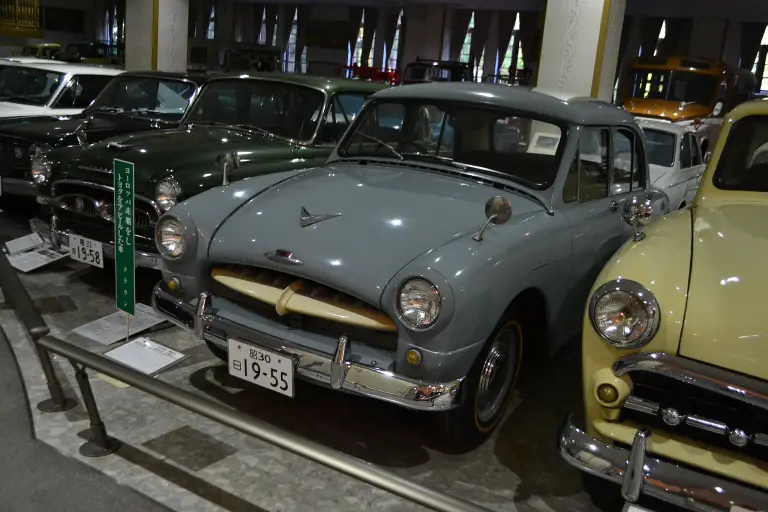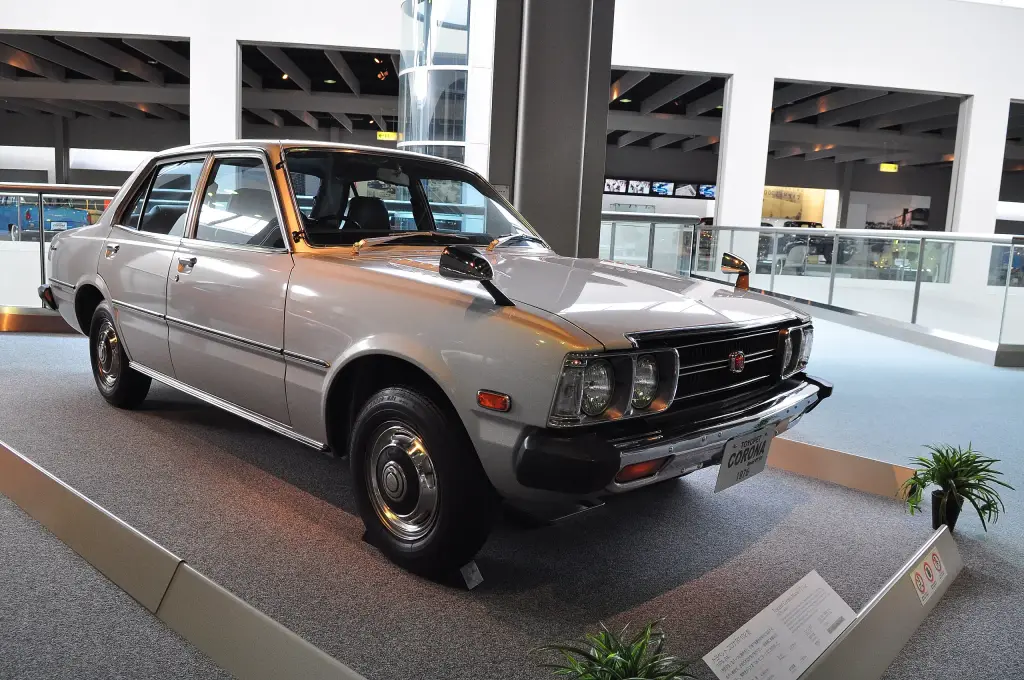
The Toyopet Corona was Toyota’s second-highest product at its launch in May 1957, sitting just below the Crown. The first generation was assembled from parts of the previous Crown and the Master, and the second generation, exported as the Tiara, kept Toyota on the American market at a time when the Crown was failing there.
Toyopet Corona at a glance
| Maker | Toyota (Toyopet) |
|---|---|
| Production | 1957–2001, eleven generations |
| First generation | T10 four-door sedan, May 1957 |
| Initial engine | 1.0 L sidevalve S, 33 PS |
| From October 1959 | 997 cc OHV P, 45 PS at 5,000 rpm |
| Top speed | 105 km/h with the P engine, 90 km/h with the S |
| Chassis | monocoque, the first on a Toyota car |
| Front suspension | independent, double wishbone |
| Weight | under 1,000 kg |
| Second generation | T20/T30, March 1960, exported as the Tiara |
| Tiara top speed | 110 km/h with the 1.0 L P engine |
| Tiara sales in the US | 318 cars |
This page uses the sections of the English Wikipedia article on the first and second generations of the Corona, the period covered by the Toyopet name. Based on one source.
History of the Toyopet Corona
First generation (T10, 1957)
The first Corona was introduced in May 1957 and reached the market two months later. It was designed with parts of the previous-generation Crown and Master after the Crown had been restyled and enlarged, and many of its body panels were cut down from the Master, which had just gone out of production. The range began with the four-door T10 sedan; in October 1958 the T16V three-door van joined it as the Toyopet Coronaline. The original sidevalve S engine produced 33 PS, and in October 1959 the 997 cc OHV P engine replaced it with 45 PS at 5,000 rpm. The P-engined sedan could reach 105 km/h, 15 km/h more than the S-engined car. A facelift brought a mesh grille and a rear seat for five instead of four. Because taxi regulations limited engines to 910 cc, dealers restricted the power of cars intended for taxi work.
Second generation and the Tiara (T20/T30, 1960)
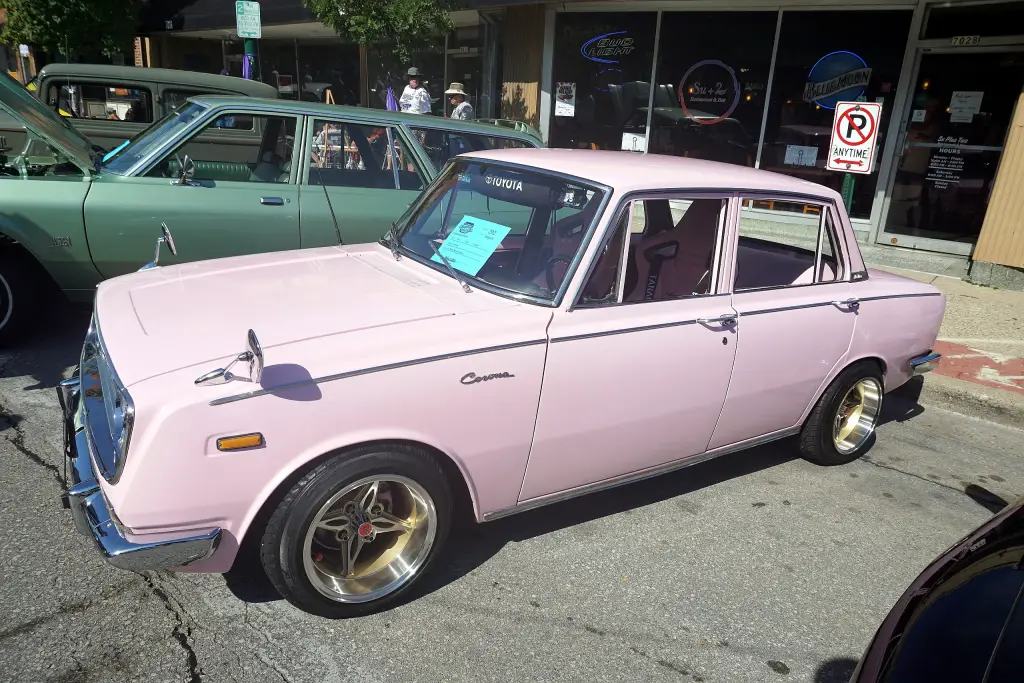
The second-generation Corona was also known as the Tiara when exported. It arrived in March 1960 at a critical moment for Toyota in North America: the flagship Toyopet Crown had been unsuccessful in the United States, and the smaller Corona was added to the range alongside the Land Cruiser. The Tiara was introduced to sell beside the Crown as its smaller companion, powered by a 45 PS 1.0-litre P engine and a three-speed manual gearbox, for a top speed of 110 km/h. In March 1961 Toyota added the 1.5-litre R engine from the Crown, and a 1.9-litre unit followed in 1964. The Tiara’s body was 180 kg lighter than the Crown’s, which made the R engine sufficient, and the car avoided the mechanical problems of the Crown. It sold better than the Crown and remained the only sedan Toyota sold in the United States until a reworked second-generation Crown appeared; only 318 Tiaras were sold there. In Australia the Tiara was assembled in Port Melbourne by Australian Motor Industries from 1963.
A name that outlived the Toyopet badge
The Corona went on to span eleven generations between 1957 and 2001. By 1968 the name was used on a larger platform as the Corona Mark II, and the car was sold worldwide under several nameplates, including the Carina in some markets. It was eventually replaced in Japan by the Premio, in Europe by the Avensis and in Asia, the Pacific and the Americas by the Camry. The name derives from the Latin word for crown, a reference to its position just below the Crown.
Design and features
- Monocoque body: the Corona was the first Toyota car with a monocoque chassis, which kept its weight under 1,000 kg.
- Double-wishbone front suspension: independent front suspension of a type unusual in this class in 1957.
- Built from existing parts: the first cars used cut-down Master body panels and Crown components to save development time.
- Taxi restrictions: dealers had to limit the 997 cc engine to 910 cc for cars sold to taxi operators.
Toyopet Corona versions
- T10 sedan (1957): the four-door first-generation car with the sidevalve S engine.
- T16V Coronaline van (1958): a three-door van version of the first generation.
- T20 Corona / Tiara sedan (1960): the second generation, exported under the Tiara name.
- Tiara station wagon: the estate version, whose brochures were aimed at women.
- Corona 1500S Convertible and 1900S Sporty Sedan (1963): two concept cars shown at the Tokyo Motor Show.
- Corona Sports Coupe (1963): a concept that shared only its suspension and name with the production Corona.
The Corona sat below the Toyopet Crown in the range and was built with parts from the Toyopet Master. More cars are in the Toyopet collection.
Sources
- Toyota Corona, English Wikipedia: first two generations, the Tiara, later nameplates