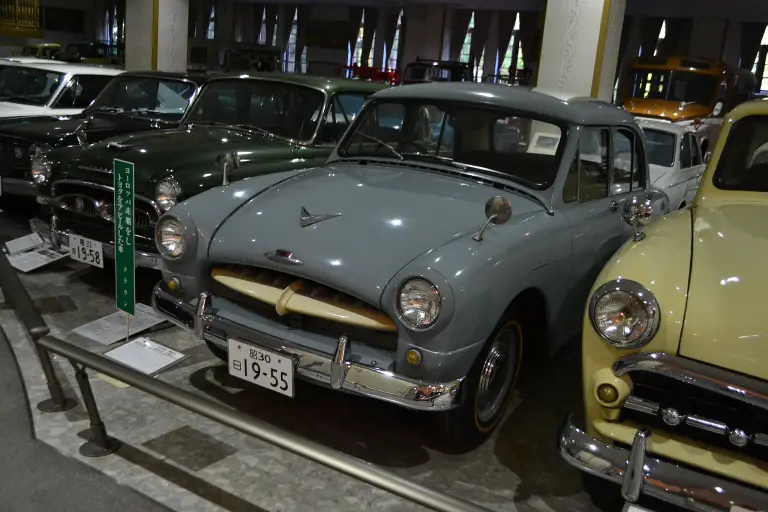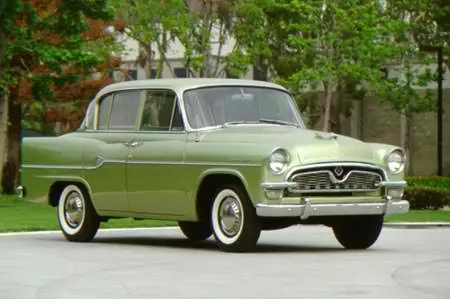
The Toyopet Crown was introduced in January 1955 to give Toyota a mainstream passenger car for private buyers. It shared its 1.5-litre R engine with the Master taxi but offered a more comfortable suspension, and it became Toyota’s flagship at home and its first model sold in the United States.
Toyopet Crown at a glance
| Maker | Toyota (Toyopet) |
|---|---|
| Production | from January 1955 |
| First-generation codes | RS, S10, S20, S30 |
| Engine | 1.5 L Type R |
| Rear doors | rear-hinged (suicide doors) |
| Body variants | four-door sedan, police Patrol, ambulance |
| Patrol engine | B 3.4 L six, later F 3.9 L |
| Export to the United States | 1958–1973 |
| Other early exports | Mexico 1959–1964, Canada 1964–1972 |
| First European export | Finland, 1964 |
| Australian production | mid-1960s to late 1980s |
| Generations by 2022 | sixteen |
This page covers the first-generation Toyopet Crown and its early exports, the material available in the English Wikipedia article. Based on one source.
History of the Toyopet Crown
A private car for 1955
The Crown was introduced in January 1955 to meet the demands of public transportation, but it was intended for private purchase, while the Master served as a taxi. Both used the 1.5-litre Type R engine of their predecessor, the Toyopet Super. The front doors opened conventionally and the rear doors were rear-hinged, a feature also used on the Toyota AA, the company’s first car. Small engines kept the car affordable at a time when the Japanese government had begun to impose an annual road tax. The styling showed similarities with the European Ford Versailles and Simca Vedette. A police version, the Toyota Patrol, used the reinforced chassis and the B 3.4-litre six of the Toyota BX truck, and an ambulance was also built on the Crown; in 1956 both were upgraded to the F 3.9-litre engine and remained in production until 1959. The Crown proved much more popular than the Master thanks to its more compliant suspension.
Exports and the American lesson
The Crown was the first Toyota model exported to the United States, sold there from 1958 to 1973. In 1960 Toyota temporarily suspended exports to the country because the Crown could not reach the speeds needed on American freeways, and returned with an improved model. Canada received the Crown from 1964 to 1972 and Mexico from 1959 to 1964. Exports to Europe began in 1964 with the first car delivered to Finland; the Netherlands and Belgium were early markets, and the United Kingdom imported the Crown until the early 1980s. Australia was an important market to the point that the car was manufactured there from the mid-1960s until the late 1980s, using many local components. New Zealand imports began in 1968, and local assembly of the Deluxe sedan started in 1973 at Steel’s Motor Assemblies in Christchurch alongside the Corona.
A nameplate that kept going
The Crown has been Toyota’s mainstream sedan in Japan throughout its existence and is one of the longest-running passenger-car nameplates in the company’s range. It has been popular with government, police and taxi fleets; as the Crown grew more opulent, Toyota created the Comfort in 1995 as a cheaper taxi alternative, and outside Japan the Lexus LS took over as the flagship in 1989. Toyota’s Discover Crown Spirit Project restores examples of every generation to show that the oldest cars still work. By 2022 the name had reached its sixteenth generation, with a four-model range sold in about 40 countries.
Design and features
- Rear-hinged rear doors: a 1950s feature shared with the Toyota AA, replaced in later generations.
- Type R engine: a 1.5-litre unit shared with the Master taxi, small enough to keep the annual road tax low.
- Comfort over the Master: a more compliant suspension made the Crown far more popular than the taxi model.
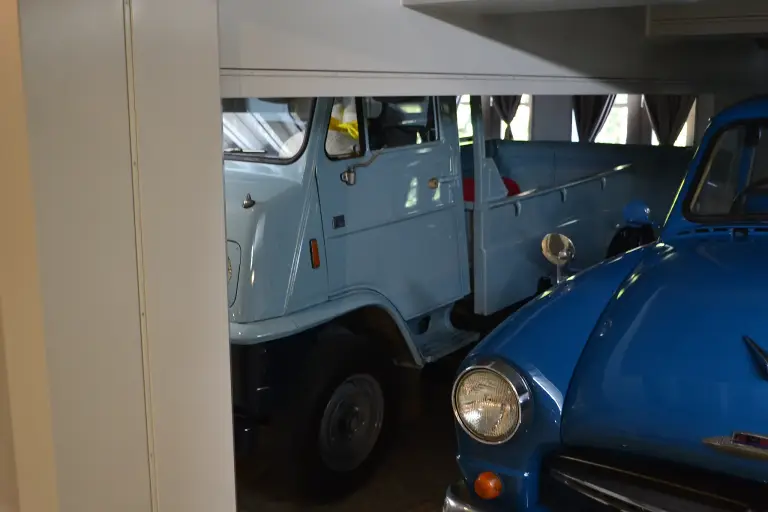
- Police and ambulance versions: the Patrol used a 3.4- or 3.9-litre six from Toyota trucks.
- Export pioneer: the first Toyota sold in the United States, from 1958.
Toyopet Crown versions
- Crown RS/S10 sedan (1955): the standard four-door car with the 1.5-litre R engine.
- Toyota Patrol: police version with a reinforced chassis and a B 3.4-litre six, later a 3.9-litre F engine.
- Crown ambulance: a bodied medical vehicle built on the same chassis.
- Australian-built Crown: assembled locally from the mid-1960s with many Australian components.
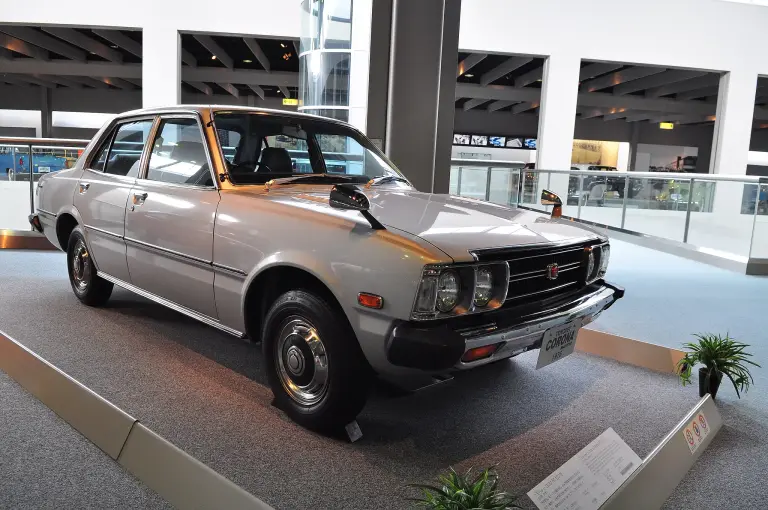
The Crown was joined by the smaller Toyopet Corona, while the Toyopet Master was the taxi alternative on the same engine. More cars are in the Toyopet collection.
Sources
- Toyota Crown, English Wikipedia: history, first generation, exports