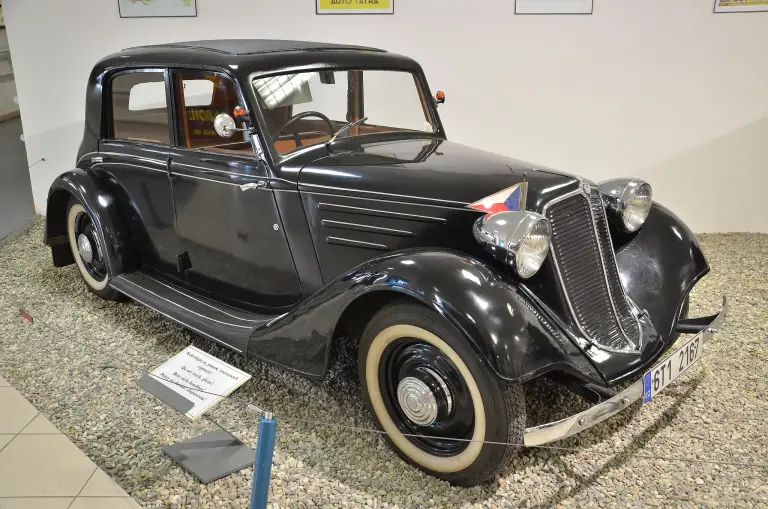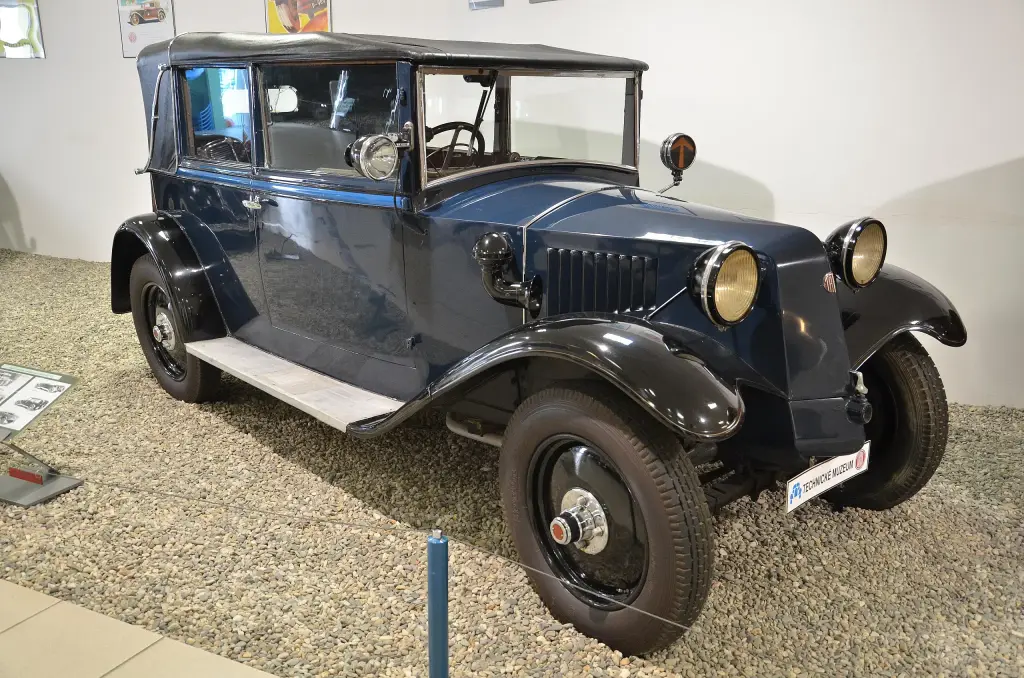
The Tatra 52 was a Czechoslovak mid-size car made by Závody Tatra from 1931 to 1939. It was built at Kopřivnice and also under licence by Rohr in Frankfurt am Main, and it replaced the Tatra 30/52 while keeping the Tatra backbone chassis concept.
Tatra 52 at a glance
| Maker | Závody Tatra, Kopřivnice |
|---|---|
| Licence build | Rohr, Frankfurt am Main |
| Production | 1931–1939 |
| Predecessor | Tatra 30/52 |
| Engine | air-cooled 1,910 cc OHV flat four |
| Power | 30 hp, 32 hp from 1935 |
| Gearbox | four speeds, dry clutch |
| Top speed | 90 km/h |
| Fuel consumption | 13–15 litres per 100 km |
| Brakes | hydraulic drum brakes |
| Built | about 1,700, of them 1,157 limousines |
History of the Tatra 52
Launch and layout
Tatra launched the Type 52 in 1931 to replace the Type 30/52. Like its predecessor, the 52 has a Tatra-concept backbone chassis. It used the same 30 hp (22 kW) air-cooled 1,910 cc overhead-valve flat-four engine, giving a top speed of 90 km/h and fuel consumption of between 13 and 15 litres per 100 km. Transmission was by a dry clutch and a four-speed gearbox, the rear wheels sat on half-axles with transverse leaf springs, and the drum brakes were hydraulically operated.
Bodies and coachbuilders
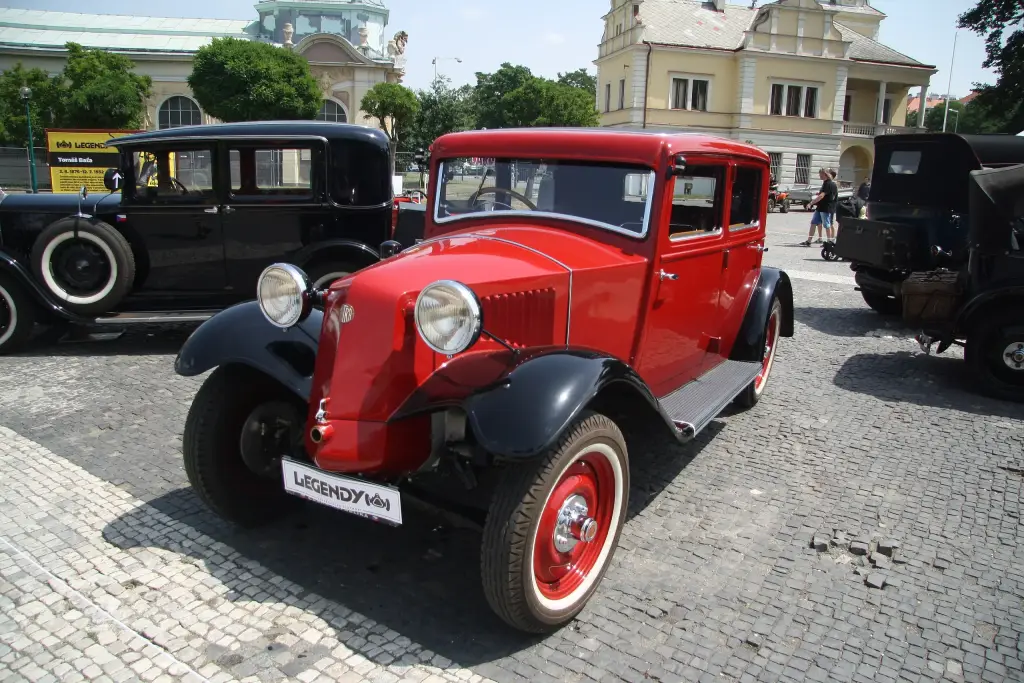
The choice of bodies included a four-door sedan, a two-door four-seat convertible and a six-seat landaulet by Tatra, plus more luxurious versions with bodies by coachbuilders such as Bohemia in Česká Lípa and Sodomka in Vysoké Mýto. By 1934 the bonnet had been restyled, with Tatra’s traditional enclosed front replaced by a conventional grille.
1935 revision and end of production
For 1935 Tatra revised the Type 52 body again to match the style of the 1,688 cc Tatra 75, and raised the power output to 32 hp (24 kW). Bodies then included a six-seat limousine, a six-seat convertible and an ambulance. Tatra also used the Type 52 engine in other vehicles, including trucks and the Tatra 72 three-axle off-road vehicle. Production ceased in 1939, by which time about 1,700 cars had been built, 1,157 of them four-door limousines.
Design and features
- Air-cooled flat four: 1,910 cc and 30 hp, later 32 hp.
- Backbone chassis: the Tatra layout with a central tube and swing rear axles.
- Hydraulic brakes: a step beyond the mechanical brakes of the Tatra 30.
- Coachbuilt choice: Tatra, Bohemia and Sodomka bodies.
Tatra 52 versions
- Four-door sedan: the standard saloon.
- Two-door convertible: four-seat open body.
- Six-seat landaulet and limousine: larger chauffeur-driven bodies.
- Ambulance: added with the 1935 revision.
- Rohr licence cars: assembled in Frankfurt am Main.
The 52 replaced the Tatra 30/52 and shared its body style with the Tatra 75. More pre-war cars are in the Tatra collection.
Video: Tatra 52
Video by 22boing on YouTube.
Sources
- Tatra 52, English Wikipedia: history, bodies, production