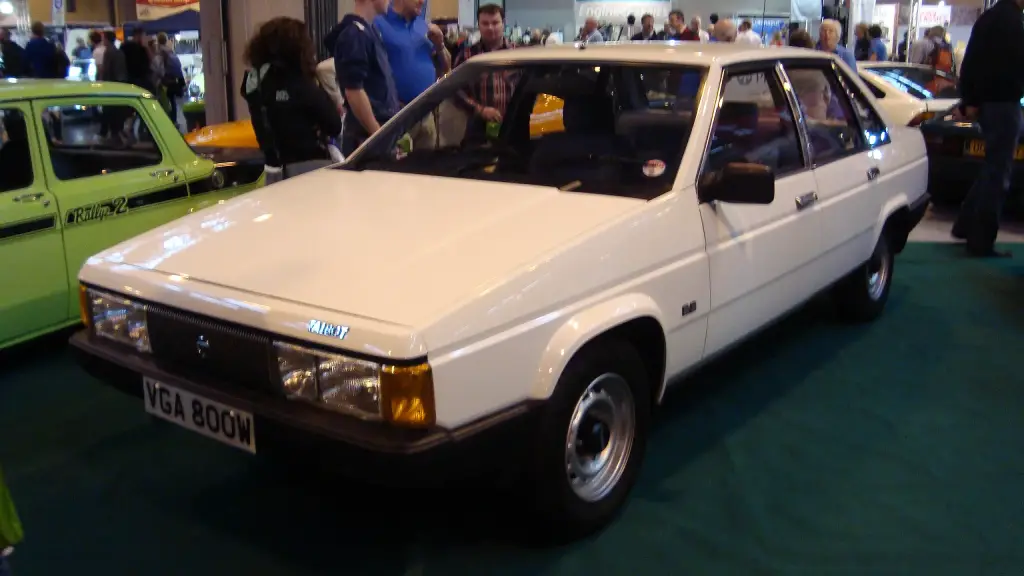
The Talbot Tagora was an executive car developed by Chrysler Europe as the C9 and produced by PSA under the Talbot name. Presented in 1980 and launched in 1981, it fell far short of sales expectations and was cancelled two years later after fewer than 20,000 cars had been built.
Talbot Tagora at a glance
| Maker | PSA (Talbot), Poissy, France |
|---|---|
| Production | 1980–1983 |
| Class | executive car |
| Project code | C9 |
| Replaces | Chrysler 180 |
| Engines | 2.0- and 2.2-litre fours; 2.7-litre PRV V6 |
| Layout | front engine, rear-wheel drive |
| Front suspension | MacPherson struts from the Peugeot 505/604 |
| Rear axle | from the Peugeot 505 |
| Launch | France April 1981, Britain May 1981 |
| Built | about 19,500 |
based on one source (English Wikipedia).
History of the Talbot Tagora
Chrysler Europe began developing the Tagora in 1976 under the code name C9, to replace the unsuccessful Chrysler 180. Technical development stayed in France while the styling was done at Chrysler’s design centre in Britain, and an early proposal for the name was “Simca 2000”. The original prototype was a modern saloon with a low beltline and a large interior made possible by its long wheelbase. The British designers proposed features inspired by the Citroën SM, including a glass panel between the headlights for the number plate, round front wheelarches and rear spats, but Chrysler management in the United States found them too extravagant: the wheelarches were squared off, the spats were lost, the number plate moved to the front bumper and the beltline was raised to balance the tall silhouette. The vertical tail lights gave way to horizontal ones.
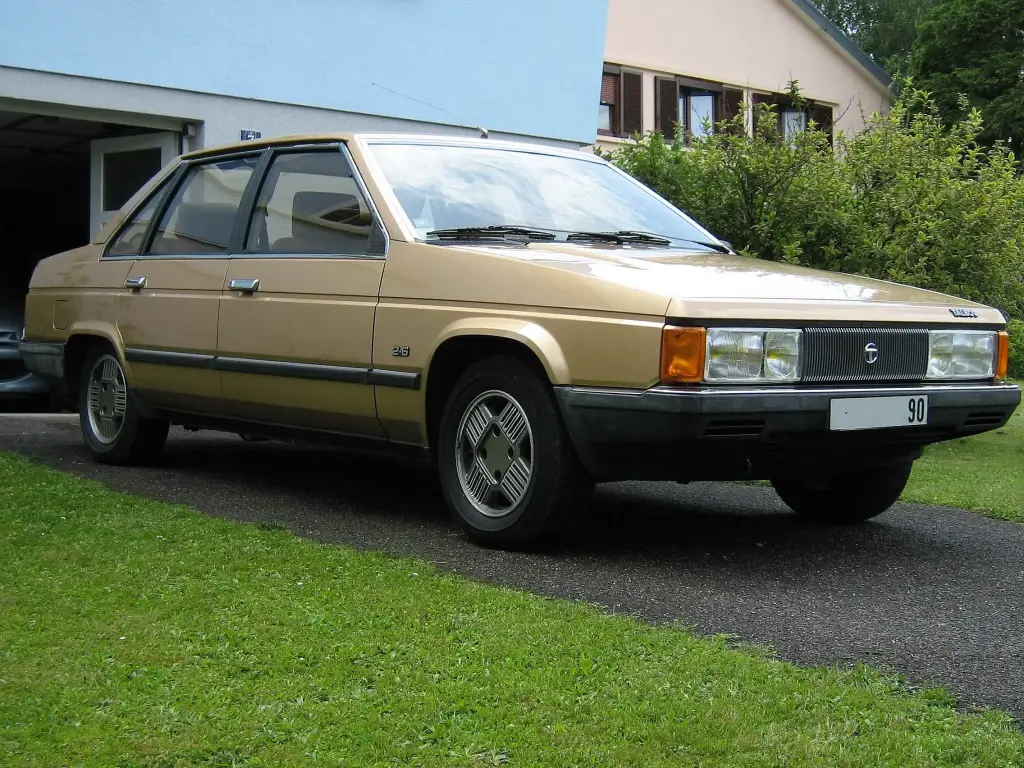
The main problem was the engine. Rivals offered more than Chrysler Europe’s biggest 2.0-litre four and a six-cylinder was expected. A Mitsubishi straight-six proved unsuitable, and the Douvrin PRV V6, a joint PSA-Renault-Volvo design, seemed unlikely to be available while the Tagora would compete with PSA’s own cars. Chrysler approved the project expecting Chrysler Europe to sell 60,000 cars a year, a 5 percent share of the executive market, which seemed reasonable given Chrysler’s 7 percent share in Europe overall.
During development Chrysler decided to sell its loss-making European operations. PSA, formed in 1976 after Peugeot took over Citroën, bought Chrysler Europe for one US dollar, effective 1 January 1979. PSA already had a crowded large-car range with the Citroën CX, Peugeot 604 and Peugeot 505, but so much had been invested that it completed the C9 anyway, adapting it to share parts with PSA models. The Simca double-wishbone front suspension gave way to MacPherson struts from the Peugeot 505 and 604, and the rear axle came from the 505. Because that axle was designed for the narrower 505 body, the rear wheels sat badly inset within the arches. The front end was extended to take the optional PRV V6, now that the car belonged to PSA.
Renamed the Talbot Tagora, the first cars left the former Simca plant at Poissy in 1980, and the car was shown at the Paris Salon that year. After a press demonstration in Morocco in March 1981 it went on sale in France in April and Britain in May, where the advertising claimed “The new Talbot Tagora. Luxury and performance redefined.” Priced between high-end Peugeot 505s and low-end Citroën CXs, and below the Peugeot 604, it also competed with the Renault 20/30 and Ford Granada. In its first fifteen months, 1980/81, only 16,169 were built, a quarter of Chrysler’s original projection; sales fell by more than 80 percent in 1982, and PSA cancelled the model in 1983. About 19,500 had been built, against more than 116,000 Peugeot 505s and 74,000 Citroën CXs in 1981 alone.
Design and features
- Chrysler origins: developed as the C9 to replace the Chrysler 180.
- PSA parts: Peugeot 505 suspension and rear axle after the takeover.
- V6 option: the 2.7-litre PRV engine in the top SX.
- Commercial failure: fewer than 20,000 built in three years.
Talbot Tagora versions
- 2.0 and 2.2 four-cylinder models: the volume versions.
- Tagora SX: the 2.7-litre PRV V6 at the top of the range.
- 1980 cars: the first batch built before the 1981 launch.
The Tagora replaced the Talbot 180 and shared its market with cars such as the Talbot Alpine below it. More cars are in the Talbot collection.
Sources
- Talbot Tagora, English Wikipedia: development, engines, PSA takeover, sales