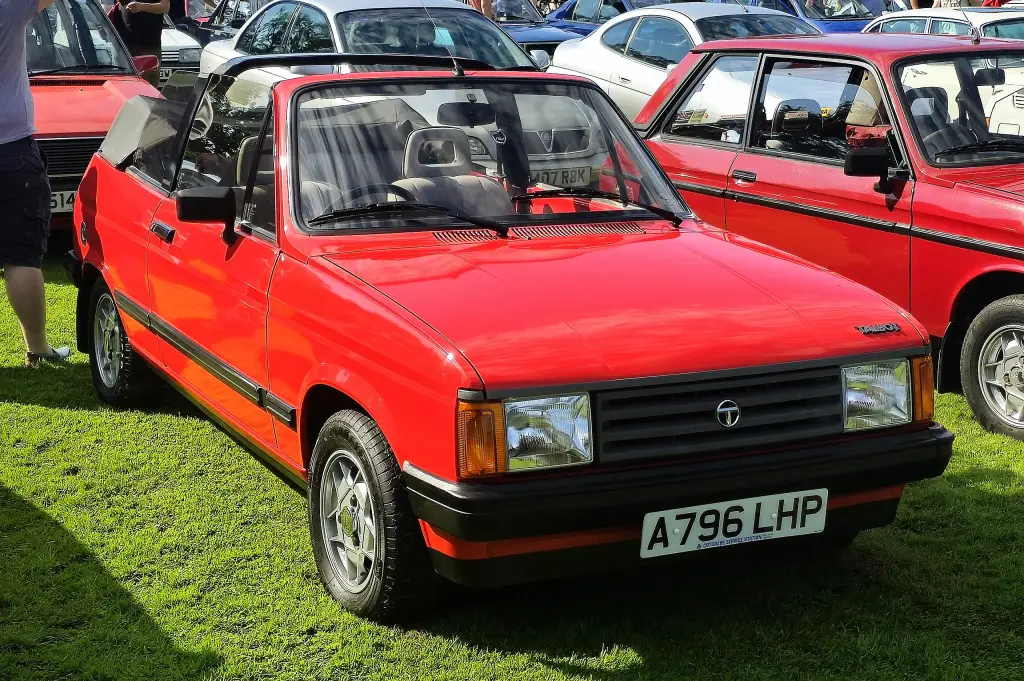
The Talbot Samba was a city car manufactured by PSA in the former Simca factory at Poissy from 1981 to 1986. Based on the Peugeot 104, it was the last new Talbot car to be launched, and its withdrawal in 1986 effectively ended the Talbot brand for passenger cars.
Talbot Samba at a glance
| Maker | PSA, Poissy, France |
|---|---|
| Production | 1981–1986 |
| Class | city car |
| Body | three-door hatchback; Pininfarina cabriolet |
| Based on | Peugeot 104, wheelbase between the 104 three- and five-door |
| Project code | C15, later T15 |
| Engines | 954 cc, 1124 cc and 1360 cc PSA X fours |
| Power | 45, 50 and 72 PS |
| Gearbox | four-speed, five-speed in the GLS |
| Cabriolet | 13,062 built by Pininfarina |
| Rallye | 1,219 cc, 90 PS, from 1983 |
| Last car | production ended 1986 |
based on one source (English Wikipedia).
History of the Talbot Samba
When PSA took over Chrysler Europe in 1979 it rebranded the French and British models as Talbots. The only small car it inherited was the Scottish-built, rear-wheel-drive Chrysler Sunbeam, based on the Avenger and conceived by Chrysler as a stopgap to keep the Linwood works running. PSA decided Linwood would be unprofitable and should close, which ended the Avenger and Sunbeam lines and made a new small Talbot necessary. The company’s city cars at the time were based on the 1972 Peugeot 104, in short three-door and longer five-door forms, also used for the Citroën LN and Visa.
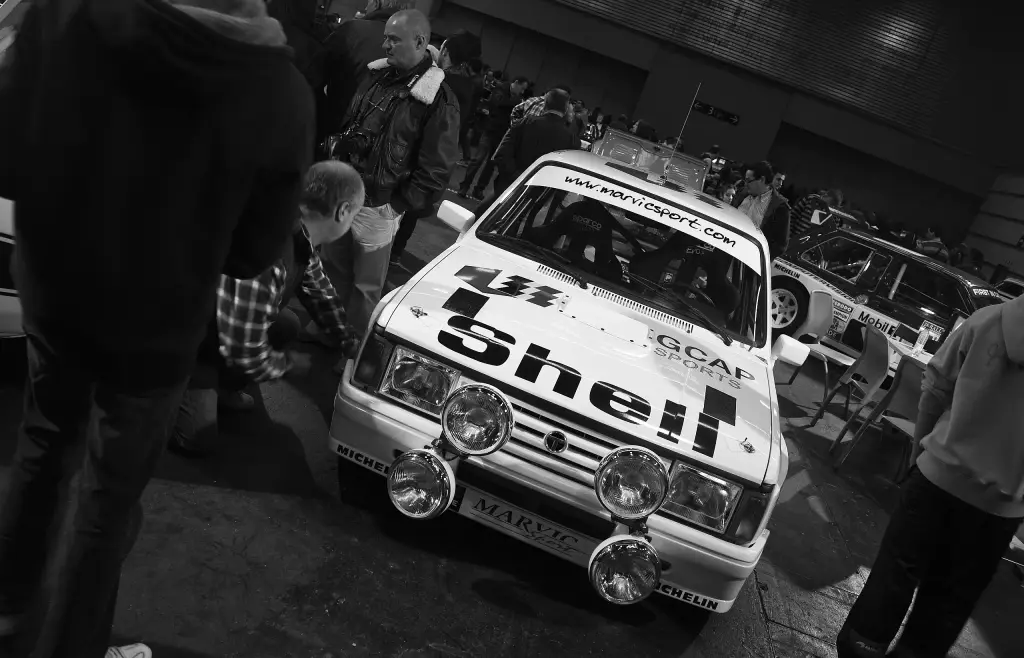
In 1979 PSA chose the 104 as the basis for the new Talbot rather than the Horizon. The model, known internally as project C15 and later T15, was given a wheelbase between those of the three- and five-door 104, which placed it slightly below superminis such as the Ford Fiesta but above city cars such as the new Austin Metro. Styling was the responsibility of the British design centre at Whitley in Coventry. The stylists had to keep the entire body structure of the 104 and were reportedly given Peugeot’s own 104 facelift proposal as a starting point, but the result was quite different and more modern: only the bonnet and tailgate were shared, and the car received a distinctive front end in the Chrysler/Talbot “international” style.
Production started in October 1981 and the Samba was launched in December. Unlike the Horizon, 1510/Alpine and Solara, it was assembled only at Poissy. It used three versions of the PSA X engine with three trim levels: the base LE and LS with the 954 cc XV, the GL with the 1124 cc XW and the top GLS with the 1360 cc XY, giving 45, 50 and 72 PS. The GLS could be had with a five-speed gearbox. The engine was tilted 72 degrees backwards so that the spare wheel could be stored under the bonnet, and drove the gearbox through step-down pinions. The GL was rated as Europe’s most economical car on official EEC figures, beating the Renault 5, though it later lost the title to the Austin Metro.
A two-door cabriolet was added to the range, designed and built by Pininfarina, which had been making open Peugeots since the 1960s. It came only with the 1360 cc engine in 72 or 80 PS form; the lower-powered version was dropped after 1984, when a revised cabriolet with the later 104 dashboard, twin carburettors and a lined hood appeared. Pininfarina built 13,062 Samba cabriolets. In 1983 PSA launched the Samba Rallye with the 1,219 cc XZ engine and 90 PS, in white or red with a hood scoop and side stripes; a 1,360 cc, 80 PS version without the stripes followed in 1984. The Samba’s end in 1986 was effectively the end of Talbot passenger cars.
Design and features
- Peugeot 104 basis: proven front-wheel-drive mechanicals in a new body.
- Distinctive styling: only the bonnet and tailgate were shared with the 104.
- Economy: the GL was briefly rated Europe’s most economical car.
- Cabriolet: a Pininfarina-built open version with the 1.4 engine.
- Rallye: a 90 PS hot hatch from 1983.
Talbot Samba versions
- LE and LS: 954 cc engines with 45 PS.
- GL: 1,124 cc engine with 50 PS.
- GLS: 1,360 cc engine with 72 PS and an optional five-speed gearbox.
- Cabriolet: Pininfarina-built, 72 or 80 PS.
- Rallye: 1,219 cc with 90 PS, later a 1,360 cc version with 80 PS.
The Samba replaced the Talbot Sunbeam and sat below the Talbot Horizon. More cars are in the Talbot collection.
Sources
- Talbot Samba, English Wikipedia: development, engines, cabriolet, Rallye