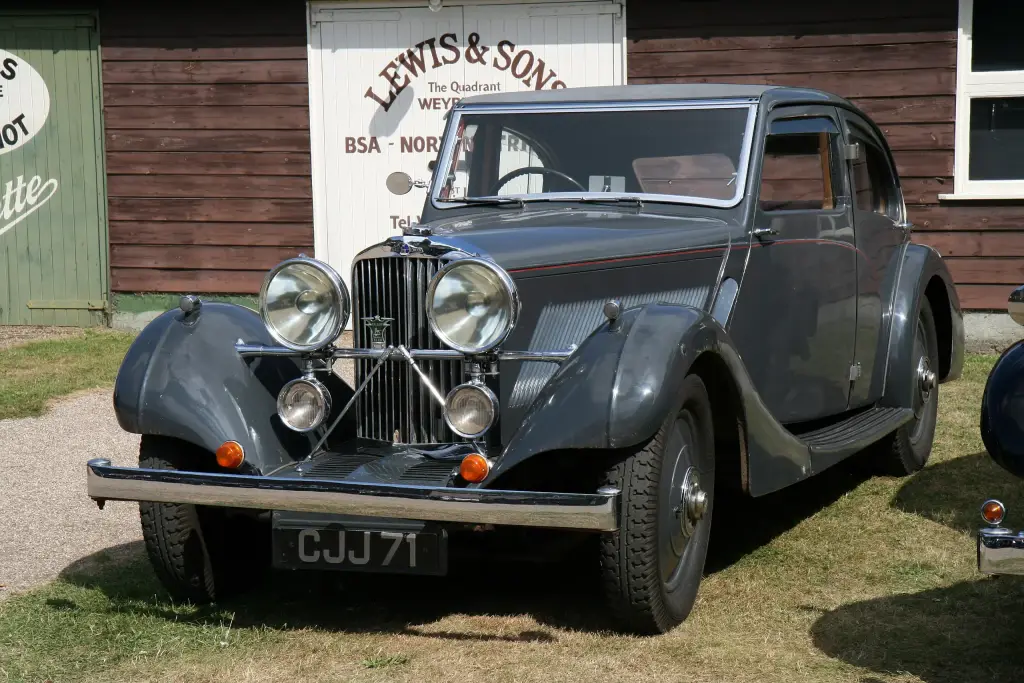
The Talbot 105 was a high-powered sports car developed by Talbot’s designer Georges Roesch. Famous for its speed, it has been described as the fastest four-seater ever to race at Brooklands. It was the last and largest development of the six-cylinder engine that powered every Talbot until the Rootes takeover of 1935.
Talbot 105 at a glance
| Designer | Georges Roesch |
|---|---|
| Engine | 2,969 cc six-cylinder |
| Power, 1931 racing tune | 119 bhp at 4,800 rpm |
| Brooklands trim | about 125 bhp, compression ratio 10:1 |
| Engine family | six-cylinder Talbot, from the 1,666 cc unit of 1930 |
| Six-cylinder debut | 1930 London Motor Show, 18-70 |
| Racing | Brooklands, dealer teams |
| Works racing | ended 1932 |
| Dealer team | Warwick Wright, three cars in 1932 |
based on one source (English Wikipedia).
History of the Talbot 105
The 105 grew out of a long line of six-cylinder Talbots. The 75 was derived from the earlier 14-45, named after its fiscal and actual horsepower; its 1,666 cc six-cylinder engine was the basis for all Talbot engines until the Rootes takeover in 1935. The engine was repeatedly bored out, giving a succession of more powerful models, while the exterior dimensions of the original 14-45 block stayed the same — although the 18-70 had an updated block with equally spaced bores, and the later 105 had a different block again.
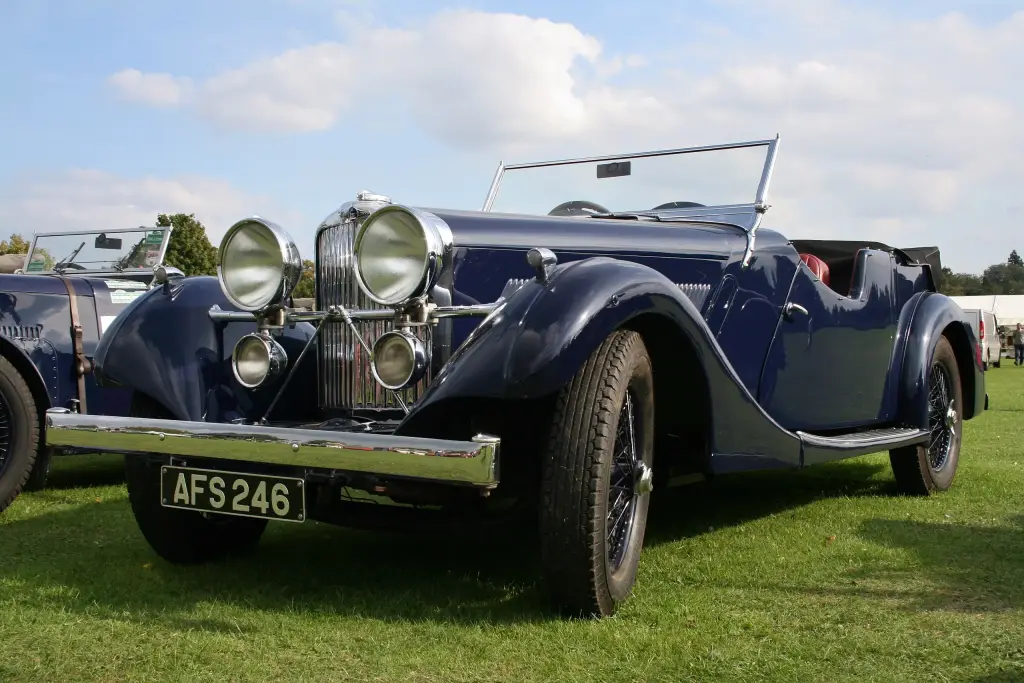
The 1930 London Motor Show saw the debut of the 18-70, with bore and stroke both increased to give 2,276 cc. In this form the car was later called simply the Talbot 70 or 75. Higher compression ratios and a bigger Zenith carburettor raised the power and produced the 90; Talbot’s AO90s were highly successful in Grand Prix racing, coming third only to the Speed 6 Bentleys in the 1931 Brooklands 500.
A further increase in capacity, still without changing the exterior dimensions of the block, gave 2,969 cc and the Talbot 105. In 1931 four 105s were tuned to a reported 119 bhp at 4,800 rpm, and in “Brooklands trim”, with more tuning and a compression ratio of 10:1, the claimed output rose to 125 bhp.
The Talbot made its name on the circuits, above all at Brooklands in Surrey. Talbot pulled out of racing in 1932, but the major Talbot dealer Warwick Wright successfully ran a team of three 105s that year, and teams run by dealers and enthusiasts kept racing the cars until at least 1938.
Design and features
- Big six: 2,969 cc from the same compact block family as the 1,666 cc original.
- Brooklands speed: 119–125 bhp in racing tune, remarkable for a 1930s four-seater.
- Roesch engineering: the final development of Georges Roesch’s long-stroke six.
- Racing pedigree: works and dealer teams at Brooklands through the 1930s.
Talbot 105 versions
- Talbot 75: the earlier 2,276 cc development of the six.
- Talbot 90: higher compression and a larger Zenith carburettor.
- Talbot 105: the 2,969 cc model, the fastest of the line.
- Brooklands trim: 10:1 compression and about 125 bhp for racing.
The 105 was the most powerful of the pre-war Talbots; the French branch of the marque later built the Talbot-Lago T26. More cars are in the Talbot collection.
Sources
- Talbot 105, English Wikipedia: engine development, power figures, racing