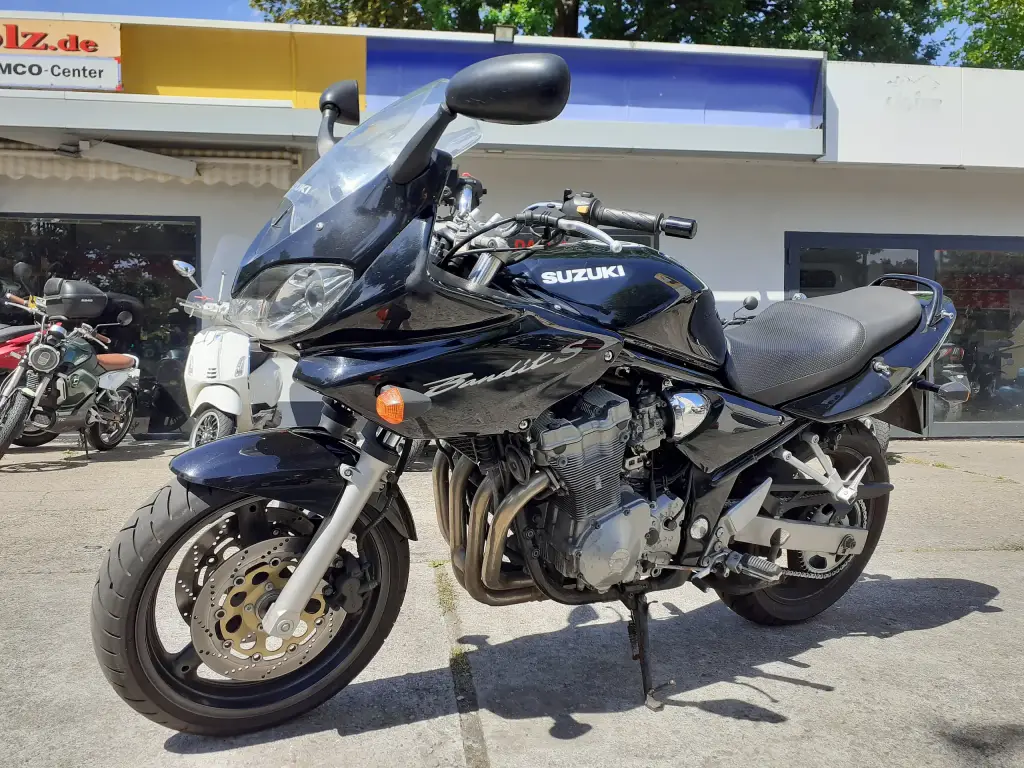
The Suzuki Bandit is a series of standard motorcycles that Suzuki has built since 1989. Apart from the small GSX150, every Bandit uses a four-cylinder engine, and the family ranges from 250 cc baby Bandits to the 1,255 cc GSF1250.
Suzuki Bandit at a glance
| Production | since 1989 |
|---|---|
| Type | standard motorcycle |
| Engines | DOHC inline fours, four valves per cylinder |
| Models | GSF250, GSF400, GSF600, GSF650, GSF750, GSF1200, GSF1250, GSX150 |
| GSF600 | 599 cc, 1995–2004, based on the GSX600F engine |
| GSF1200 | 1,157 cc, 1996–2007, bored-out GSX-R1100 engine |
| GSF650 | 656 cc, 2005–2016, liquid-cooled from 2007 |
| GSF1250 | 1,255 cc, 2007–2016, with balance shaft |
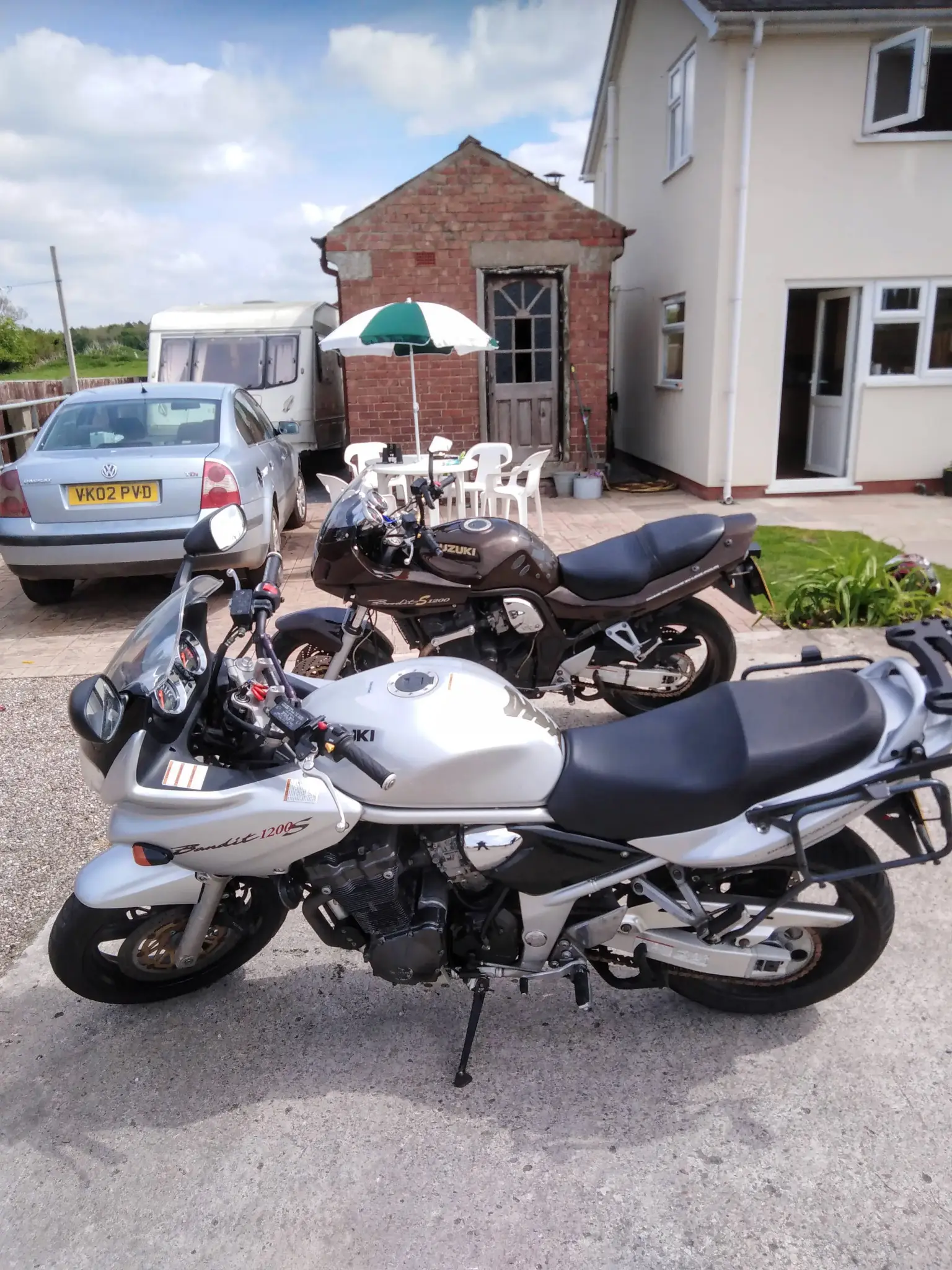
| S versions | half fairing, twin headlights from 2000 |
| N versions | unfaired, single headlight |
History of the Suzuki Bandit
Baby Bandits
The GSF250 and GSF400 started the line in 1989. Both were naked street bikes with liquid-cooled fours derived from the GSX-R250 and GSX-R400, held in a steel trellis frame with a single rear shock. The 250 made 45 hp and the 400 59 hp, with a wider 525 chain and twin front discs on the larger bike. Variable inlet timing arrived on the GSF400V in 1991, and a second generation came in 1995.
The 600
The naked GSF600 N appeared in February 1995, styled after the GSF400 and using a retuned GSX600 engine. The half-faired S arrived in 1996; a clutch switch and carburettor heaters came in 1997, grab rails on the N in 1998 and a better rear shock in 1999. The 2000 model brought new bodywork, electronic instruments, a 20-litre tank, Nissin brakes, revised geometry and twin headlights on the S.
650 and 1250
The Bandit 650 and 650S were launched in 2005 with 56 cc more displacement, adjustable seat and bars, a new exhaust and an optional ABS, and from 2007 they used a purpose-built liquid-cooled engine. The GSF1250 of 2007 added a balance shaft to calm the larger four. The GSF600’s engine was based on the GSX600F unit and the GSF1200’s on a bored-out GSX-R1100 engine, both retuned for mid-range torque.
Reputation
The Bandit earned a name as a hooligan bike, and the GSF1200 remains popular with stunt riders, including a wheelie school in Britain. Later revisions made the range smoother and more sports-tourer than tearaway.
Design and features
- One family, many sizes: from a 250 cc four to the 1,255 cc GSF1250.
- N or S: naked single-headlight or half-faired twin-headlight versions.
- Recycled muscle: GSX-R1100 and GSX600 engines retuned for road torque.
- Stunt favourite: the GSF1200 is still used by wheelie schools.
Suzuki Bandit versions
- GSF250 and GSF400 (1989): the baby Bandits, with VVT on the 400V from 1991.
- GSF600 (1995–2004): N and S, with a major update in 2000.
- GSF1200 (1996–2007): the big torquey four.
- GSF650 (2005–2016): a new liquid-cooled engine from 2007.
- GSF1250 (2007–2016): the largest Bandit, with a balance shaft.
- GSX650F and GSX1250FA: fully faired Bandit-based models sold alongside the range.
The Bandit’s engines came from the GSX-R and Katana families, and its faired relatives were the GSX650F and GSX1250FA. More Suzukis are in the Suzuki collection.
Sources
- Suzuki Bandit series, English Wikipedia: models, engines, model-year changes