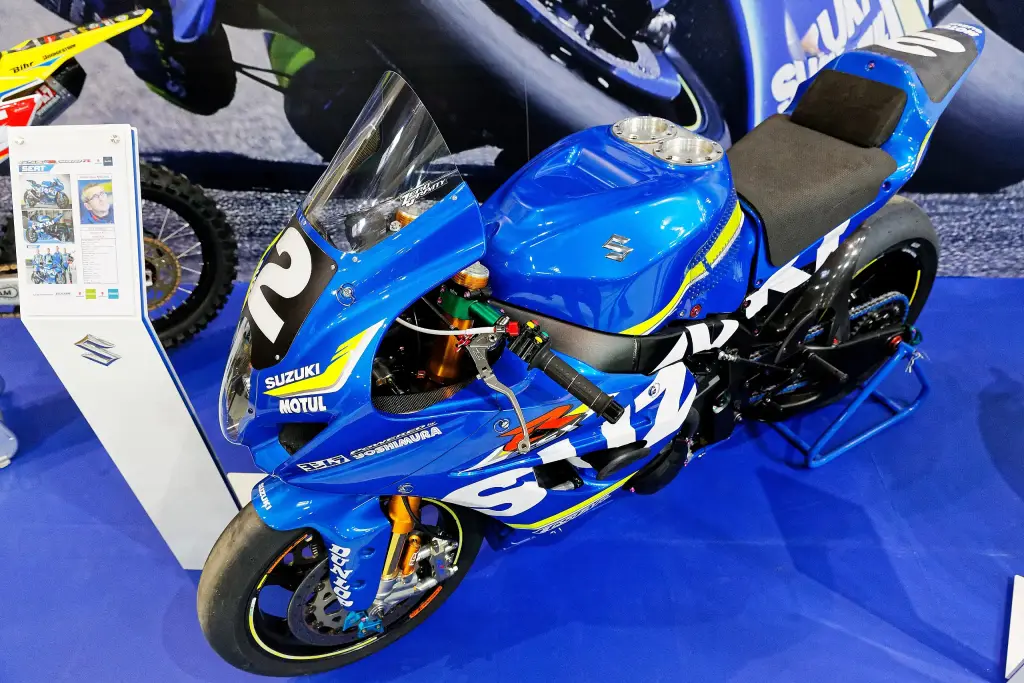
The Suzuki GSX-R is a family of sports motorcycles that Suzuki has built since 1984. The first one, the GSX-R400, was sold only in Japan, but the 750 that followed in 1985 was the closest thing yet to a race bike with lights.
Suzuki GSX-R at a glance
| Production | since 1984 |
|---|---|
| First model | GSX-R400, Japan only, 1984 |
| GSX-R750 | 1985 |
| GSX-R1100 | 1986, about 130 hp |
| 750 weight | about 176 kg |
| Frame | welded square-section aluminium |
| Cooling | air and oil, with a large oil cooler |
| Stock power, 750 | 100 hp, 135 hp with the race kit |
| Designer | Hiroshi Fujiwara |
| Racing | Bol d’Or won 12 times between 1993 and 2011 |
History of the Suzuki GSX-R
The first GSX-R
Suzuki released the first GSX-R in 1984, a 400 cc model sold only in Japan, where licensing rules made bigger bikes impractical. It was the closest any Japanese maker had come to a race bike with lights, at a time when the Universal Japanese Motorcycle still ruled: steel double-loop frames and air-cooled transverse fours.
The 750 that changed things
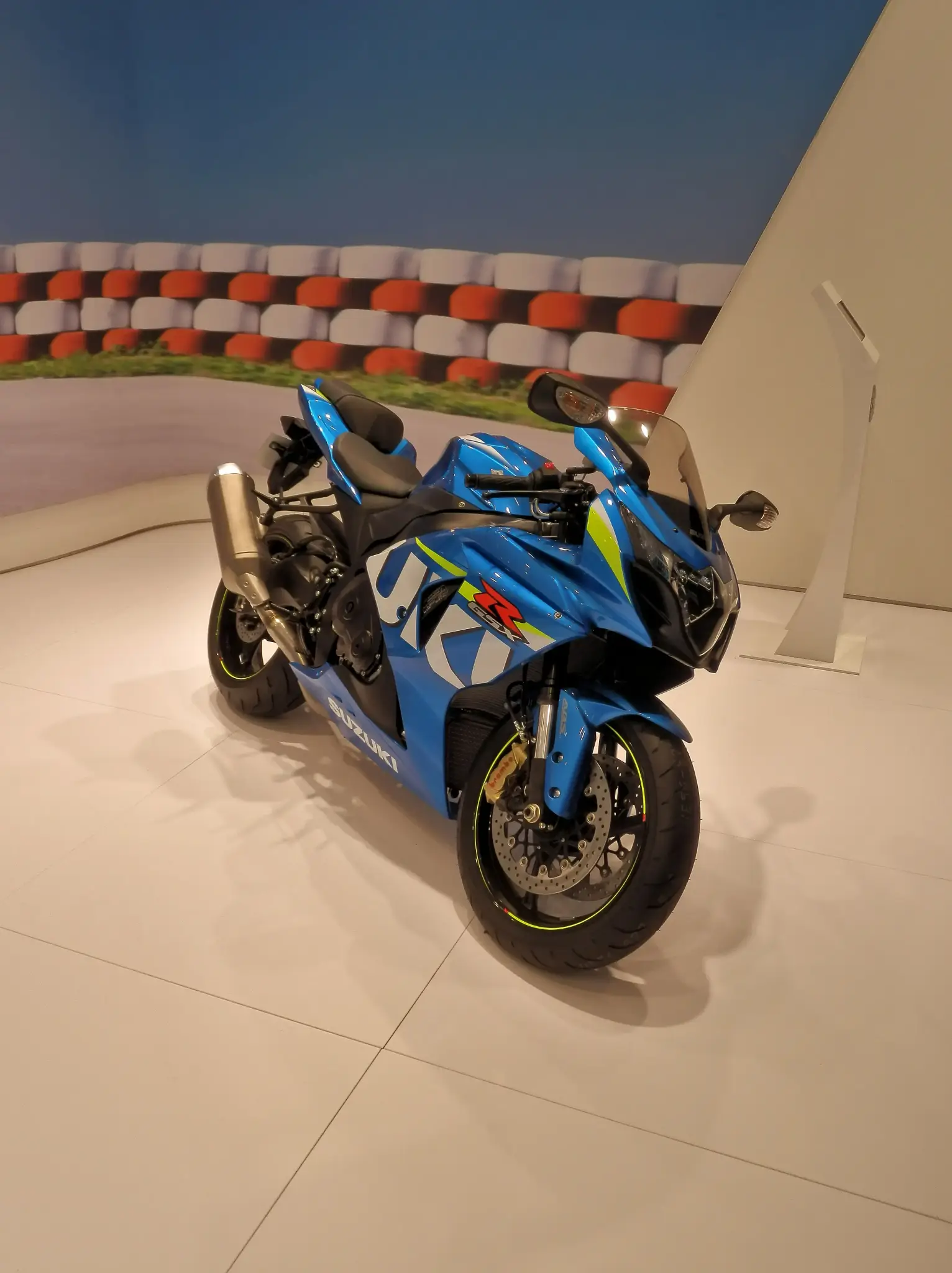
In 1985 came the GSX-R750, designed by Hiroshi Fujiwara. Its engine was the most conventional of the new superbikes, a four-valve inline four descended from the GS series, cooled by what Suzuki called an air-oil mix with a large oil cooler spraying the pistons from below. The frame was the real innovation: Suzuki abandoned steel for welded square-section aluminium tubing, large enough to give the stiffness the racers wanted. The riding position was a racer’s crouch, the bike weighed only 176 kg, and it shipped with 100 hp that a race kit could lift to 135. Its full fairing with two round headlights set a style that supersport bikes still follow.
The 1100 and the second generation
A 750 cc GSX-R was fast and capable; the 1100 of 1986 was an exercise in excess, a little heavier at about 480 lb against the 750’s claimed 435 lb but with considerably more power and torque. The second generation arrived in 1988, initially as the 750 and 1100 with 250 cc models for Japan, keeping the layout but replacing the welded tube frame with large cast and formed parts and adding Slingshot carburettors.
Racing record
The GSX-R did not dethrone Honda’s VFR in AMA Superbike immediately, but Suzuki took that title in 1989. By then the bike had become the privateer’s favourite, simpler and cheaper than a V4, and it built an outstanding endurance record, winning the Bol d’Or 12 times between 1993 and 2011.
Design and features
- Aluminium frame: welded square-section tubing instead of steel, a first for a production superbike.
- Air-oil cooling: a large cooler and oil sprayed at the pistons’ undersides.
- Race-ready: 100 hp stock and a 135 hp race kit in 1985.
- Endurance legend: 12 Bol d’Or wins between 1993 and 2011.
Suzuki GSX-R versions
- GSX-R400 (1984): the Japanese-only first model.
- GSX-R750 (1985): the aluminium-framed breakthrough.
- GSX-R1100 (1986): the big-power version.
- Second generation (1988): cast and formed frame, Slingshot carburettors.
- GSX-R600, GSX-R750 and GSX-R1000: the later range.
The GSX-R grew out of the GS series, and its engines later powered the Bandit and the GSR750. More Suzukis are in the Suzuki collection.
Video: Suzuki GSXR 750 vs BMW S1000RR (GoPro Hero 2)
Video by babić on YouTube.
Sources
- Suzuki GSX-R series, English Wikipedia: first and second generations, engineering, racing