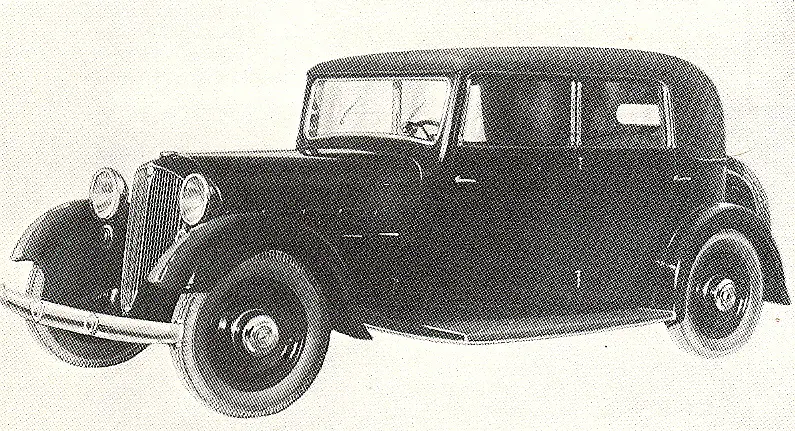
The Steyr 430 was the upper-middle-class car that the Steyr works presented in 1933, a year before the merger that created Steyr-Daimler-Puch. It was based on the Steyr 30 designed by Ferdinand Porsche, and unlike the streamlined 120, 125 and 220, the 430 and its successors kept the classical style with upright windows and a separate boot.
Steyr 430 at a glance
| Maker | Steyr-Werke A.G., later Steyr-Daimler-Puch AG |
|---|---|
| Introduced | 1933 |
| Based on | Steyr 30, designed by Ferdinand Porsche |
| Engine | six-cylinder in-line, front mounted |
| Gearbox | four-speed manual |
| Layout | rear-wheel drive |
| Front axle | rigid axles on longitudinal leaf springs |
| Rear axle | swing axle on a transverse leaf spring |
| Steyr 430 built | 1,250 to 1935 |
| Steyr 530 built | 456, one year only |
| Steyr 630 built | 500, 1937–1939 |
| Coachwork | works bodies and luxury cabriolets by Gläser, Dresden |
based on one source: the German Wikipedia article on the Steyr 430.
History of the Steyr 430
A classical body on a Porsche chassis
The Steyr 430 was presented in 1933 as an upper-middle-class car of the Steyr-Werke A.G., which from 1934 was called Steyr-Daimler-Puch AG. It was based on the Steyr 30 that Ferdinand Porsche had designed, with a six-cylinder in-line engine at the front driving the rear wheels through a four-speed gearbox, rigid front axles on longitudinal leaf springs and a rear swing axle on a transverse leaf spring. Where the 120, 125 and 220 had a streamlined shape, the 430 and its successors were classical: upright windows and a separate boot. The six-cylinder engines were strong, which made the cars particularly suitable for use in the mountains, and 1,250 were built up to 1935.
530 and 630
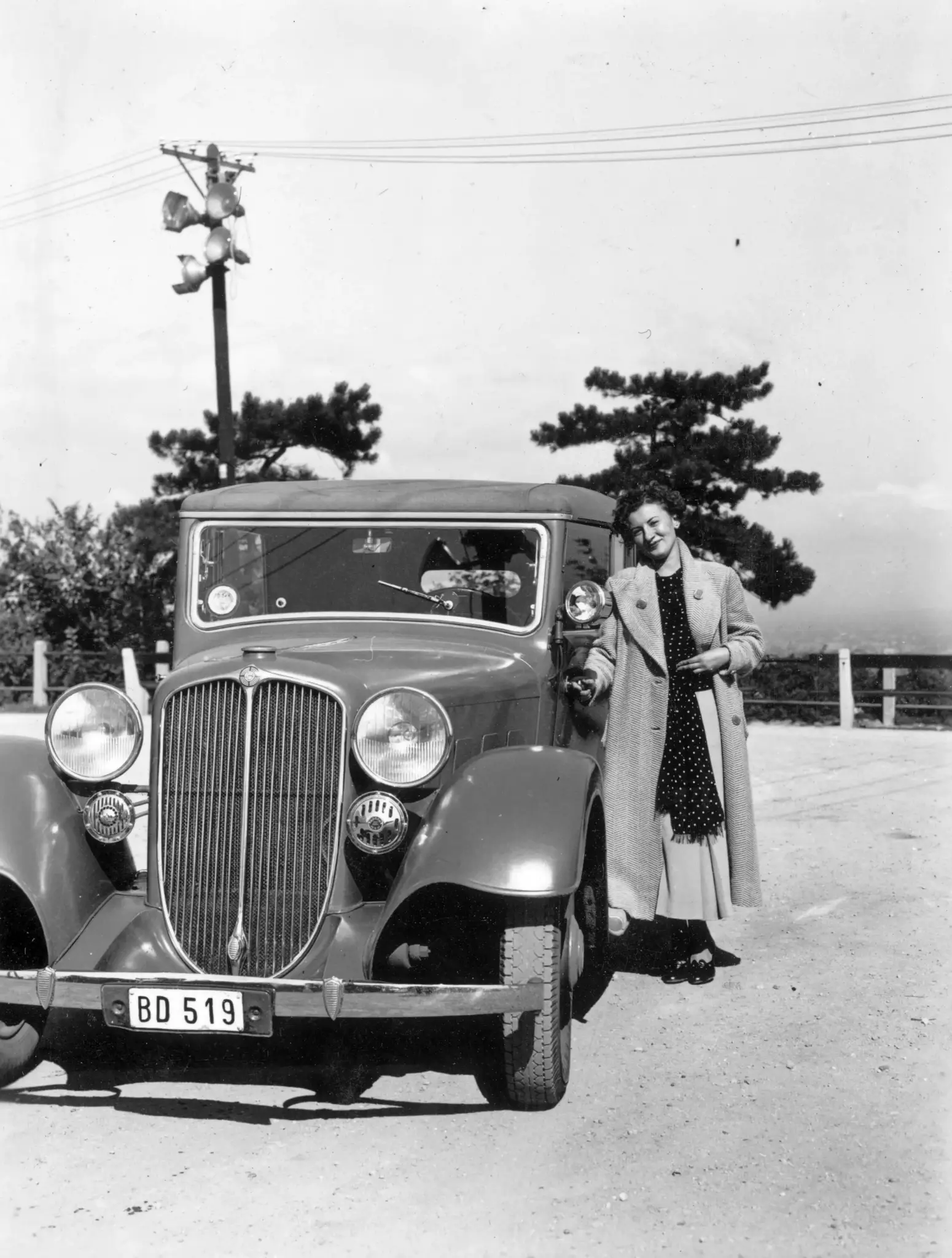
In 1935 the car was revised with a larger and stronger engine, and the new model was called the Steyr 530. It stayed on offer for one year and 456 were built; one of them is kept in the automobile museum at Aspang in Lower Austria. A further small revision came in 1937, with higher compression, a stronger generator and transverse leaf springs at the front axle as well. At the same time a Pullman limousine, intended above all for taxi work, was added, and this last model, the Steyr 630, was built exactly 500 times up to 1939. For all three models luxury cabriolets were available from the well-known coachbuilder Gläserkarosserien GmbH in Dresden alongside the factory bodies.
Design and features
- Classical styling: upright windows and a separate boot, in contrast to the streamlined 120 series.
- Strong six-cylinder engines: well suited to Alpine roads.
- Porsche-derived chassis: the layout of the Steyr 30 carried over into the 430.
- Gläser cabriolets: luxury open bodies from Dresden on all three models.
Steyr 430 versions
- Steyr 430 (1933–1935): the original model, 1,250 built.
- Steyr 530 (1935–1936): larger and stronger engine, 456 built.
- Steyr 630 (1937–1939): revised car with a Pullman limousine for taxi work, 500 built.
- Gläser cabriolets: luxury open versions of all three.
The car it was derived from is the Steyr 30, and the streamlined six-cylinder family of the same years is described with the Steyr 120 and 220. More cars are in the Steyr collection.
Sources
- Steyr 430, German Wikipedia: introduction, chassis, styling, 530 and 630, production figures