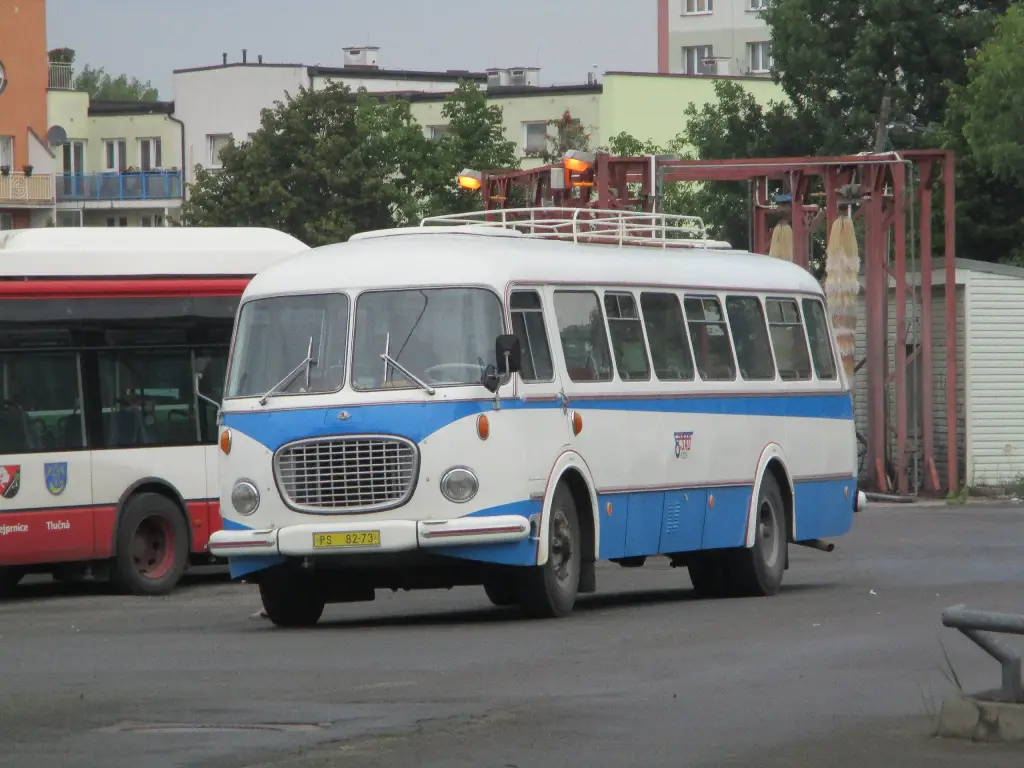
The Škoda 706 RTO was a Czechoslovak bus built from 1958 to 1972. The letters stood for framový trambusový osobní — frame-based forward-control passenger vehicle — and it was made on the chassis of the Škoda 706 lorry by Karosa in Vysoké Mýto with mechanical parts from LIAZ. It became the standard bus of the country in the 1960s, and it was also built under licence in Poland.
Škoda 706 RTO at a glance
| Makers | Karosa, Vysoké Mýto; LIAZ mechanicals |
|---|---|
| Production | 1958–1972; first prototype 1956 |
| Layout | semiframeless forward-control body on the 706 lorry frame |
| Engine | six-cylinder diesel in front, beside the driver |
| Doors | one or two, depending on version, plus a driver’s door |
| Interior | leatherette seats, plastic panelling, hardboard headlining |
| Built by Karosa | 14,451 |
| Licensed abroad | Jelcz 272 and Jelcz 041, Poland, to 1977 |
| Last in service | 1986 in central Slovakia and the Vsetín region |
| Nicknames | egg, cucumber, dumpling |
History of the Škoda 706 RTO
A bus on lorry bones
The 706 RTO was derived from the Škoda 706 RT lorry and built on its frame: the engine sat at the front next to the driver, and a long propeller shaft drove the rear axle. The body was a semiframeless forward-control shell, its steel skeleton electrically welded and covered with pressed profiles, resting on the ladder frame. Passengers entered through one or two doorways, depending on the version, operated mechanically or by electro-pneumatic controls, and the driver had a separate door on the left leading straight to his position. The interior was lined with plastic laminate and perforated fibreboard on the ceiling, and the seats were trimmed in leatherette. The shape earned the bus several nicknames, among them egg, cucumber and dumpling.
Body production and the LUX story
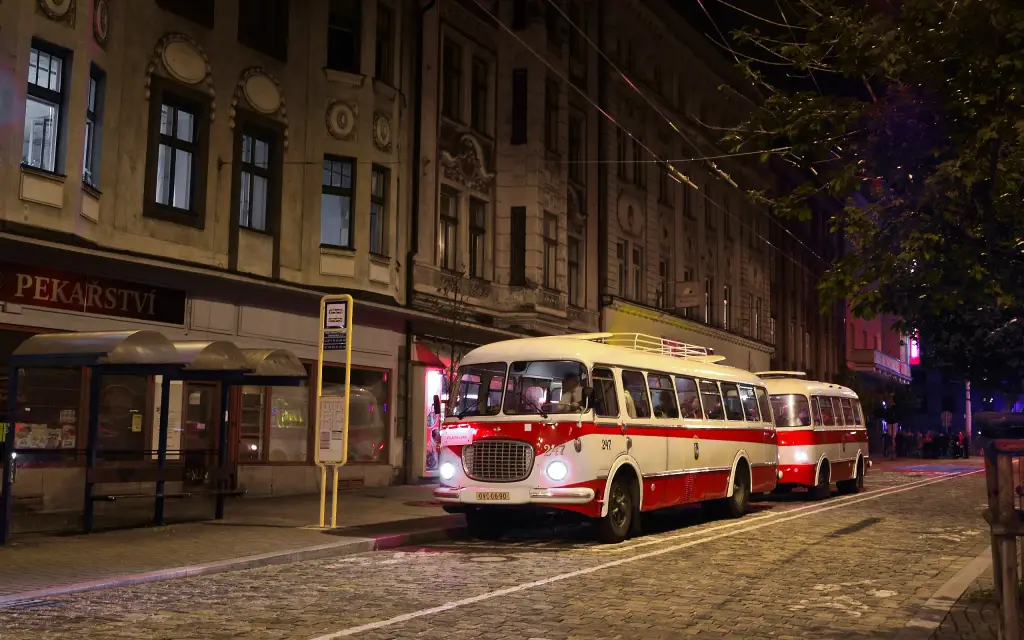
Karosa built the bodies and assembled the buses, while LIAZ supplied chassis and engines; between 1958 and 1967 the Holýšov state repair works rebuilt 706 RO buses with new RTO bodies, in effect creating new vehicles, and from 1967 to 1972 it built its own 706 RTO-SVA on LIAZ chassis. In Karosa 14,451 buses of the type were made, not counting the Holýšov and LIAZ Rýnovice production. It is often said that Otakar Diblík designed the body, but he joined Karosa when the bus was nearly finished and probably worked on details; what he certainly did design was the interior of a special luxury version for the Expo 58 exhibition in Brussels, with 24 seats, a television and a toilet with a kitchenette at the back. The name came to be attached to the whole range by mistake.
Four versions and a long farewell
The 706 RTO was built in four main versions: MTZ, the city bus for Czechoslovakia; MEX, the export city bus, differing only in details such as the heavy bumpers fitted for Cuba; KAR, the intercity version, the most numerous, with one door, reclining seats, luggage nets and a roof rack; and LUX, the long-distance coach with mechanical doors, sprung seat cushions, armrests, curtains and glazed roof corners, familiar from the film Florenc 13.30. A single articulated prototype, the 706 RTO-K, was also built. Thanks to Karosa’s monopoly the type appeared in every Czechoslovak city and on intercity and long-distance services, and it was exported to Cuba, Egypt, Bolivia, Romania, Afghanistan and Tunisia, among others. In Poland it was built under licence as the Jelcz 043, nicknamed the cucumber, and the Czech sources describe the Polish descendants as the Jelcz 272 and 041, made until 1977; it was also exported to China and North Korea, where one is preserved in Pyongyang. The last Czechoslovak cars ran in 1986.
Design and features
- Front engine beside the driver: the forward-control layout placed the six-cylinder diesel ahead of the passenger saloon.
- One body, four uses: city, export city, intercity and coach versions from the same shell.
- Driver’s door: a separate left-hand door led straight to the driving position.
- Licensed in Poland: Jelcz built the bus for nearly twenty years.
Škoda 706 RTO versions
- 706 RTO MTZ: city bus with two electro-pneumatic doors, 65 km/h.
- 706 RTO MEX: export city bus, with heavy bumpers for some markets.
- 706 RTO KAR: intercity version with one door and a roof rack, 75 km/h.
- 706 RTO LUX: long-distance coach with curtains and glazed roof corners, 85 km/h.
- 706 RTO-K: a single articulated prototype.
- Jelcz 043: Polish licence version, 1959–1986.
The bus used the chassis of the Škoda 706 lorry, and Škoda’s own light commercial vehicle of the period was the Škoda 150. More vehicles are in the Škoda collection.
Video: Škoda 706 RTO – Kladno
Video by jirkakopyto on YouTube.
Sources
- Škoda 706 RTO, English Wikipedia: production years, construction, Polish licence, exports
- Škoda 706 RTO, Czech Wikipedia: versions and dimensions, Diblík, Holýšov, production totals, last cars