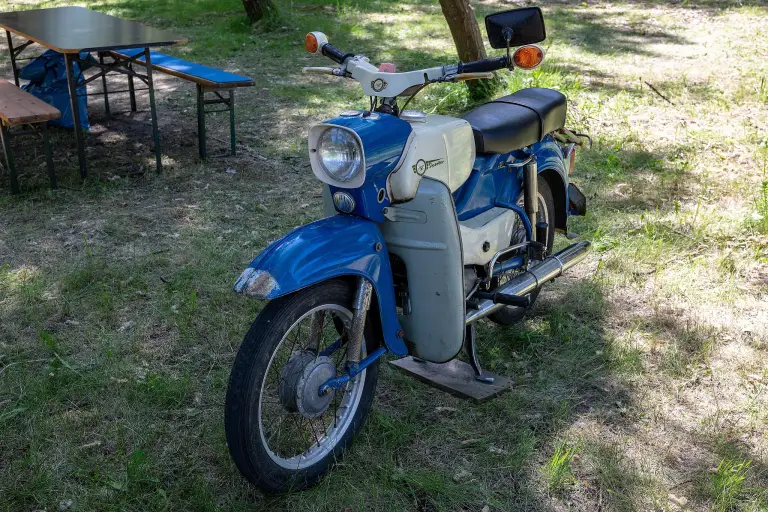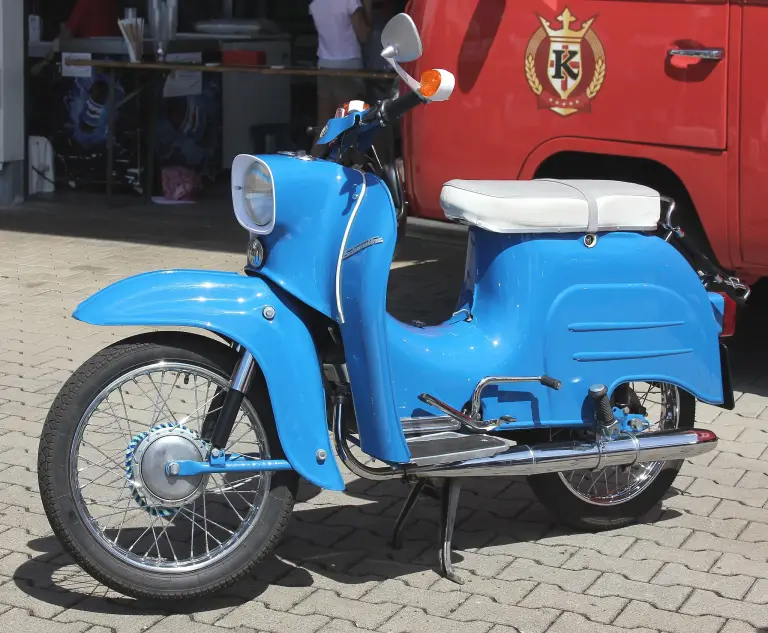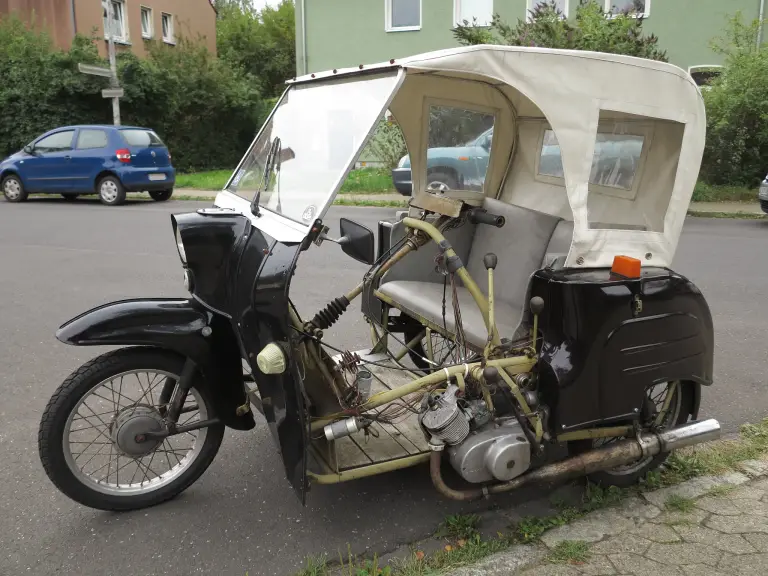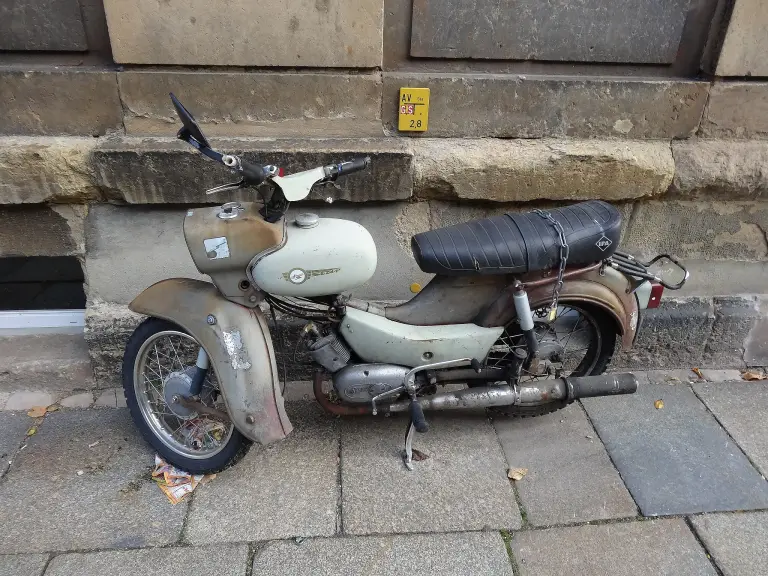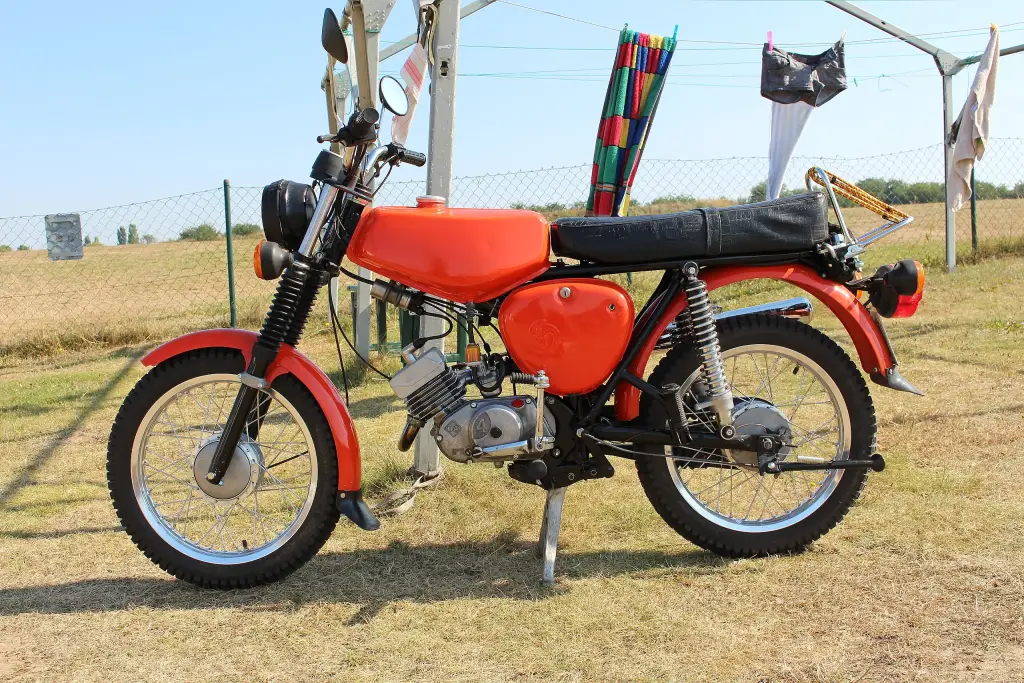
The Simson S51 was built by the VEB Fahrzeug- und Jagdwaffenwerk „Ernst Thälmann“ in Suhl from 1980 to 1990 under the Simson brand. It was the direct successor to the S50, and with more than 1.6 million S50 and S51 machines produced, the line is the most-built moped in Germany. The S51 is known for simple, repair-friendly engineering and a high degree of parts standardisation.
Simson S51 at a glance
| Maker | VEB Fahrzeug- und Jagdwaffenwerk „Ernst Thälmann“, Suhl |
|---|---|
| Production | 1980–1990 |
| Predecessor | Simson S 50 |
| Engine | 49 cc two-stroke, M531/541 (M542 in the S51/1) |
| Gearbox | three-speed, four-speed optional |
| Top speed | 60 km/h; 64 km/h measured by KFT |
| Fuel consumption | 2.4 l/100 km |
| Permissible weight | 260 kg |
| Line total | over 1.6 million S 50 and S 51 |
| Electrics | 6 V, 12 V from 1989 |
Based on one source, the German Wikipedia article on the S 51.
History of the Simson S51
The main new feature of the S51 compared with its predecessor, the S50, was a newly developed two-stroke engine, the M531/541, with the M542 used in the S51/1 models. Its changed bore and stroke improved torque at medium and low engine speeds, which showed in stronger pulling power on hills and with two people aboard. A four-speed gearbox became available as an option and increased the usable pulling force further. The new engine generation used a pull-key gearshift instead of the claw shift of the M52/53/54 series, which was simpler and cheaper to make. Fuel consumption fell only slightly, from 2.5 to 2.4 litres per 100 km.
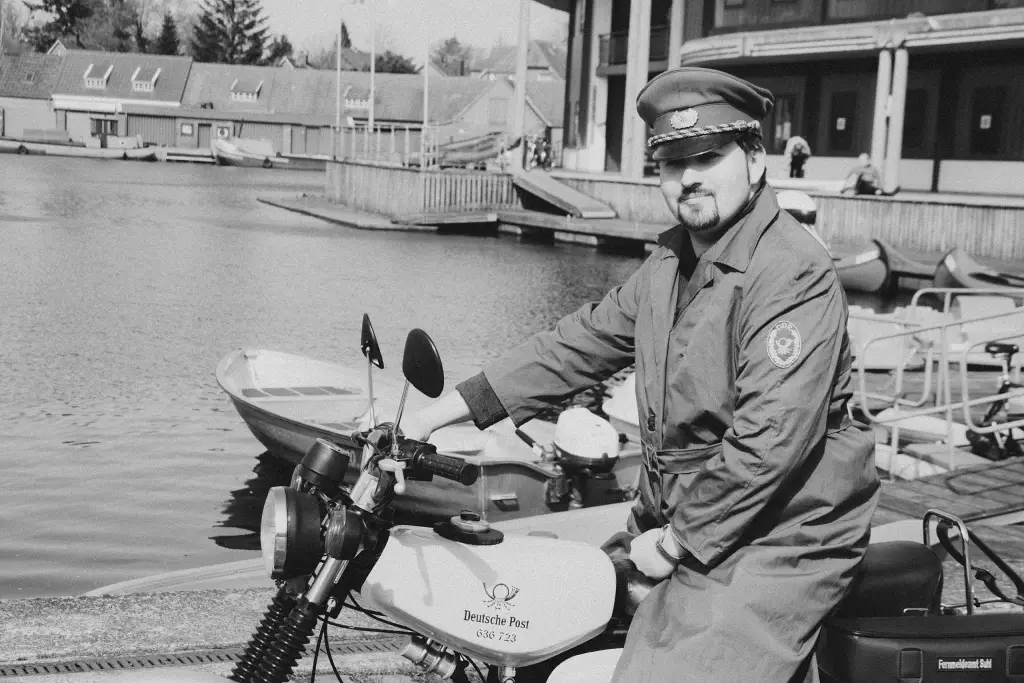
Repair-friendliness was improved as well: the crankshaft seals were mounted outside the engine and the kickstarter shaft had a freewheel, so both parts were much easier to replace. The intended service life of the engine rose from 25,000 km to 40,000 km, and the permissible total weight of the S51 went up to 260 kg (the S50 was rated at 230 kg). Externally the S51 was close to the S50. The new tank shape had already arrived on the S50 in 1978; at the S51’s launch in 1980 the differences were the engine, the “S 51” script on the side cover, a round headlamp in a flatter, more angular housing, the switches combined in one unit on the left of the handlebar (except on the S51 N), stronger steering-head bearings and a slightly higher charging current of 2.2 instead of 2 amperes. The colour range and the Simson tank script were carried over, except that rape yellow was dropped.
A light revision in mid-1983 brought tank decals with a large Simson script instead of the small script with the IFA diamond, a front mudguard without stays and a new tail light enlarged from 100 to 120 mm; the S51 E had these features from 1981. From 1986 a new “economy” carburettor was fitted. The larger revision came in 1989 and produced the S51/1: 12-volt electrics, an electronic charging and indicator system (ELBA), a halogen headlamp (except the S51/1 B), a brake light that also came on with the front brake, a more reliable rear-brake contact moved to the foot lever, the K36 tyre profile and black instead of silver-grey or chrome mudguards, kickstarter and gear lever. The S51 kept round indicators, unlike the SR 50. The S51 was never available from the factory in metallic paint, except the metallic silver of the S51 E. Production ended in 1990, when the S53 was being prepared as its successor.
Design and features
- New M531 engine: better torque at low and medium speeds than the S50, and a longer intended service life.
- Optional four-speed gearbox: more usable pulling power, especially with a passenger.
- Easy repair: external crankshaft seals and a kickstarter shaft with freewheel.
- S51/1 electrics: 12-volt system, ELBA charging and indicator unit and a halogen headlamp from 1989.
Simson S51 versions
- S51 (1980–1989): the original 6-volt model with a three-speed gearbox and optional four-speed.
- S51 E: the enduro version, which had the 1983 detail changes from 1981 and was the only model with metallic silver paint.
- S51 N: a basic version without the combined handlebar switch unit.
- S51 B2-4: painted billiard green, a colour also used for the better-equipped Schwalbe.
- S51/1 (1989–1990): 12-volt electrics, halogen lamp and the 1989 detail changes.
The S51 was the successor to the Simson S50 and shared its engine with the Simson SR50 scooter; the earlier Schwalbe also received an S51 engine in its last series. More vehicles are in the Simson collection.
Video: Simson S51- Tipps & Tricks
Video by thebikerider on YouTube.
Sources
- Simson S 51, German Wikipedia: engine, model updates, production