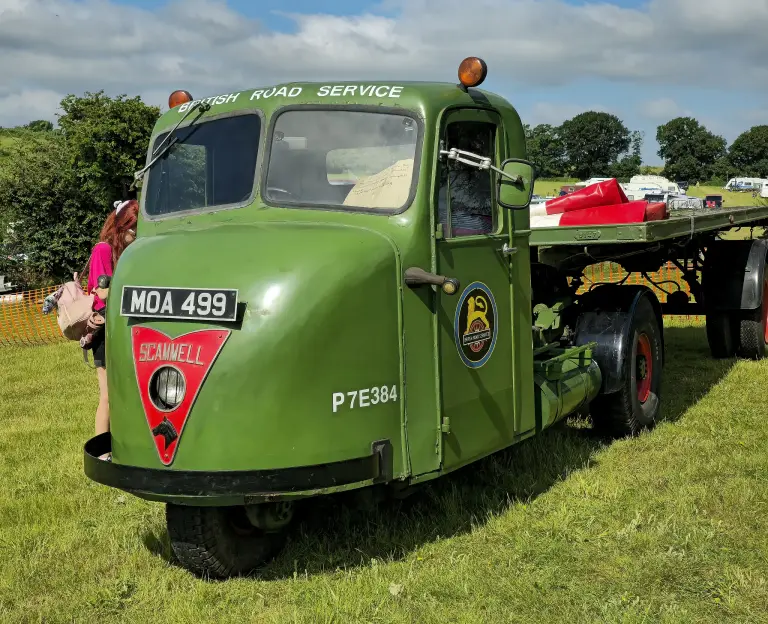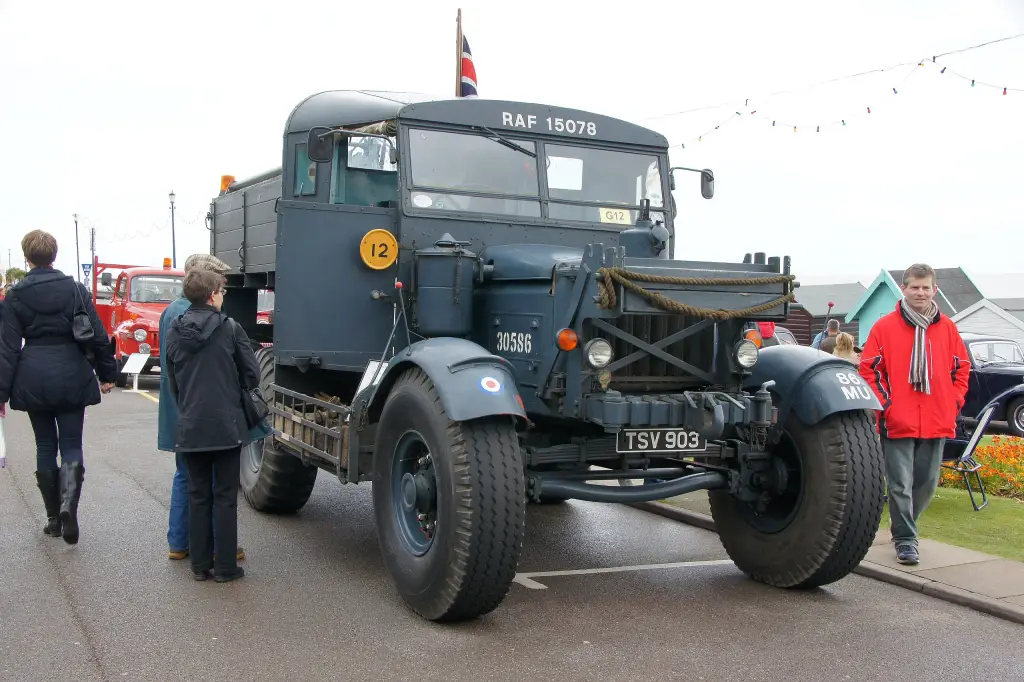
The Scammell Pioneer was a 6×4 off-road tractor unit designed for Britain’s colonies and taken up by the British Army, which used it throughout the Second World War as an artillery tractor, a recovery vehicle and a tank transporter. It was the machine that made Scammell’s name in heavy off-road work.
Scammell Pioneer at a glance
| Maker | Scammell Lorries Ltd, Watford |
|---|---|
| Production | from 1927; military production to 1945 |
| Type | 6×4 off-road tractor unit |
| Army engine | Gardner six-cylinder diesel, 102 bhp |
| Winch | 8 tonnes |
| Artillery tractor | Pioneer R100, 980 built |
| Recovery vehicles | SV1S and SV1T, 43 built; SV2S, 1,975 built |
| Tank transporters | TRCU20 and TRMU30/TRCU30, 459 built |
| Crew carried | eight, besides the driver |
| Special equipment | a pair of tracks for the rear wheels, for soft ground |
| Last army use | Belize, in the 1980s |
History of the Scammell Pioneer
Designed for the colonies
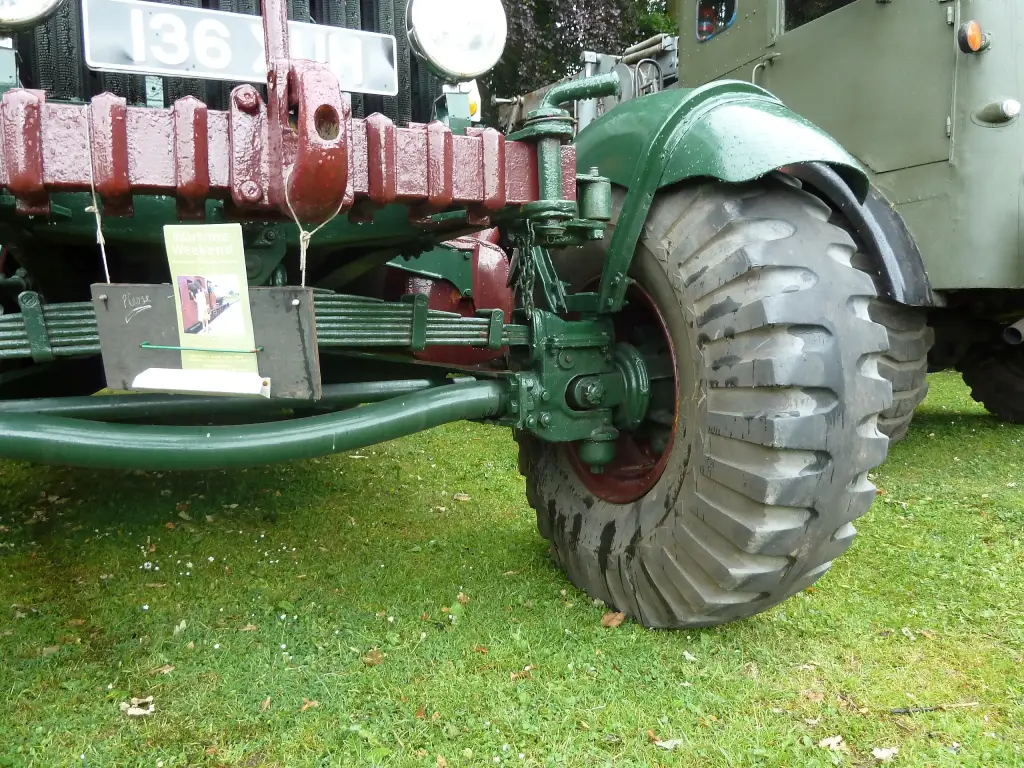
The Pioneer was designed as a 6×4 off-road vehicle for use in Britain’s colonies, where metalled roads were scarce, and was first produced in 1927. Though it lacked all-wheel drive, its combination of a suspension with great travel, excellent traction and a low-revving engine gave it impressive pulling power on rough ground at low speeds. It was not designed for military use, but the War Office bought a single petrol-engined example in 1932: equipped as a tank transporter with a permanently coupled 18-tonne semi-trailer, it went to a training unit but did not catch on, and no more transporters were bought until 1937.
The artillery tractor
With the exception of that single 1932 vehicle, every Pioneer bought by the British Army had a 102 bhp Gardner six-cylinder diesel, driving the rear wheels through a constant-mesh gearbox and fitted with a power take-off for a Scammell winch. Introduced in 1935, the Pioneer R100 heavy artillery tractor was used throughout the war to tow medium and heavy guns, with accommodation for the gun’s crew, tools, equipment and ammunition. Early in the war it towed the 60-pounder, the 6-inch howitzer, the 4.5-inch gun and the 5.5-inch howitzer until the AEC Matador arrived in numbers; the heavy pieces included the 6-inch gun, the 8-inch howitzer, the 155 mm Long Tom and the 7.2-inch howitzer. Many were lost in France in June 1940 with the evacuation of the British Expeditionary Force, either destroyed by the retreating troops or captured by the Germans. Scammell built 980 R100s by the end of the war, which was not enough, and from late 1943 the Pioneer was supplemented by the Albion CX22S.
Recovery and tank transport
From 1936 the army began to receive Pioneer heavy recovery vehicles. The first 43, designated SV1S and SV1T, had a three-tonne folding crane and lockers for recovery equipment and towing bars; most of these early vehicles were lost with the BEF. The SV2S had a simpler, redesigned extending crane with greater lifting height, was introduced in 1938 and stayed in production for the rest of the war, with 1,975 built. Among its equipment was a pair of tracks that could be fitted over the two rear wheels, turning the Pioneer temporarily into a half-track for soft ground. The last Pioneer recovery vehicle did not leave the British Army until the 1980s, in Belize.
Tank transporter deliveries did not begin until 1937. The production vehicle had a longer wheelbase and an extended cab to carry the tank crew as passengers, and larger rear wheels than the artillery tractor and recovery versions; it was designated TRCU20, and 20- and 30-tonne combinations (TRMU30 and TRCU30) were delivered. In both cases the trailer was more or less fixed to the tractor, unlike a modern semi-trailer, and hinged ramps let the tank drive on, or the tractor’s winch pull it aboard if it was immobilised. The combination proved too tall to carry higher-profile American tanks under some British bridges and was superseded by the Diamond T from 1941, but it stayed in production throughout the war, with 459 built; most of the trailers were scrapped afterwards and the tractors were kept for other trailers or sold into civilian use.
After the war
The Pioneer became a popular heavy haulage and forestry vehicle in civilian hands and was used well into the 1980s, and restored examples are still driven at rallies and used for off-road events.
Design and features
- Off-road traction: great suspension travel and a low-revving diesel gave it pulling power where roads were poor.
- Gardner diesel: 102 bhp in every army Pioneer but the single 1932 petrol vehicle.
- Scammell winch: driven by a power take-off and rated at eight tonnes.
- Half-track conversion: a pair of tracks could be fitted over the rear wheels for soft ground.
- Long service: the last recovery Pioneer stayed with the army until the 1980s.
Scammell Pioneer versions
- R100 artillery tractor: introduced in 1935, 980 built by the end of the war.
- SV1S and SV1T recovery vehicles: the first 43, with a three-tonne folding crane.
- SV2S recovery vehicle: introduced in 1938 with an extending crane, 1,975 built.
- TRCU20 tank transporter: the 1937 production tractor with an extended cab.
- TRMU30 and TRCU30: 20- and 30-tonne tractor and trailer combinations, 459 built.
- Civilian tractor: post-war heavy haulage and forestry use into the 1980s.
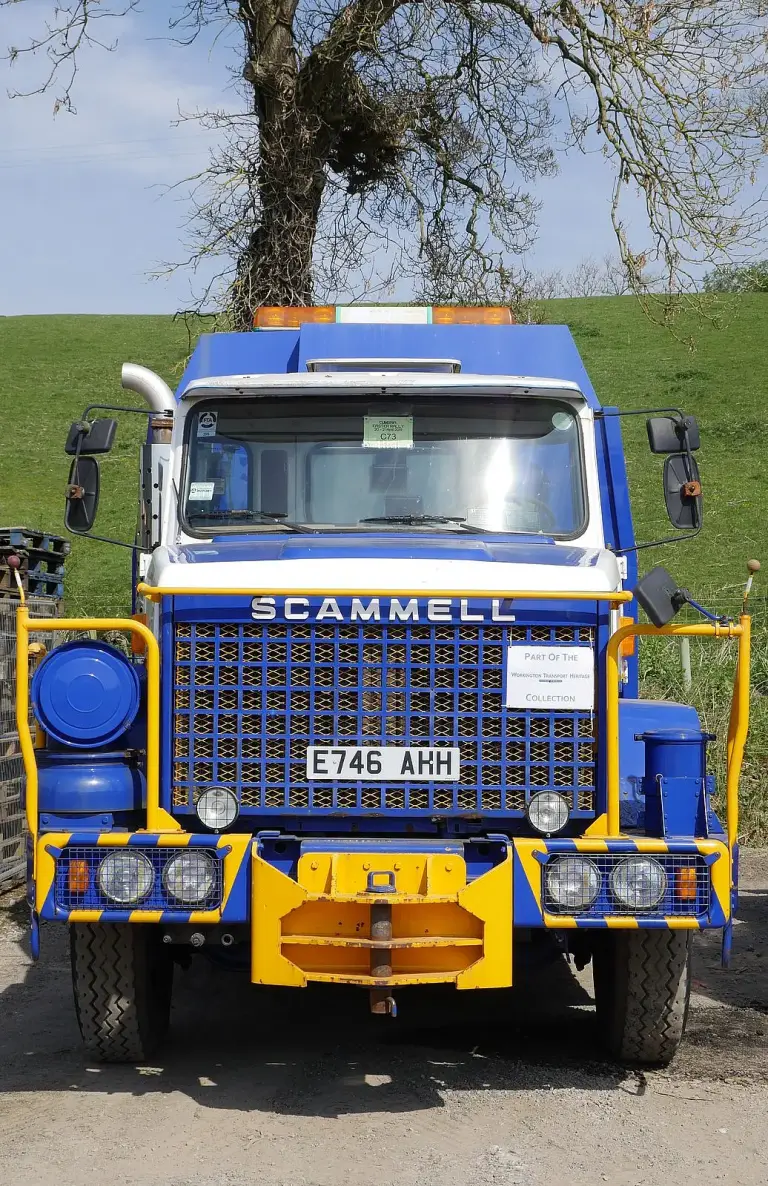
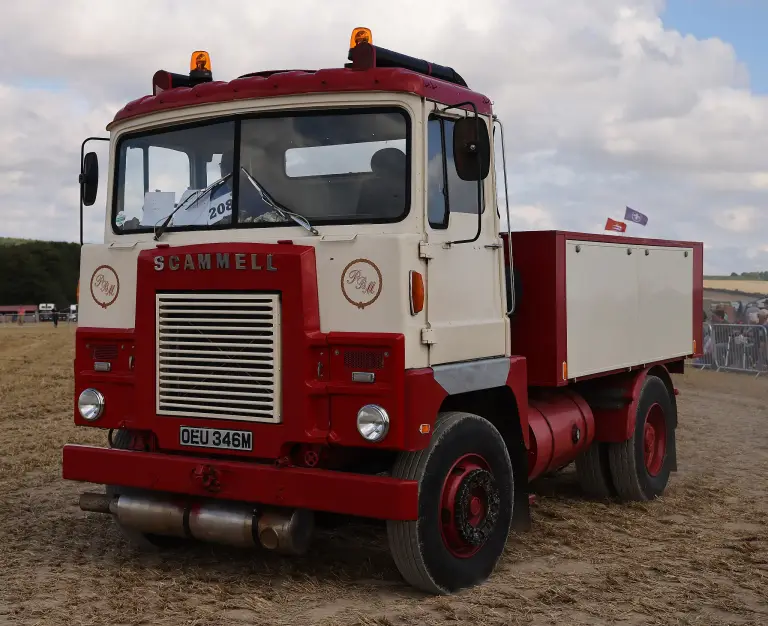
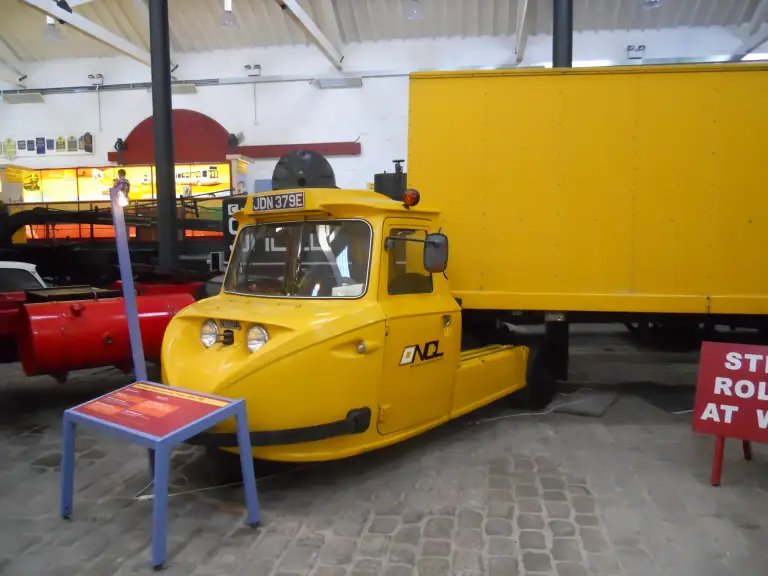
The Pioneer was the ancestor of Scammell’s heavy off-road lorries such as the Explorer, and it shares its 6×4 layout with the later Constructor. More lorries are in the Scammell collection.
Sources
- Scammell Pioneer, English Wikipedia: development, army use, artillery tractor, recovery and tank transporter variants
- Scammell Pioneer, German Wikipedia: winch rating, crew, civilian use
- Scammell Pioneer, French Wikipedia: production figures and post-war use
- Scammell Pioneer, Italian Wikipedia: variants and army service