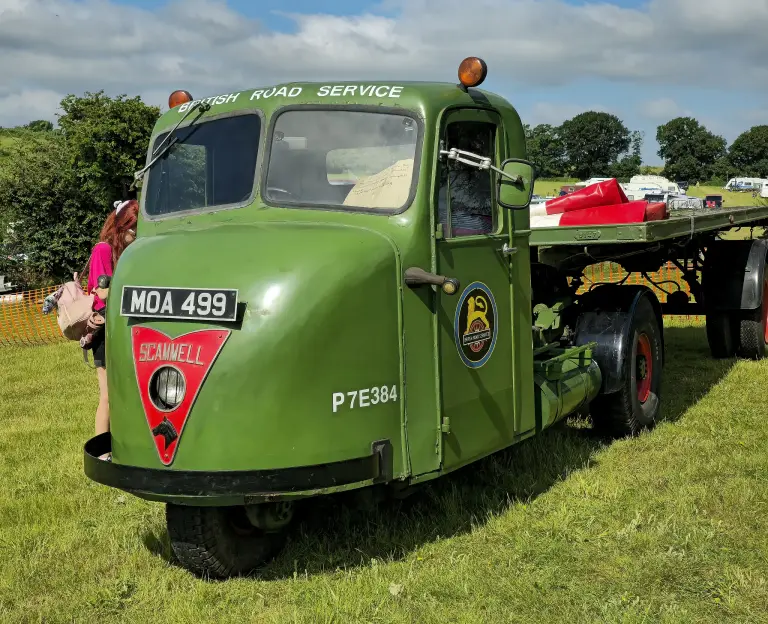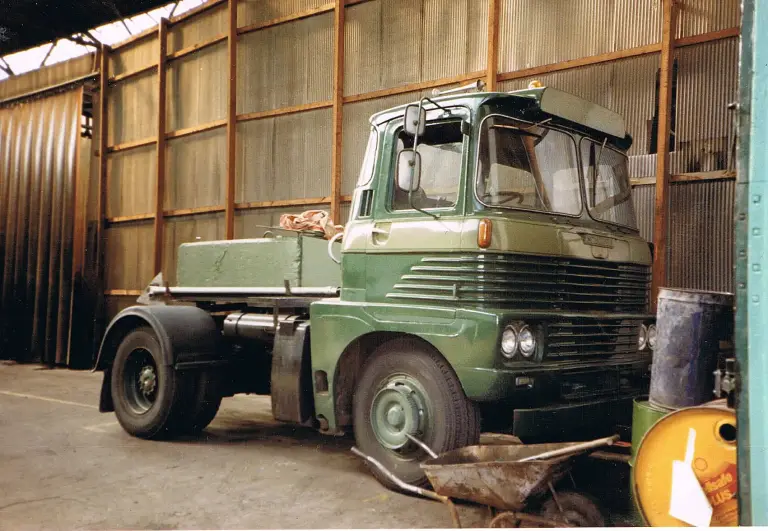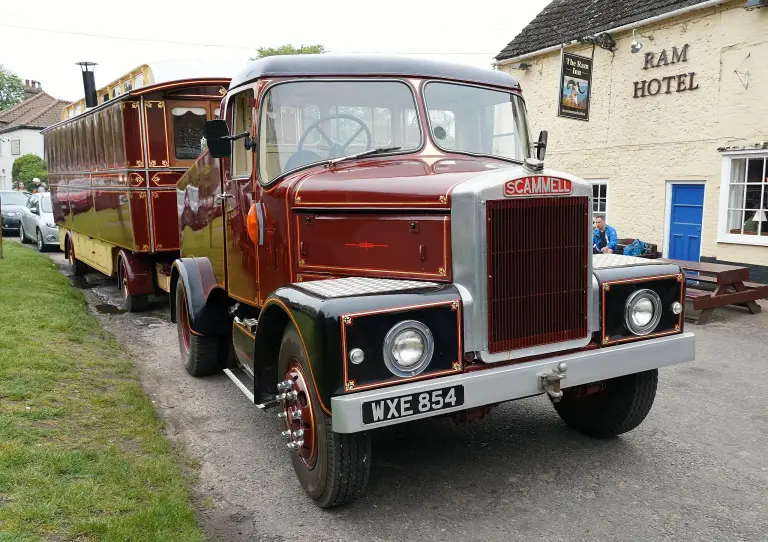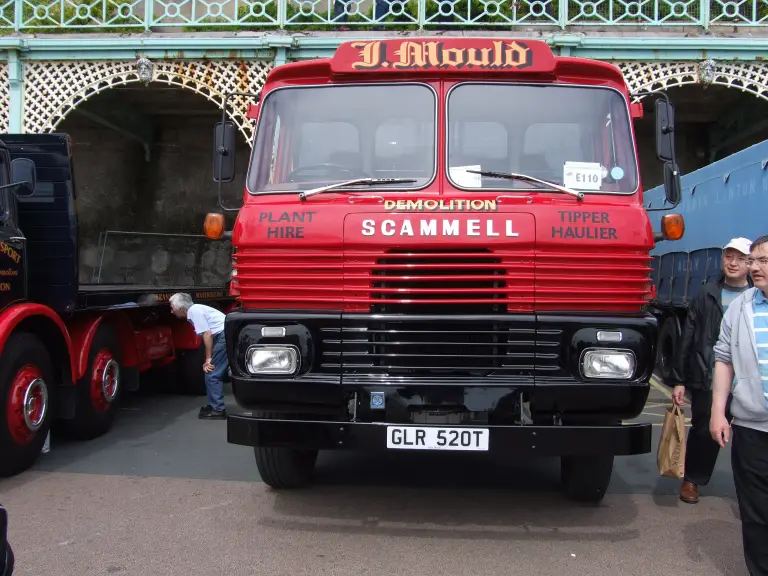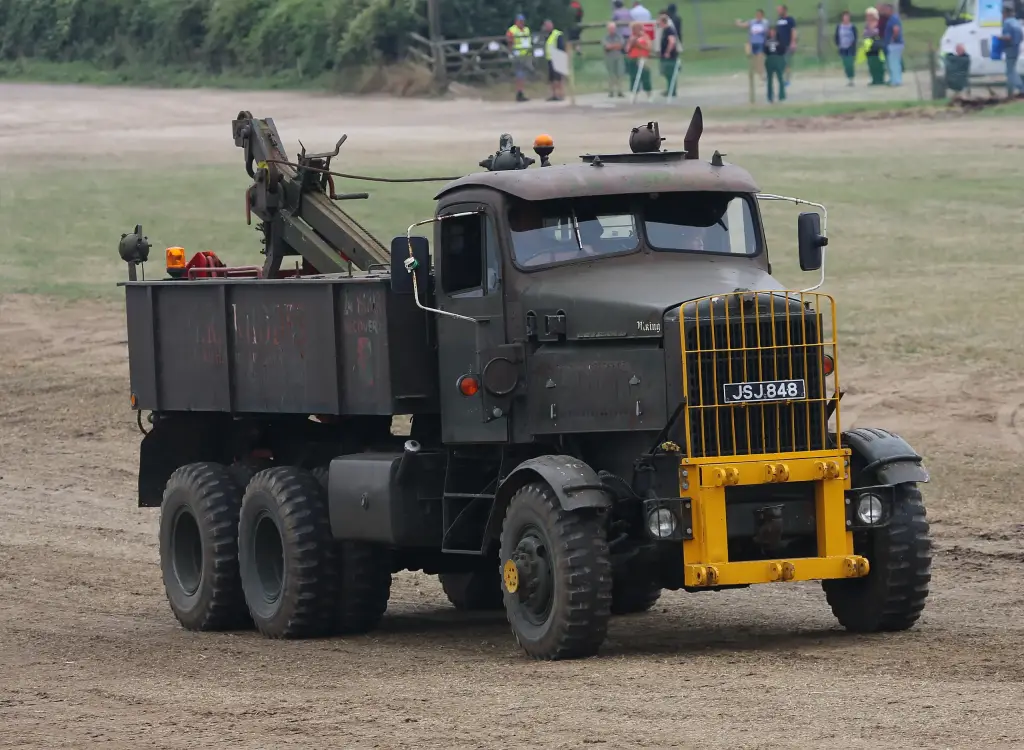
The Scammell Constructor was the name the Watford works gave to its heaviest multi-axle lorries. In the 1950s it was an all-wheel-drive three-axle machine rated at 30 tonnes and exported as far as East Germany; in 1980 the name returned on the Constructor 8, the eight-wheel version of the Leyland Roadtrain that replaced the Routeman.
Scammell Constructor at a glance
| Maker | Scammell Lorries Ltd, Watford |
|---|---|
| Parent company | Leyland group, Scammell part of it from 1955 |
| Type | heavy multi-axle lorry |
| 1950s version | all-wheel drive, three axles, 30-tonne payload |
| Engine of that version | Rolls-Royce six-cylinder diesel |
| Notable export | East Germany, one of the few Western lorries sold there |
| 1980 version | Constructor 8, the eight-wheel Leyland Roadtrain |
| In the range | replaced the Routeman from 1980 |
| Production ended | 1988, when DAF closed the Watford works |
There is no separate Wikipedia article on the Constructor; this page uses the company articles on Scammell.
History of the Scammell Constructor
The all-wheel-drive Constructor
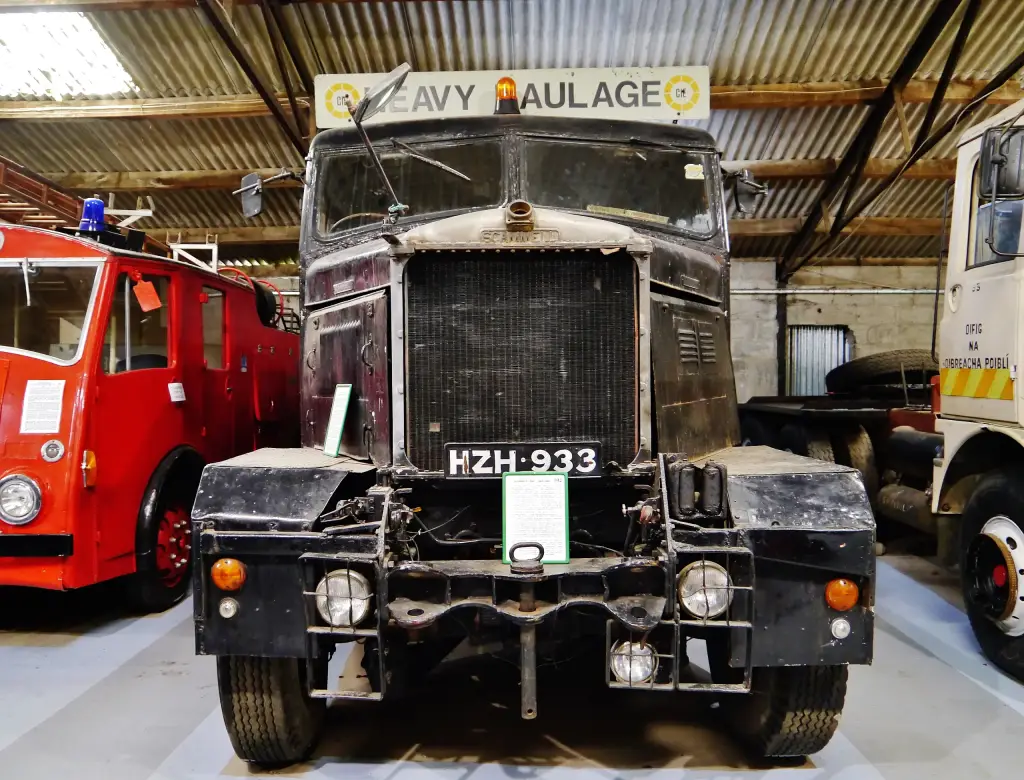
Scammell built its reputation on heavy lorries for rough ground and for the armed forces, and the Constructor was one of the machines that carried the name into export markets. It was an all-wheel-drive three-axle lorry rated at 30 tonnes payload and powered by a Rolls-Royce six-cylinder diesel. That version found buyers behind the Iron Curtain: the Constructor was one of the few Western motor vehicles imported into East Germany, where heavy off-road lorries of this kind were in demand.
An eight-wheel Roadtrain
In the late 1970s the Leyland group set out to replace its heavy tractor range with two new models, the bonneted Landtrain for export and the cab-over Roadtrain for the home market. Scammell, by then the group’s specialist heavy-vehicle works at Watford, was given the contract to develop and build the eight-wheel version of the Roadtrain, which it sold as the Constructor 8. The new lorry took over from the Routeman, the forward-control eight-wheeler that had been in production since 1959 and whose third series alone accounted for 4,800 vehicles.
The end at Watford
The Leyland group was taken over by DAF in the late 1980s and the Watford works, Scammell’s home since 1922, was closed in July 1988. DAF sold the manufacturing rights, though not the right to the Scammell name, for the S24, Nubian, Crusader and Commander to Alvis Unipower, which opened a new works at West Watford to support the vehicles that remained in service.
Design and features
- Roadtrain bones: the eight-wheel Constructor of 1980 used the Leyland Roadtrain cab and chassis.
- Routeman replacement: from 1980 it took the place of the long-running Routeman 8×4.
- All-wheel drive: a three-axle version with a 30-tonne payload for rough ground and export.
- Rolls-Royce power: the export Constructor was powered by a Rolls-Royce six-cylinder diesel.
Scammell Constructor versions
- Constructor 6×6: the all-wheel-drive three-axle lorry of the 1950s, rated at 30 tonnes payload.
- Constructor 8: the eight-wheel Roadtrain-based lorry that replaced the Routeman.
- Late production: built at Watford until the works closed in 1988.
The Constructor 8 replaced the Routeman. Other heavy Scammells of the same years are the Crusader and the S24; more lorries are in the Scammell collection.
Sources
- Scammell, English Wikipedia: company history, Leyland era, Watford works
- Scammell, German Wikipedia: all-wheel-drive Constructor, payload, Rolls-Royce engine, East German export
- Scammell, French Wikipedia: eight-wheel Roadtrain contract, end of the Watford works
- Scammell Routeman, English Wikipedia: Routeman production and its 1980 replacement