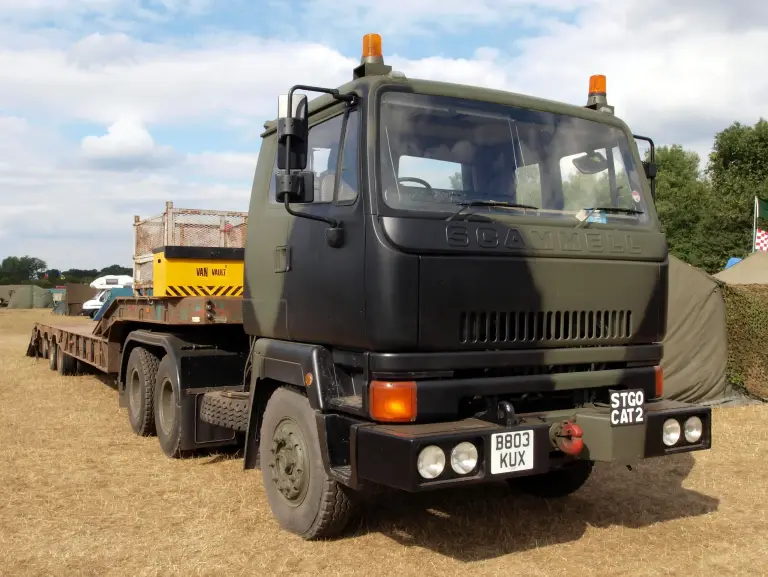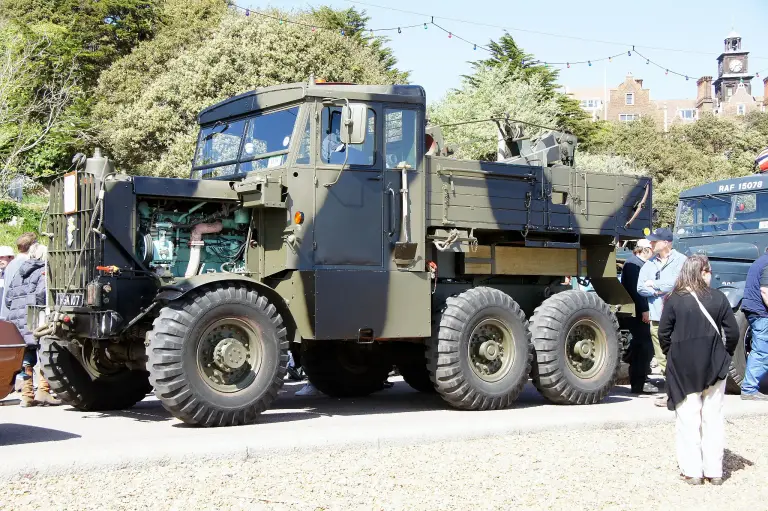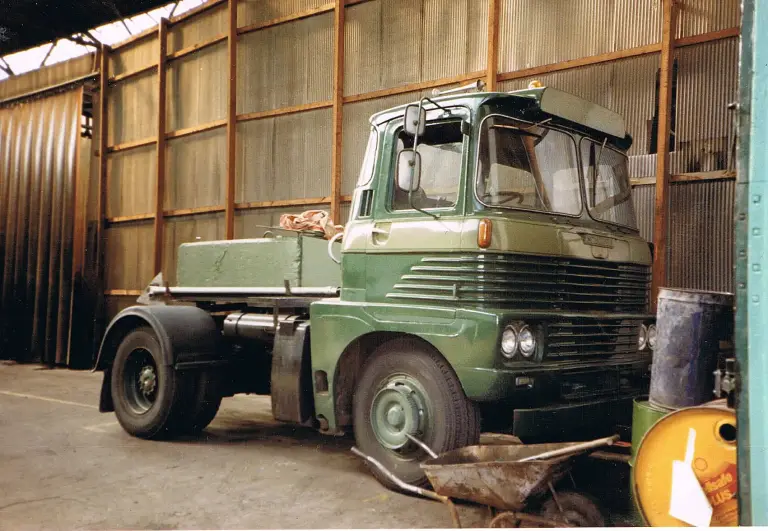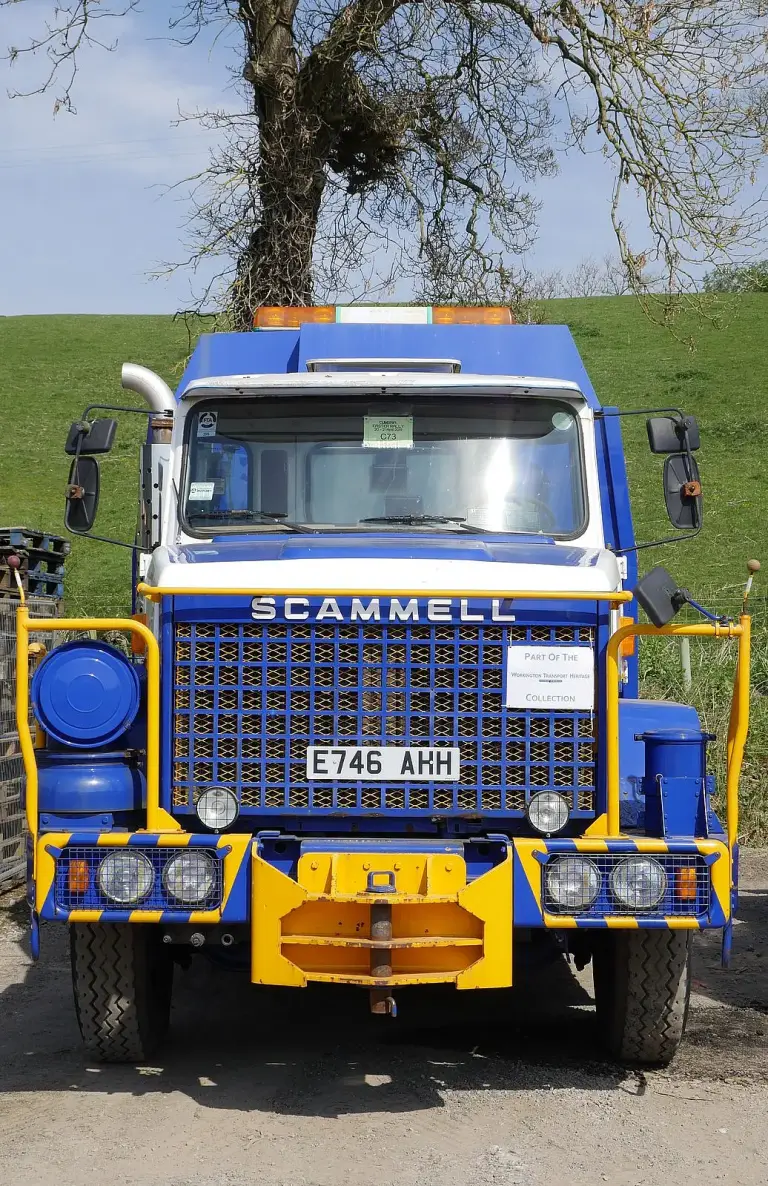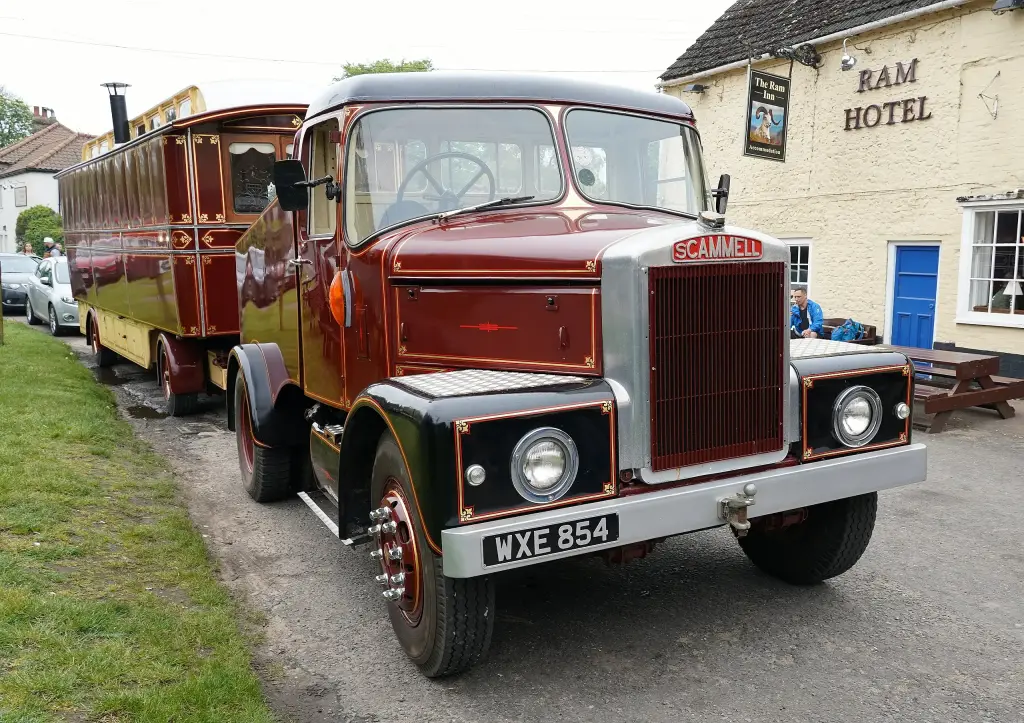
The Scammell Highwayman was the bonneted 4×2 of the range that the Watford works introduced after joining Leyland Motors in 1955. As a tractor unit it was rated at up to 50 tonnes, and surviving examples are dated between 1959 and 1967.
Scammell Highwayman at a glance
| Maker | Scammell Lorries Ltd, Watford |
|---|---|
| Type | bonneted 4×2 lorry and tractor unit |
| Introduced | with the post-1955 Leyland-era range |
| Gross train weight | up to 50 tonnes as a tractor unit |
| Trailers | Scammell, built at the Moor Park works |
| Company | part of Leyland Motors from 1955 |
| Surviving examples | 1959 to 1967 |
| Engines of survivors | Gardner diesels are common |
There is no separate Wikipedia article on the Highwayman; this page uses the company articles on Scammell and the captions of the Commons photographs.
History of the Scammell Highwayman
The bonneted Scammell
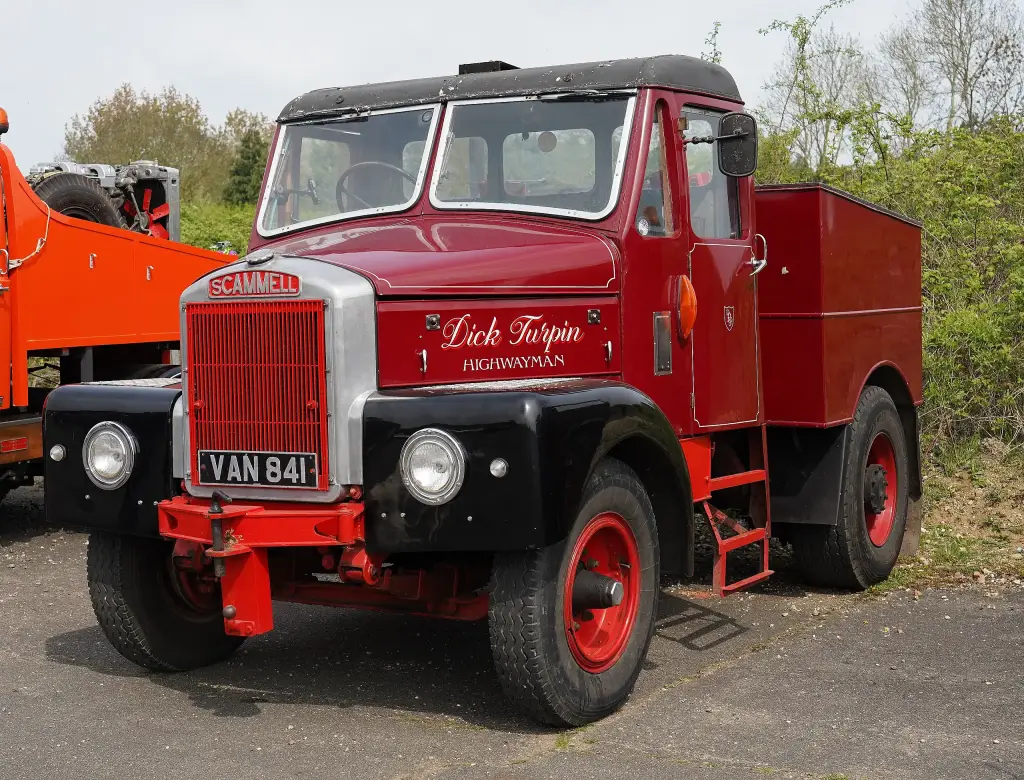
After the war, foreign competition and the rationalisation of the British industry led Scammell into Leyland Motors in 1955. Access to group components allowed the Watford works to replace its “lightweight” range with three new models: the Highwayman, a bonneted 4×2; the Routeman, a forward-control eight-wheeler; and the Handyman, a forward-control 4×2. The Highwayman kept the traditional layout with the engine ahead of the driver, which made it the conservative choice of the three and the easiest to maintain.
Tractor units and trailers
Both tractor units of the range could be set up for trains of up to 50 tonnes and, with the full range of Scammell trailers made at the Moor Park works, they allowed the company to keep selling into specialist and military markets. The Highwayman was used both as a rigid lorry and as a tractor unit, and the tractors are the form in which most survivors appear today.
Survivors
Preserved Highwaymans are dated between 1959 and 1967. Among them are a 1959 example seen near Brandon, a 1962 lorry photographed at Saffron Walden in 2025 and a 1967 vehicle that appears regularly at the Old Warden Park rallies; a 1963 Highwayman Gardner tractor was photographed in service in November 1980, which shows how long these lorries stayed at work.
Design and features
- Bonneted layout: the engine sat ahead of the cab, unlike the forward-control Handyman.
- 50-tonne trains: with Scammell trailers the Highwayman could haul up to 50 tonnes.
- Gardner engines: a common choice in the surviving tractors.
- Long service: examples were still working in 1980, more than twenty years after delivery.
Scammell Highwayman versions
- Rigid lorry: the 4×2 chassis with a flat or specialist body.
- Tractor unit: the form used for Scammell semi-trailers of up to 50 tonnes.
- Gardner-engined tractor: a popular specification among operators and survivors.
The Highwayman was the bonneted stablemate of the forward-control Handyman and of the eight-wheel Routeman. Scammell tractor units in general are described in the Scammell tractor article; more lorries are in the Scammell collection.
Sources
- Scammell, English Wikipedia: post-1955 range, 50-tonne rating, Moor Park trailers
- Scammell, French Wikipedia: range introduced after the Leyland takeover