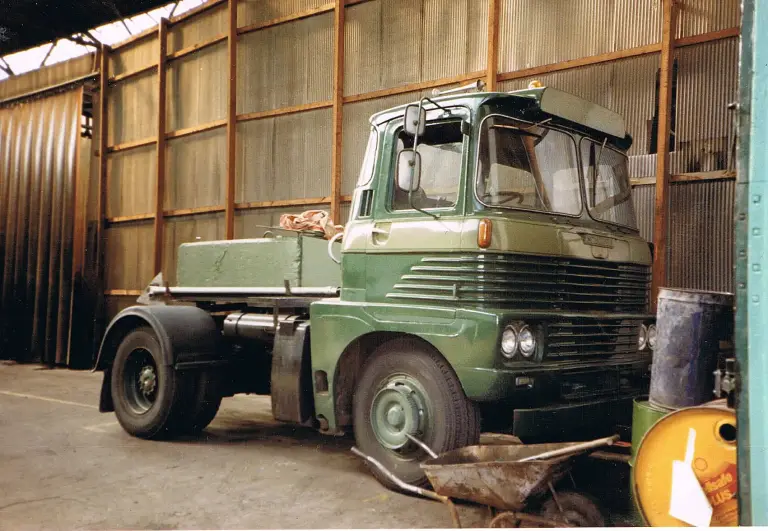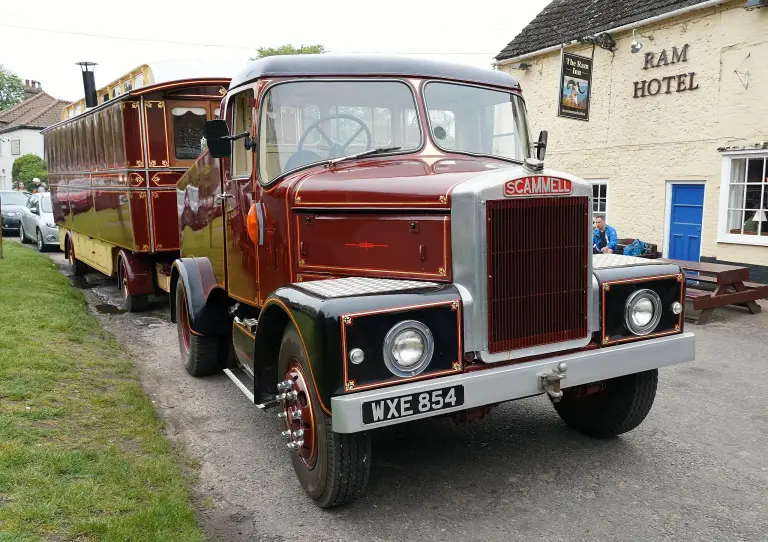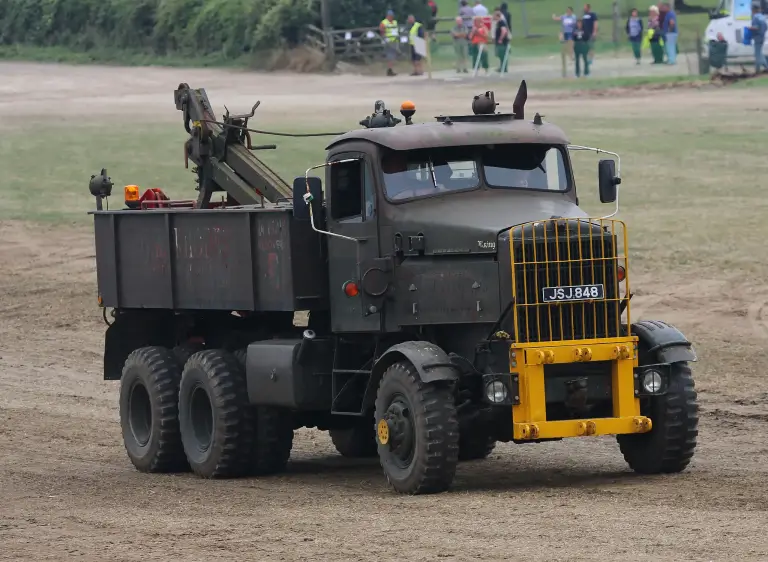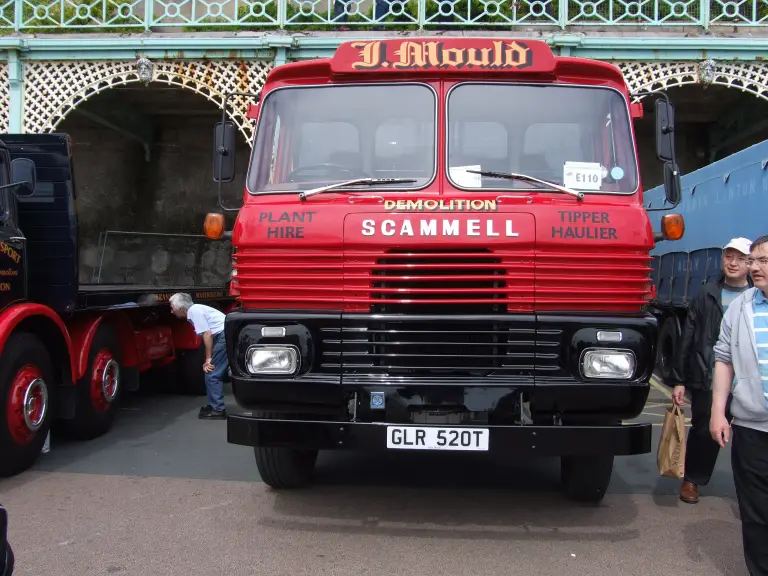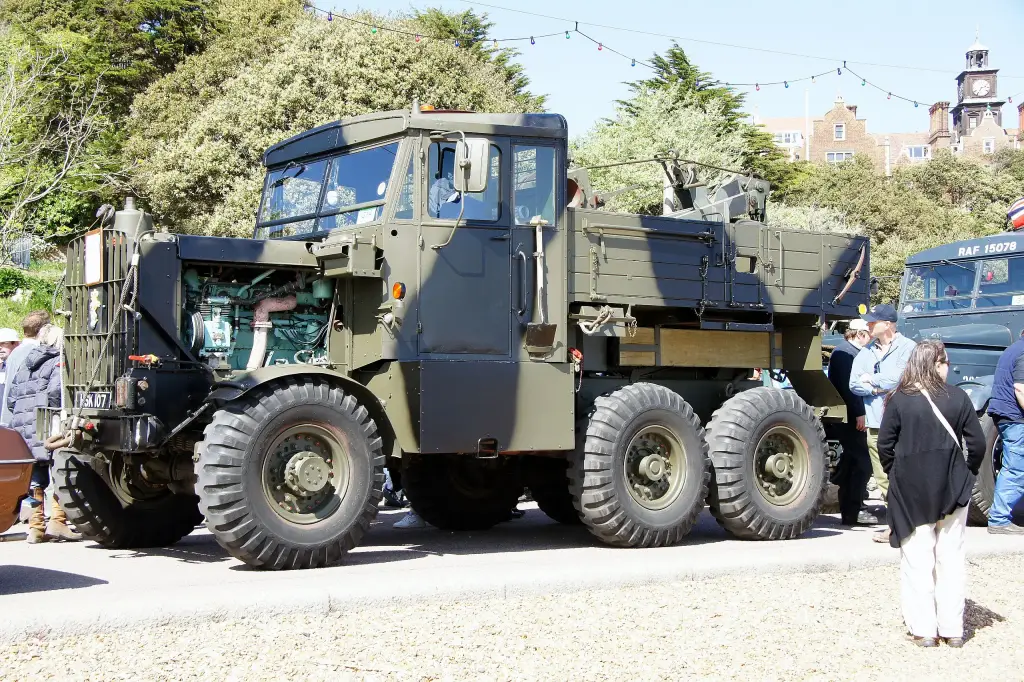
The Scammell Explorer was one of the heavy off-road lorries that the Watford works built for the British Army after the Second World War. Surviving vehicles, dated between 1951 and 1955, show it both as an artillery tractor and as a heavy recovery lorry.
Scammell Explorer at a glance
| Maker | Scammell Lorries Ltd, Watford |
|---|---|
| Type | heavy off-road lorry |
| Army roles | artillery tractor and heavy recovery vehicle |
| Surviving examples | 1951 to 1955 |
| Works | Tolpits Lane, Watford |
| Parent company | Leyland Motors from 1955 |
| Earlier heavy Scammell | Pioneer of 1927 |
| Preserved today | examples at rallies and transport museums |
There is no Wikipedia article on the Explorer; this page is based on the company article and the captions of the Commons photographs, so it is shorter than the other Scammell pages.
History of the Scammell Explorer
A post-war heavy lorry
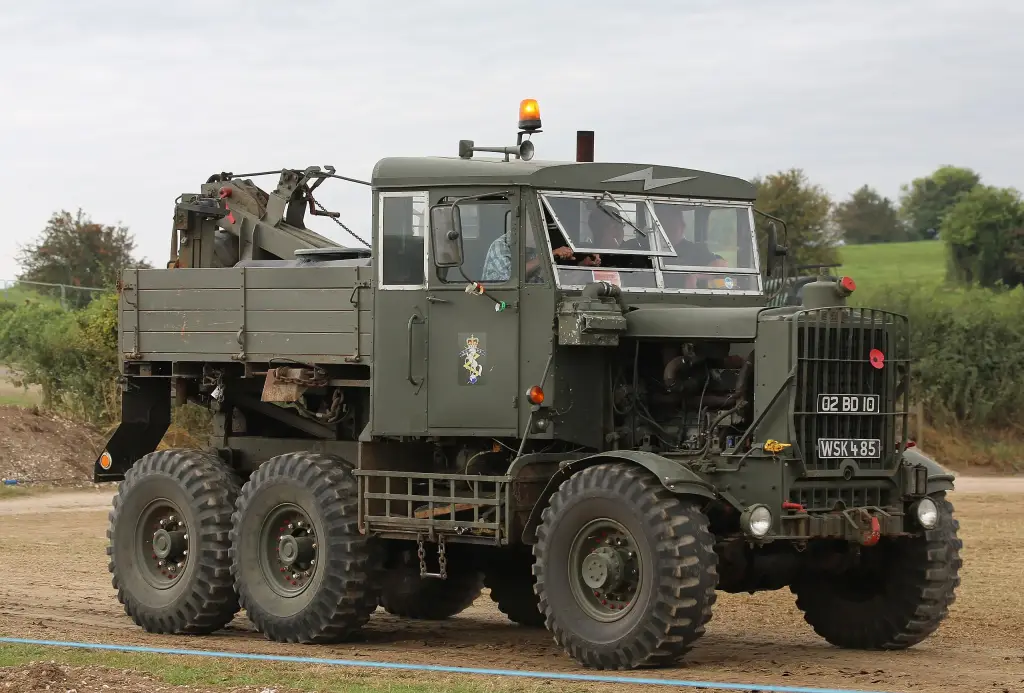
Scammell Lorries built lorries, and particularly specialist and military off-road vehicles, at Watford between 1921 and 1988. Its heavy off-road tractors went back to the 6×4 Pioneer of 1927, an off-highway heavy haulage machine that the army went on to use as an artillery tractor, a recovery vehicle and a tank transporter. After the war the works continued to supply heavy vehicles of this kind, and the Explorer is one of them: the surviving examples are dated between 1951 and 1955, the year in which Scammell came under Leyland Motors.
In army service
The preserved vehicles show the two roles the Explorer was built for. A 1953 example at Felixstowe is an artillery tractor; a 1951 vehicle preserved in Britain is fitted out as a heavy recovery lorry. Both are heavy off-road machines in the Scammell tradition, and both are now kept by enthusiasts rather than by the army.
Preservation
Explorers still appear at British transport rallies. A 1955 example, RSJ 789, has been shown at Tatton Park in Cheshire, and at least one survives in fairground ownership as a showman’s road locomotive, a use to which several heavy Scammells were put after their military service ended.
Design and features
- Off-road design: a heavy lorry built for rough ground rather than for trunk roads.
- Artillery tractor: the preserved 1953 example at Felixstowe is fitted for gun towing.
- Heavy recovery: a 1951 survivor is equipped as a recovery vehicle.
- Long service: examples passed into civilian and fairground use after the army.
Scammell Explorer versions
- Artillery tractor: the gun-towing form, as preserved at Felixstowe.
- Heavy recovery: the recovery version of 1951.
- Showman’s tractor: a survivor used by a fairground as a road locomotive.
The Explorer belonged to the same family of heavy army Scammells as the Pioneer, and the name Constructor was later used for heavy multi-axle lorries such as the Constructor 8. More lorries are in the Scammell collection.
Sources
- Scammell, English Wikipedia: company history, Pioneer background, Leyland takeover of 1955
- Scammell, French Wikipedia: list of Scammell models and company history
- Scammell Explorer photographs, Wikimedia Commons: dates and roles of the surviving vehicles