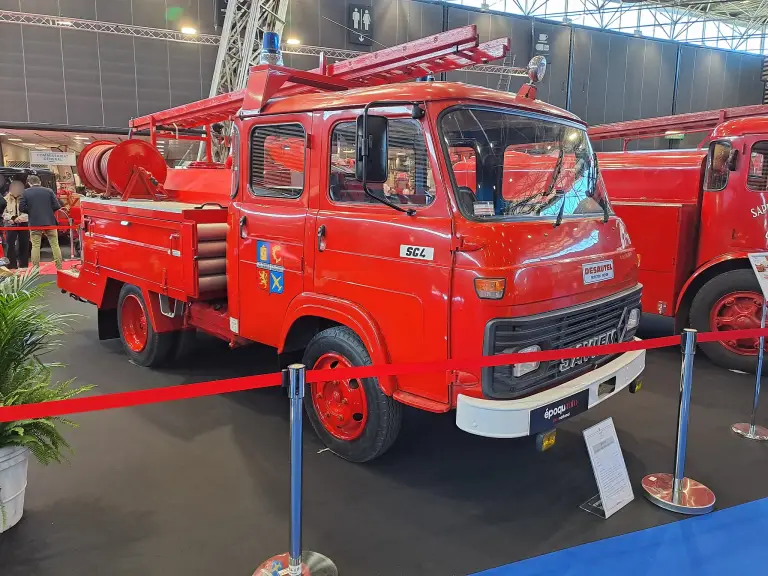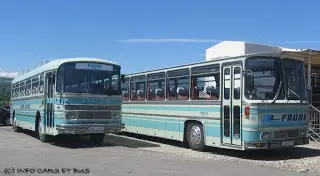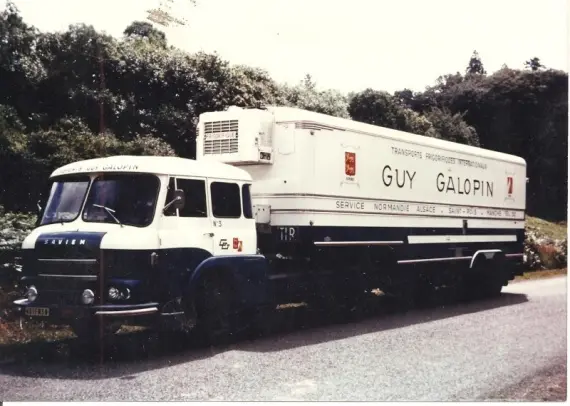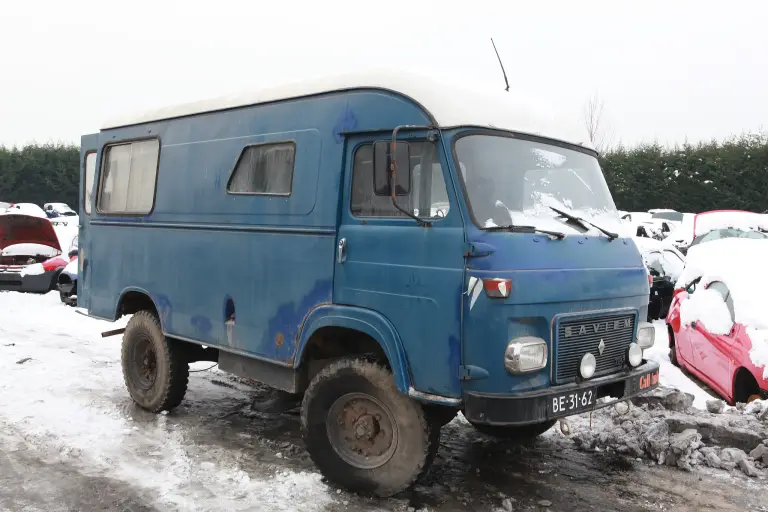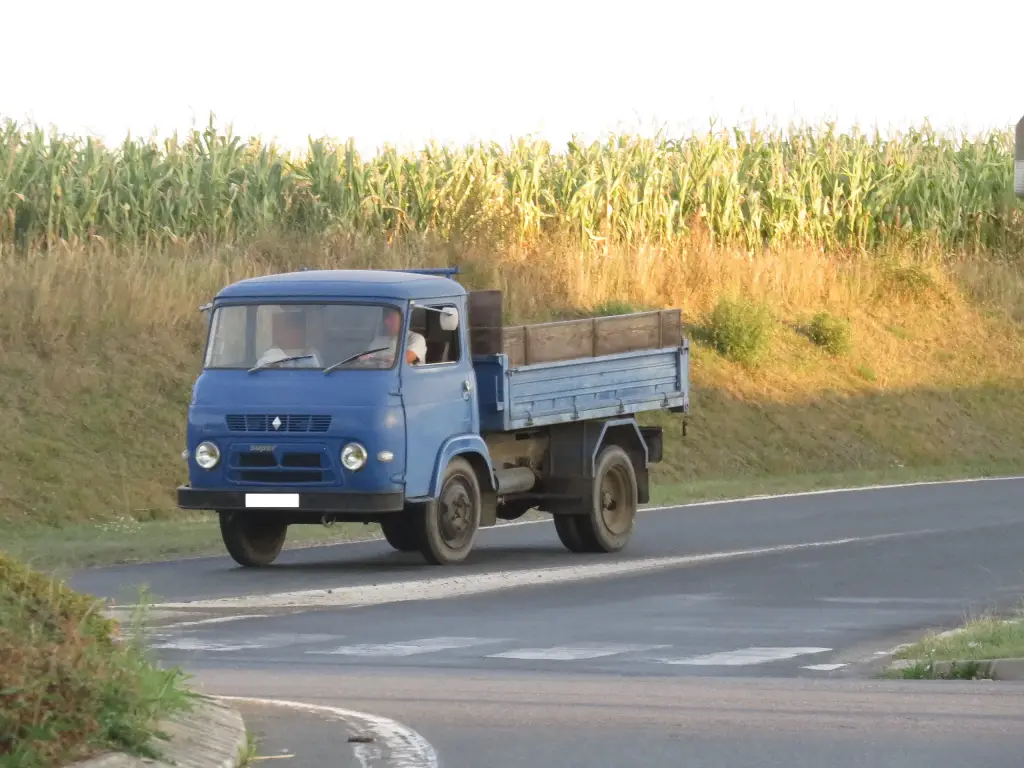
The Saviem SG2, or Super Goélette, was a light van and chassis-cab of 3.3 to 3.5 tonnes launched in June 1965 to replace the Goélette. It stayed in production under Saviem, Renault and RVI badges, and in licensed form, until 1982.
Saviem SG2 at a glance
| Maker | Saviem, marketed by Renault |
|---|---|
| Production | 1965–1980; the SG3 until 1982 |
| Gross weight | 3.3 and 3.5 tonnes |
| Launched | June 1965, replacing the Goélette |
| Petrol engine | Étendard unit from the Renault Frégate |
| Diesel engines | 2.7-litre Saviem 580-03; 3-litre 591-01; 3.3-litre 712 from 1969 |
| Suspension | independent front with coil springs; leaf springs at the rear from 1967 |
| 1967 changes | rectangular headlamps; four-wheel-drive version, later the TP3; front-wheel-drive Trafic SB2 |
| 1971 option | three-speed automatic transmission |
| 1974 addition | SG3 with twin rear wheels |
| Licensed | Avia in Czechoslovakia; MAN 270 in Germany; Alfa Romeo-Saviem A15 in Italy |
| Replaced by | Renault Master, 1980 |
The English Wikipedia article on the Super Goélette is the main source; it also covers the SG3 and the licensed production.
History of the Saviem SG2
A new Goélette
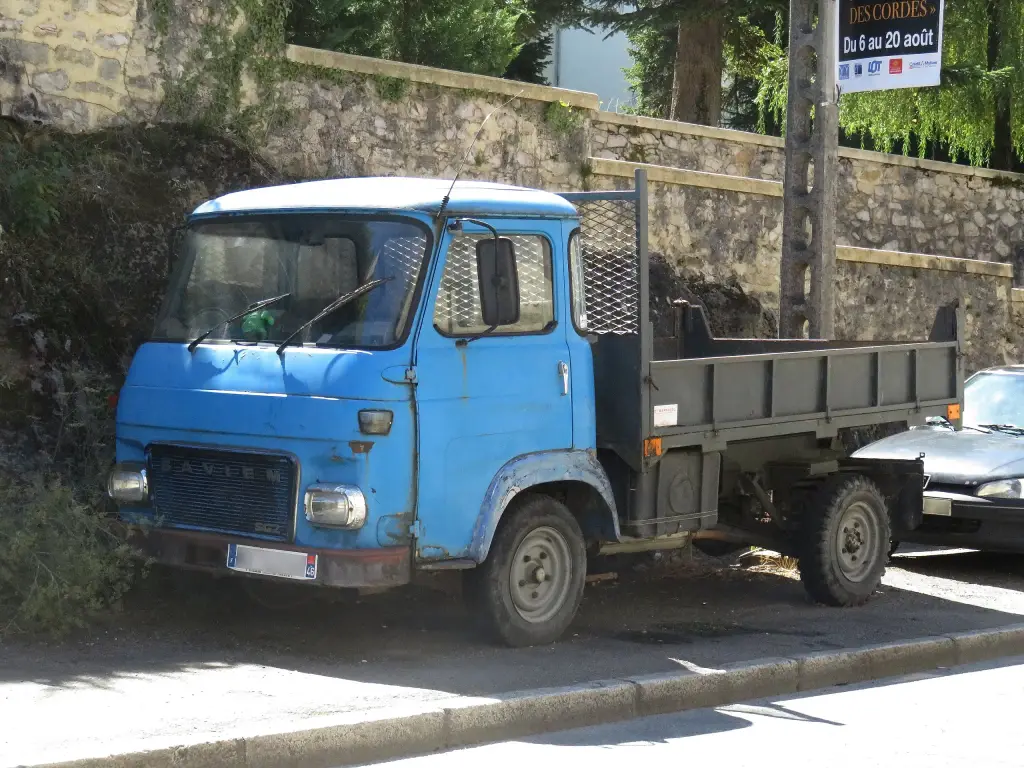
The Super Goélette SG2 replaced the Goélette in June 1965 with a curved wide windscreen, a steel instead of sheet-metal dashboard, a gear lever on the steering column, independent front suspension with variable-rate coil springs, telescopic shock absorbers and good ground clearance. The petrol engine was still the Étendard unit used in the Renault Frégate, while the diesels were swirl-chamber designs: a 2.7-litre Saviem 580-03 in the SG2 D and a 3-litre 591-01 in the Super Galion. In the autumn of 1966 the windscreen was enlarged downwards, the grille lost its centre bar and the lights became two-coloured; the dashboard changed slightly.
Four-wheel drive and foreign partners
For 1967 the round headlamps gave way to rectangular ones and two new versions appeared: a four-wheel-drive model, later called the TP3, and a front-wheel-drive Trafic SB2 for urban deliveries with a low loading floor, a floor-mounted gear lever and a rigid rear axle on springs. The diesel became a 3-litre Saviem four with MAN-licensed direct injection in two outputs. In Italy the SG2 was sold as the Alfa Romeo-Saviem A15, and Saviem’s partner MAN marketed it in Germany as the MAN 270. For 1969 the diesels were updated to the 712 series, still with MAN direct injection but with a longer stroke and 3.3 litres; a three-speed automatic became available in 1971. From 1970 the vehicles were badged simply Saviem SG2 and SB2.
SG3 and the end
In January 1974 the SG3 entered production with twin rear wheels and leaf-spring rear suspension. The range was modernised again for 1977 with a large black plastic grille, and on 21 April 1980, after the merger of Berliet and Saviem, it was sold under the RVI marque. The SG2 had been common in the 1970s and was replaced by the Renault Master in 1980; the remaining SG3 range gave way to the B-series in 1982, though both continued for some export markets. Avia built them under licence in Czechoslovakia and they were sold with Renault badges in some countries into the mid-1990s, Avia production continuing until 2000. The Madara works in Shumen, Bulgaria, also built the van under licence as the Madara 201.
Design and features
- Modern cab: a curved wide windscreen, a steel dashboard and a column gear lever.
- Comfortable chassis: independent front suspension with variable-rate coil springs and high ground clearance.
- Diesel choice: Saviem swirl-chamber units, later with MAN-licensed direct injection.
- Four-wheel drive: the 1967 4×4 version became the army’s Saviem TP3.
- Licensed worldwide: built by Avia, sold by MAN and by Alfa Romeo in Italy.
Saviem SG2 versions
- SG2 (1965): the standard van and chassis-cab.
- SG2 D: with the 2.7-litre Saviem diesel.
- SG3 (1974): twin rear wheels and leaf-spring rear suspension.
- Trafic SB2: front-wheel-drive urban delivery version with a low floor.
- Alfa Romeo-Saviem A15 and MAN 270: the Italian and German versions.
The SG2 shared its cab with the SG4 and SG5 trucks, and its four-wheel-drive version became the Saviem TP3. More vehicles are in the Saviem collection.
Sources
- Renault Super Goélette, English Wikipedia: history, engines, versions, licences