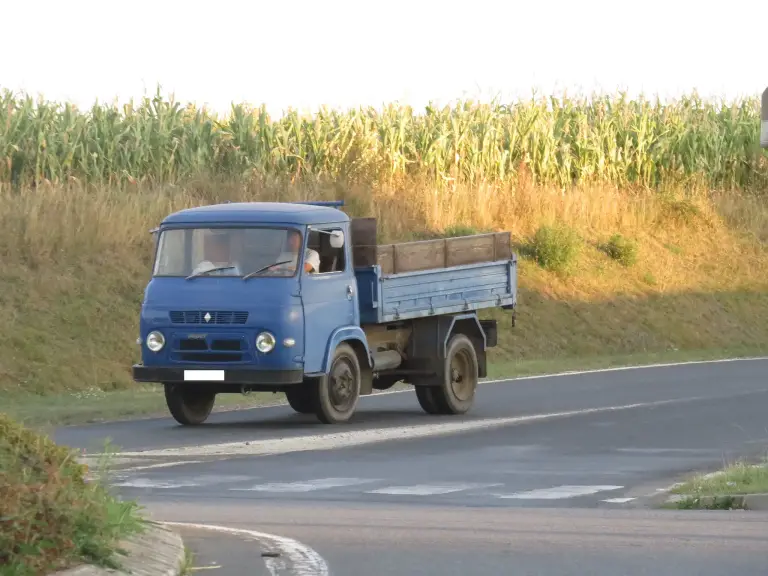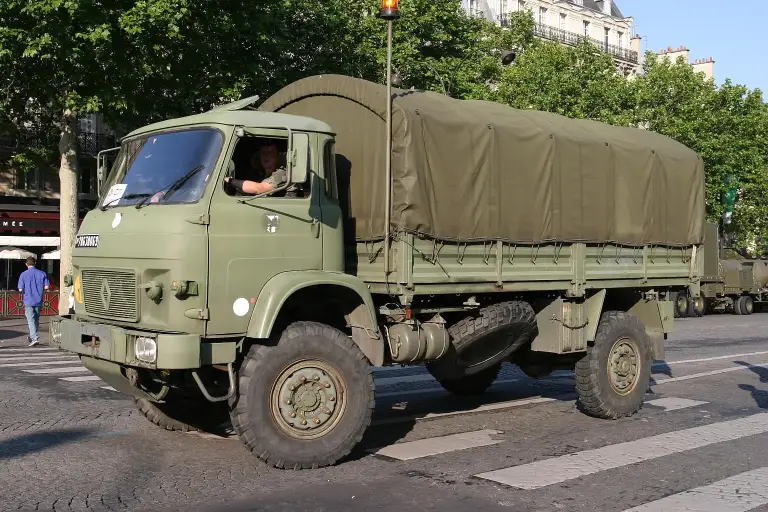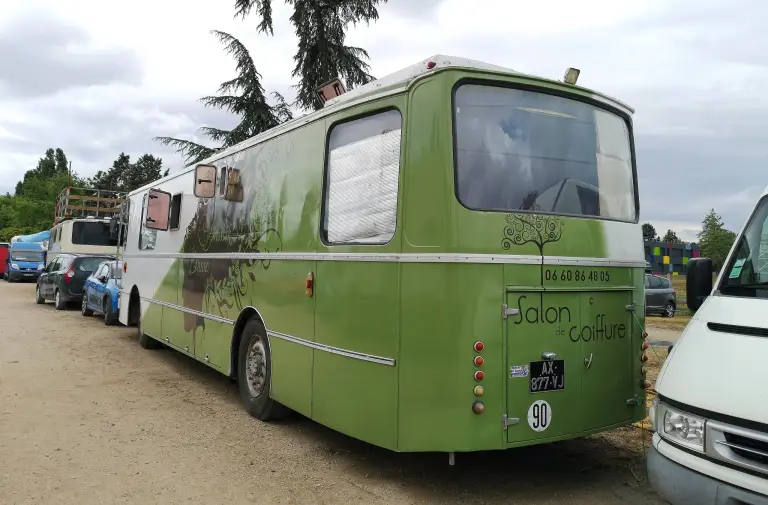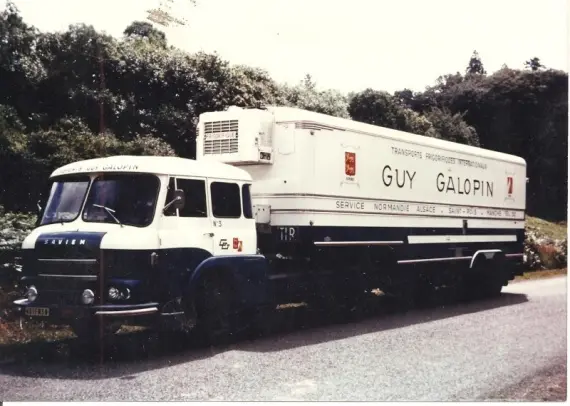
The Saviem JL was a range of medium and heavy trucks that Saviem inherited from Somua and built until 1964. It marked the beginning of the Saviem truck range and was replaced by the MAN-engined JM.
Saviem JL at a glance
| Maker | Somua, then Saviem |
|---|---|
| Production | from 1958 to 1964 |
| Layout | forward-control lorry |
| Predecessor | Somua JL series |
| Engines | Renault, Henschel and Alfa Romeo at first; Fulgur 4.8 l and 6.8 l diesels of 100 and 150 hp from 1961 |
| Heavy versions | 11-litre Henschel diesel of 204 hp (JL 20/200); 9.35-litre Panhard D615H (JL 20) |
| 1961 update | new front with double headlamps; Fulgur engines assembled at Limoges |
| 1963 renaming | MAN-engined models became the JM; Fulgur models became the S9 |
| Replaced by | Saviem JM, 1964 |
The English Wikipedia article on the JL is short; this page uses it together with the French article on the JM range, which describes the JL it replaced.
History of the Saviem JL
From Somua to Saviem
The JL began as a Somua design. Somua had been part of the Schneider group until 1955 and built no more than about 300 heavy vehicles a year, but its name carried weight in French road transport: the company’s output ranged from military equipment and railway material to printing machines and heavy lorries and buses. After 1945 its lorry side produced two models, the JL in many variants from the JL 12 to the JL 19, and the MTP construction truck. Each came as a 4×2 or 6×2 chassis and as a 4×2 tractor unit, with several wheelbases.
Fulgur, Henschel and Panhard engines
When Saviem took over the JL, the truck was offered with Renault, Henschel and Alfa Romeo engines. In 1961 it received a revised front with double headlamps and was standardised on two Fulgur diesels of 4.8 and 6.8 litres, giving 100 and 150 hp; these engines were assembled at the Limoges factory that became part of Saviem. The heaviest JL20/200 kept an 11-litre Henschel direct-injection diesel of 204 hp, and the JL20 used the 9.35-litre Panhard D615H, a Lanova licence design. In 1963, under Saviem’s agreement with MAN, the MAN-engined models were renamed JM, while those that kept the Fulgur engines became the S range (S9). The JL name was still occasionally used afterwards, but the JM replaced it in 1964 with a more modern design and more powerful engines.
Design and features
- Somua origins: the JL was a Somua design taken over by Saviem.
- Engine choice: Renault, Henschel and Alfa Romeo units, then Fulgur diesels of 100 and 150 hp.
- 1961 facelift: a new front with double headlamps.
- Two names: MAN-engined JLs became the JM in 1963, Fulgur-engined ones the S9.
Saviem JL versions
- JL 12 to JL 19: the Somua-built range of the 1940s and 1950s.
- JL 20: with the 9.35-litre Panhard D615H diesel.
- JL 20/200: the heavy version with an 11-litre Henschel diesel of 204 hp.
- JL 29A: the 17.5-tonne model on which the short-lived JM 29 was based.
The JL was replaced in 1964 by the Saviem JM, and Saviem later built the TP3 four-wheel drive for the army. More vehicles are in the Saviem collection.
Sources
- Saviem JL, English Wikipedia: engines, 1961 update, renaming, replacement
- Saviem JM, French Wikipedia: Somua history, JL variants, the JL 20 the JM replaced