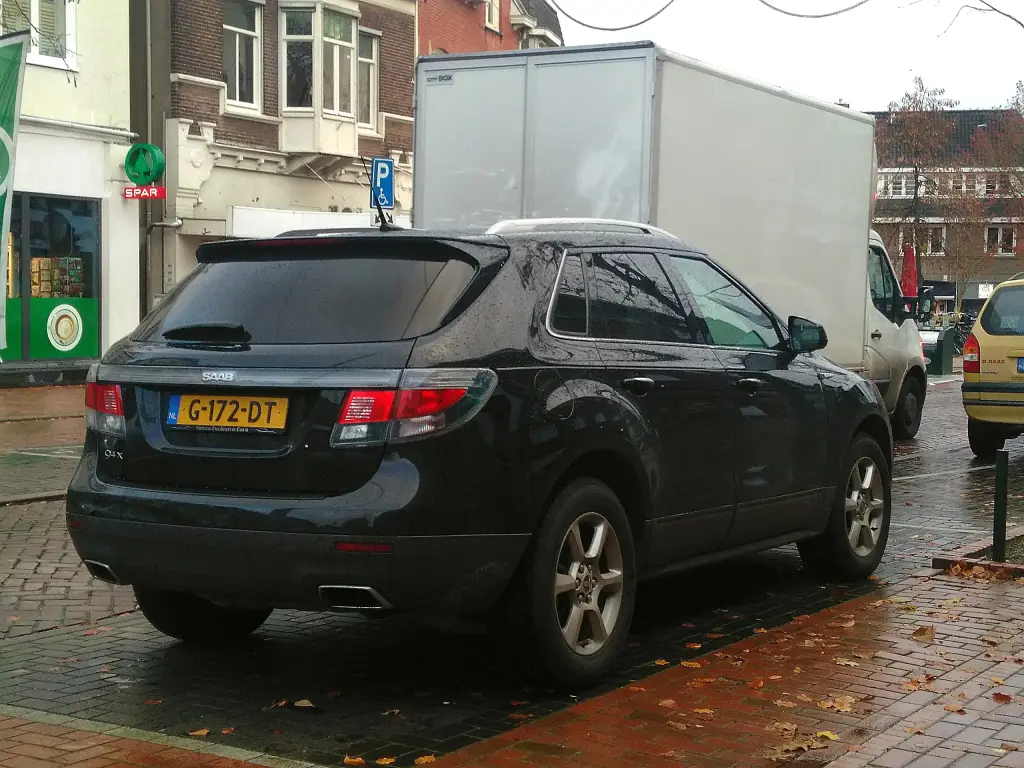
The Saab 9-4X was a mid-size luxury crossover presented at the 2010 Los Angeles Auto Show. It shared its platform with the Cadillac SRX and was built in Mexico, but Saab’s bankruptcy ended production within a year, after fewer than a thousand cars.
Saab 9-4X at a glance
| Introduced | 2010 Los Angeles Auto Show |
|---|---|
| Concept | 2008 North American International Auto Show |
| Production | 2011 |
| Assembly | Ramos Arizpe, Mexico, by General Motors |
| Platform | GM Theta Premium, shared with the Cadillac SRX |
| Engines | 3.0-litre V6, 265 hp; 2.8-litre turbo V6, 300 hp |
| Torque | 302 N·m and 400 N·m |
| Gearbox | six-speed automatic with paddle shifters |
| Drive | all-wheel drive |
| Built | 814 according to the Saab Museum |
| End of production | November 2011 |
Based on one source, the English Wikipedia article on the 9-4X; production totals in that article differ between sources.
History of the Saab 9-4X
The 9-4X took shape after the planned Saab 9-6X was cancelled, following General Motors’ sale of its stake in Subaru. It was meant to replace the larger Saab 9-7X in the United States and to give Saab a rival for compact luxury crossovers. A concept car was shown at the 2008 North American International Auto Show, and the production version appeared at Los Angeles in 2010, almost identical to the concept on the outside and similar to the second-generation Saab 9-5 inside.
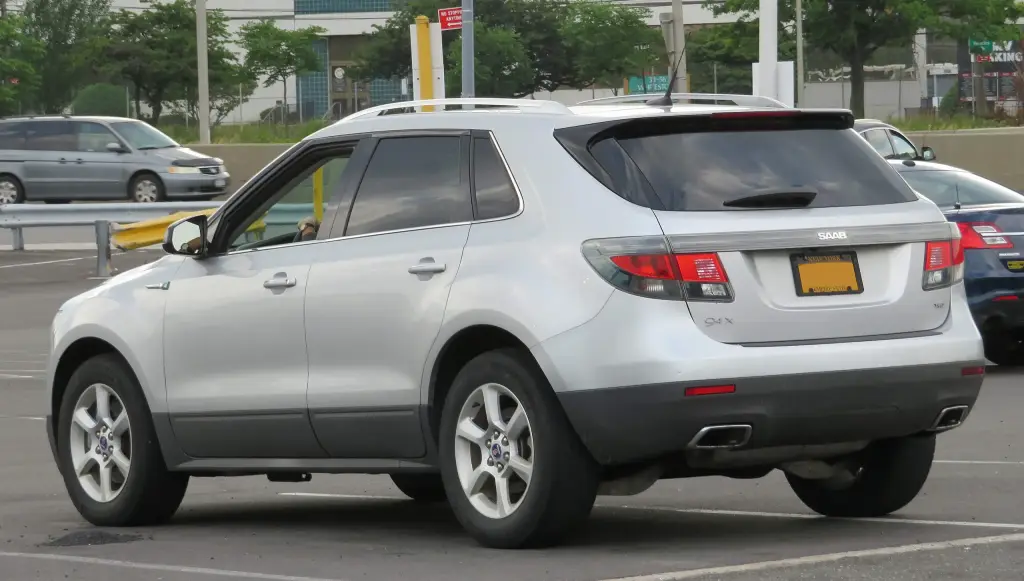
The car used the GM Theta Premium platform with all-wheel drive. The engines and transmissions were General Motors units, while the body trim and lighting were specific to Saab. Two petrol V6 engines were offered: a 3.0-litre with 265 hp and 302 N·m, and a 2.8-litre turbo with 300 hp and 400 N·m, the latter coupled to a six-speed automatic transmission with paddle shifters. A diesel for Europe was discussed but never offered.
General Motors built the 9-4X next to the Cadillac SRX at Ramos Arizpe in Mexico, and it was the only Saab ever assembled in that country. The first car was completed in February 2011 and displayed at the Saab Museum in Trollhättan. In November 2011 General Motors announced that production would end, because it was unwilling to supply a modern chassis and engine to a Chinese owner who might compete with GM in China.
Production figures differ. The Saab Museum quotes 814 cars, an unofficial production report counted 673 production cars plus about 130 test cars, and another source mentions more than 1,040 units, including almost 300 sold as pre-owned through GM dealers. Reviews praised the car’s Saab character but criticised its weight and fuel consumption.
Design and features
- Cadillac bones: the same platform and mechanicals as the Cadillac SRX, with Saab styling and trim.
- Two V6 engines: a 3.0-litre naturally aspirated unit and a 300 hp 2.8-litre turbo.
- All-wheel drive: standard on every 9-4X.
- Saab cabin: interior design close to that of the second-generation Saab 9-5.
Saab 9-4X versions
- 3.0i: 3.0-litre V6 with 265 hp and 302 N·m.
- Aero: 2.8-litre turbo V6 with 300 hp and 400 N·m, tested by Road & Track in April 2011.
- Pre-owned GM cars: about 300 cars sold through GM dealers after production ended.
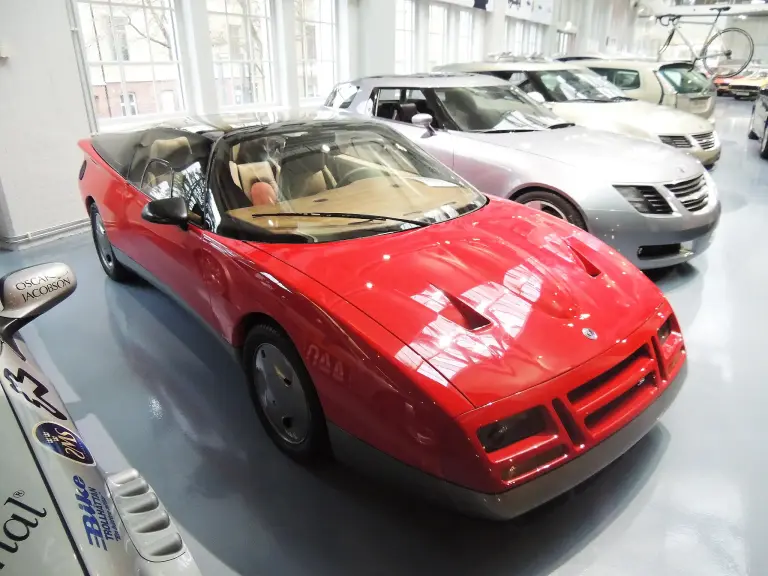
The 9-4X replaced the larger Saab 9-7X and shared its cabin design with the Saab 9-5. The Saab 9-X concept had shown an earlier idea for a Saab with all-wheel drive. More cars are in the Saab collection.
Video: Saab 9-4X – Test Drive
Video by the uploader on YouTube.
Sources
- Saab 9-4X, English Wikipedia: design, production, engines, numbers