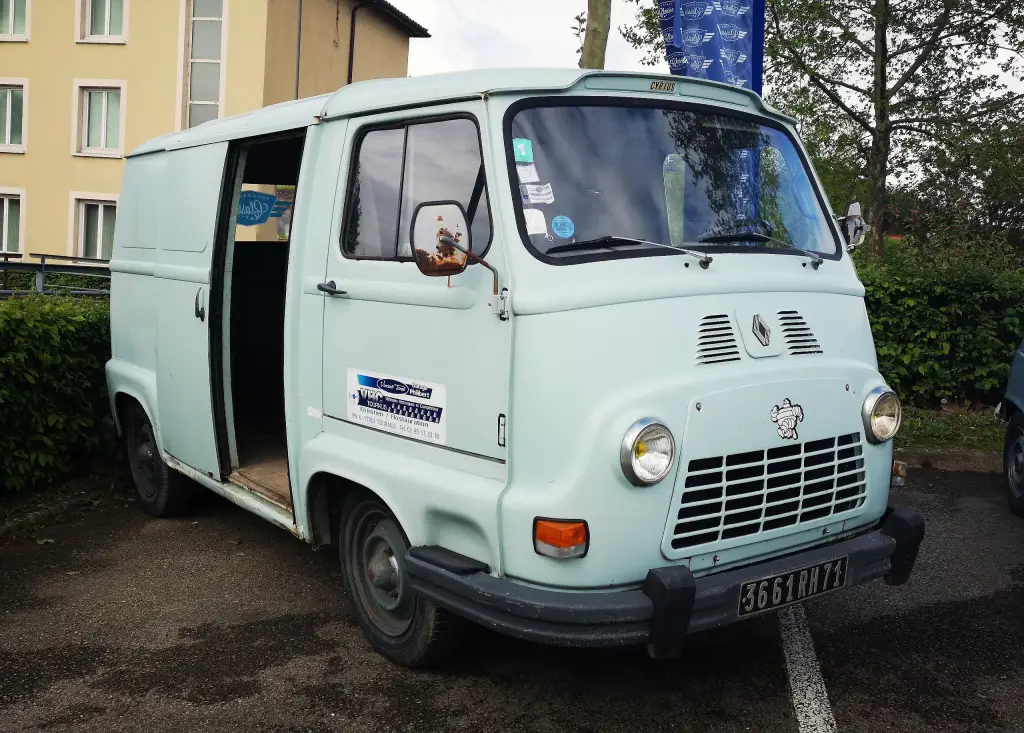
The Renault Estafette is a light commercial front-wheel-drive van produced by Renault, at first with the water-cooled Ventoux engine and later with the Cléon-Fonte unit, in a range of body styles. It was replaced by the Renault Trafic.
Renault Estafette at a glance
| Maker | Renault, France |
|---|---|
| Layout | front engine, front-wheel drive |
| Engines | Ventoux, later Cléon-Fonte |
| Bodies | panel van, minibus, pick-up, special bodies |
| Payload versions | 800 kg and 1,000 kg |
| Context | designed under the Plan Pons rules |
| Replaced by | Renault Trafic |
Based on one source, the English Wikipedia article on the Renault Estafette.
History of the Renault Estafette
The Plan Pons inheritance
In summer 1944 the French Ministry of Industrial Production, headed by Paul-Marie Pons, set out a plan for the post-war motor industry under which Peugeot, Renault and Chenard & Walcker were restricted to vans of 1,000 to 1,400 kg, while Citroën was to build trucks of two to three and a half tonnes. Citroën’s Pierre-Jules Boulanger ignored the plan and went ahead with the H Van, launched in 1947: a unitary body with no separate frame, independent suspension and front-wheel drive, a powerful engine, generous capacity and an exceptionally low loading floor, which was an immediate success and stayed in production until 1981.
Catching up
Renault obeyed the plan and built the 206 E1 on pre-war lines, with a fixed chassis and a body of metal panels on a wooden frame, which paid off in cost terms but left it behind the Citroën. The Estafette was Renault’s modern answer: a front-wheel-drive van with a low floor and a unitary body. With it, Renault became the only maker in the world simultaneously producing vehicles with all three common drivetrain layouts: the front-engined front-wheel-drive Estafette, rear-engined rear-wheel-drive cars such as the Dauphine, and front-engined rear-wheel-drive models such as the Frégate.
Bodies and engines
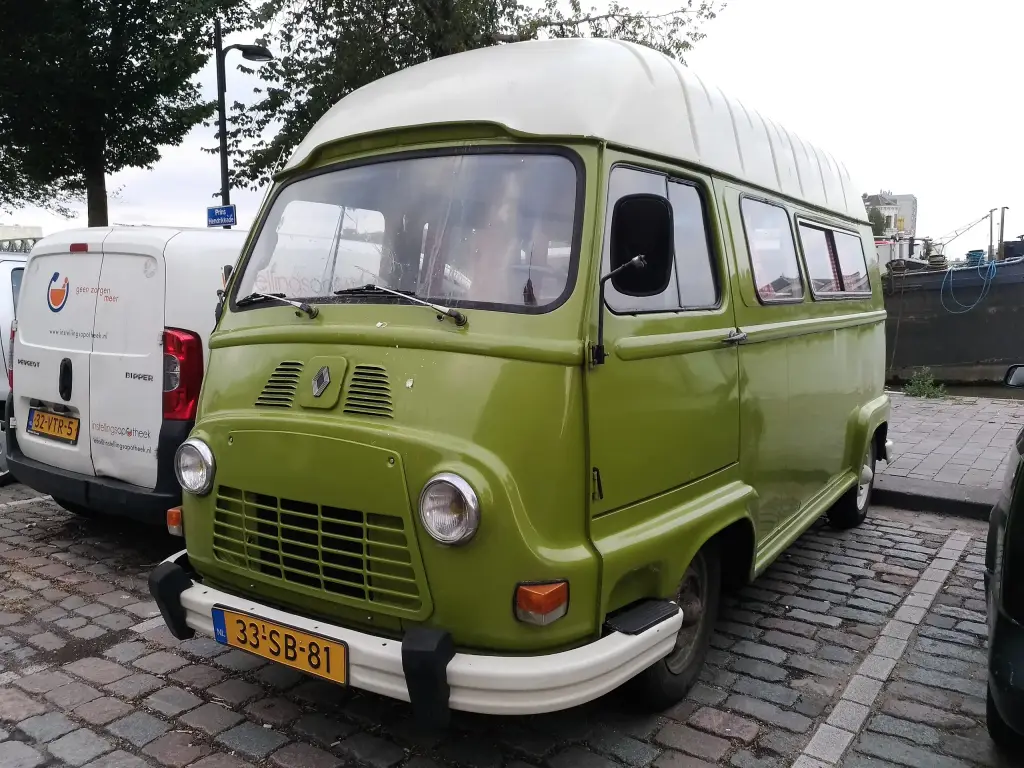
The Estafette was sold in a wide range of bodies, from panel vans to minibuses and pick-ups, with 800 kg and 1,000 kg payload versions. It began with the water-cooled Ventoux engine and later used the Cléon-Fonte, and it was eventually replaced by the Renault Trafic.
Design and features
- Front-wheel drive: a low loading floor in the manner of the Citroën H.
- Two engines: the Ventoux at first, the Cléon-Fonte later.
- Many bodies: panel van, minibus, pick-up and specialist conversions.
- Payload choice: 800 kg and 1,000 kg versions.
Renault Estafette versions
- Estafette panel van: the basic commercial body.
- Estafette minibus: glazed passenger version.
- Estafette pick-up: open load bed.
- Estafette 800 and 1000: payload versions.
The Estafette followed the Renault 1 000 kg and was replaced by the Renault Trafic; the smaller Renault Express covered lighter work later. More Renaults are in the Renault collection.
Video: Renault Estafette 800
Video by Drive Culture on YouTube.
Sources
- Renault Estafette, English Wikipedia: Plan Pons background, engines, bodies